For years, starting an online business was often associated with having a laptop, reliable internet, expensive software and perhaps an office. But that picture is changing.
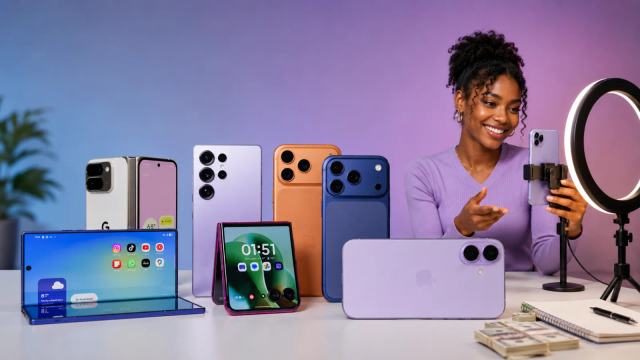
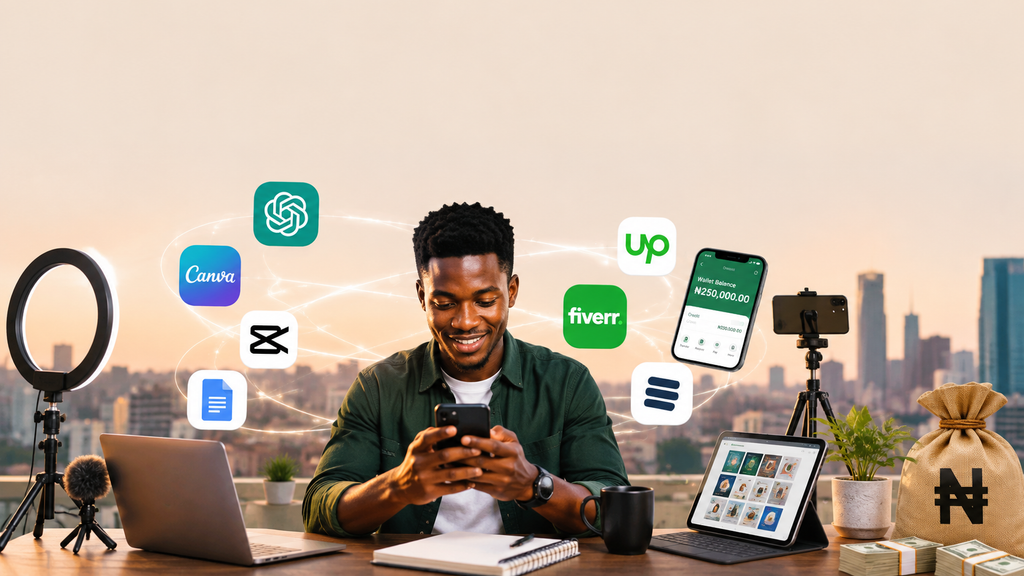
In 2026, a smartphone can take you much further than simply making calls, sending WhatsApp messages or watching videos. With the right tools and the right skills, that small device in your hand can help you write, design, edit videos, communicate with customers, market a service and even find clients online.
That does not mean a smartphone is a magic money-making machine. It is not.
Downloading an application does not automatically create an income. The real opportunity comes when you learn how to use these tools to solve problems that people are willing to pay you to solve.
That is why I find the smartphone side-hustle conversation more interesting than the usual promises of “make money online.” The question should not be, “Which app will make me rich?” It should be, “What useful skill can I learn and deliver with the tools already available to me?”
That shift in thinking can make a huge difference.
One of the tools worth looking at is ChatGPT. Artificial intelligence has become increasingly useful for people who work with information, writing and content, and ChatGPT is available on Android and iOS. It can assist with brainstorming, drafting, planning, analysing information and many other tasks. (help-lb.openai.com)
For someone interested in writing, for example, ChatGPT can help generate ideas, organise an article, create an outline or improve the structure of a first draft. A social media manager can use it to brainstorm content ideas. Someone building a digital product can use it during the planning and drafting process.
But there is something I would strongly advise anyone using AI for business to understand: ChatGPT should be treated as a tool, not as the business itself.
A client is not paying you because you know how to open an AI chatbot. The client is paying because you can deliver something useful.
That means you still have to think, check facts, edit your work and understand what the customer actually needs. In fact, as AI becomes more common, the ability to add human judgment and originality may become even more valuable.
And once you understand that, you begin to see why another smartphone-friendly tool like Canva can be useful.
Canva gives users access to templates and design tools for creating social media graphics, flyers, presentations, videos and other visual content. Its mobile app makes it possible to work on designs from a smartphone. (play.google.com)
Think about the number of small businesses that need visual content every day.
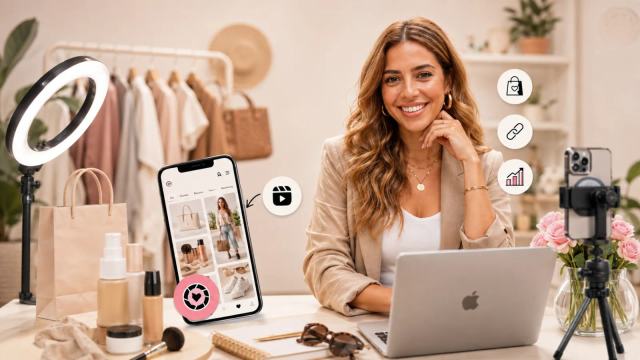
A fashion seller may need a promotional graphic. A restaurant may need a food advertisement. A church may need an event flyer. A property agent may need a social media post for a new listing. A content creator may need thumbnails or graphics for social media.
These people may not necessarily need a large advertising agency. Sometimes they simply need someone who understands how to create clean, attractive and useful designs.
That person could be you.
You could start by learning Canva from your phone, practising different types of designs and creating a small portfolio. You could even create sample designs for imaginary businesses while you are learning.
The important thing is to move beyond saying, “I know Canva.”
Instead, learn to say, “I can help your business create better social media content.”
That is a much more valuable proposition.
The same thinking applies to video editing.
Short-form video has become an important part of online communication, and businesses, creators and individuals increasingly need people who can turn raw footage into something watchable and engaging.
CapCut is one of the tools that can help beginners enter this space. Its mobile application provides features for trimming clips, adding text and effects, creating captions, adjusting speed and performing other video-editing tasks. (apps.apple.com)
Imagine a small business owner who records five videos every week but doesn't have the time to edit them.
You could offer to turn those recordings into short videos for Instagram, TikTok, Facebook or YouTube Shorts.
A content creator could send you a long video and ask you to turn it into several shorter clips.
An event planner could need highlights from an event.
A restaurant could need short promotional videos showing its food.
Suddenly, CapCut is no longer just an application on your phone. It becomes part of a service you can offer.
And this is where I think the smartphone side-hustle conversation becomes more realistic.
You are not trying to make money simply because you have an application. You are learning a skill and using the application to deliver that skill to another person.
The same principle applies to writing, and this is where something as simple as Google Docs becomes important.
Google Docs allows Android users to create, view and edit documents from their phones, including Microsoft Word files. It also allows documents to be shared with others for collaboration. (support.google.com)
That may sound ordinary, but ordinary tools can be extremely useful when you know how to use them.
Someone who writes well could use Google Docs to prepare blog articles, website content, product descriptions, CVs, business documents, ebooks or social media content.
A small business owner may have a good product but struggle to describe it properly online.
A job seeker may need help improving a CV.
A website owner may need someone to produce articles regularly.
An organisation may need documents prepared and edited.
None of these problems requires a fancy office to solve.
What they require is someone who can do the work properly.
That is why I would encourage anyone considering a smartphone side hustle not to become obsessed with complicated technology. Sometimes, a simple tool combined with a useful skill is enough to get started.
But then another question appears: Where do you find the people who need your service?
This is where platforms such as Upwork can become useful.
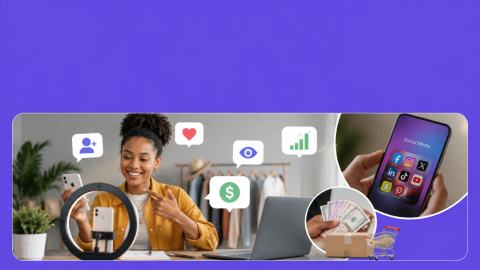
Freelance marketplaces can connect people offering digital services with clients looking for those services. Instead of depending entirely on customers in your immediate environment, you can potentially reach clients in other locations.
Writing, graphic design, video editing, virtual assistance and other digital services can all be offered through freelance platforms.
However, I would not advise anyone to download a freelancing app today and expect money tomorrow.
It does not work that way.
There can be competition, and established freelancers may already have strong portfolios and reviews. A beginner therefore needs to think about what makes them useful.
If you want to write, create writing samples.
If you want to edit videos, create sample videos.
If you want to design, build sample graphics.
If you want to become a virtual assistant, learn the tasks businesses actually need help with.
Then gradually put your work in front of potential customers.
Fiverr provides another avenue for packaging and offering digital services online. Instead of simply telling people that you are a writer, designer or editor, you can present a specific service that explains exactly what you can deliver.
That difference may seem small, but it is important.
“I am a writer” is broad.
“I write SEO-friendly blog articles for small businesses” is specific.
“I edit videos” is broad.
“I turn long videos into short social media clips” tells the customer exactly what problem you can solve.
When people understand the problem you can solve, it becomes easier for them to understand the value of your service.
And once you begin thinking about online services as a real business rather than simply a hobby, another issue becomes impossible to ignore: getting paid.
A digital business needs a reliable payment process.
Paystack is one payment platform serving businesses in Nigeria, with payment options designed for customers paying Nigerian businesses. That makes platforms in this category relevant to anyone building a legitimate digital business and looking for ways to collect payments from customers.
The bigger lesson, however, is not that everyone must use one particular payment platform.
It is that you should think about payment, pricing, record-keeping and customer trust from the beginning.
If someone is paying you for a service, they should understand what they are paying for, how much it costs and what they will receive.
That may sound obvious, but professionalism is one of the things that can separate a serious side hustle from a temporary experiment.
And this brings me to what I consider one of the biggest mistakes beginners make.
They try to do everything.
They download ChatGPT.
They download Canva.
They download CapCut.
They create an Upwork account.
They create a Fiverr account.
They start watching videos about affiliate marketing.
Then they jump into another business idea the following week.
Before long, they have seven applications and seven unfinished plans.
I don't think that is the best way to start.
If you are starting with only your smartphone, choose one skill first.
If writing interests you, start with writing and learn the tools that make you better at it.
If graphic design interests you, focus on Canva.
If video excites you, learn CapCut.
If you want to freelance, learn one service before trying to sell ten different things.
Give yourself time to become good.
Create samples.
Practice.
Make mistakes.
Correct them.
Ask people what they think.
Improve your work.
Then start looking for your first customer.
That first customer may not bring a huge amount of money. But there is something valuable about earning your first legitimate income from a skill you taught yourself.
It changes your mindset.
You stop seeing your phone simply as a device for consuming other people's content.
You begin seeing it as a tool for creating value.
And that, to me, is the bigger opportunity in 2026.
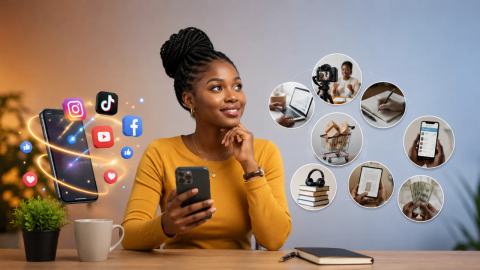
We often talk about smartphones as though their biggest purpose is entertainment. We spend hours watching videos made by other people, scrolling through social media posts and consuming information.
But the same device can also be used to create.
You can write with it.
You can design with it.
You can edit videos with it.
You can communicate with customers.
You can learn new skills.
You can build a portfolio.
You can market your services.
You can even connect with potential clients outside your immediate environment.
The technology is increasingly accessible. The harder part is deciding what you want to use it for.
That is why I don't think the right question is, “Which app can make me money?”
A better question is, “What problem can I solve with the tools I already have?”
If you can answer that question honestly, you are already thinking more like a business owner.
Maybe you can help a restaurant create better social media graphics.
Maybe you can edit videos for a fashion business.
Maybe you can write articles for websites.
Maybe you can help small businesses organise their online content.
Maybe you can create digital products that solve a specific problem.
The possibilities are different for everyone.
What matters is that you start with something useful and build from there.
Of course, nobody should believe every “make money online” promise they see on social media. The internet is full of exaggerated income claims, fake opportunities and people selling dreams instead of skills.
There is no legitimate application that can guarantee you a large income simply because you installed it.
Real online work still requires learning, consistency, patience and value.
And perhaps that is actually encouraging.
It means you don't need to discover a secret button that everybody else missed.
You need to become useful.
You need to learn something people need.
You need to become good at delivering it.
Then you need to find people who are willing to pay for that value.
That journey can begin with something as simple as the smartphone already sitting in your hand.
So, if you have been telling yourself that you cannot start an online side hustle because you don't have a laptop, perhaps it is worth looking at your situation differently.
You may eventually need a laptop as your work grows, especially for more demanding tasks.
But you don't necessarily have to wait until you have everything before you begin learning.
Start with one skill.
Choose one tool.
Practice consistently.
Build something you can show people.
Find your first customer.
Then improve from there.
The goal is not to become an overnight millionaire because of an app.
The goal is to turn the technology you already have into an opportunity to learn, create and earn.
And sometimes, that first opportunity is much closer than we think.
It may already be in your hand.
If you have an article, opinion piece, event or news story you would like published, Global News Arena would love to hear from you. If you are ready to begin your journey toward building a profitable online content-writing business from your phone or laptop, you can start by developing one useful skill, building your portfolio and putting your work in front of people who need it.
Send your article, opinion piece, event or publication enquiry to advertise@globalnewsarena.com.