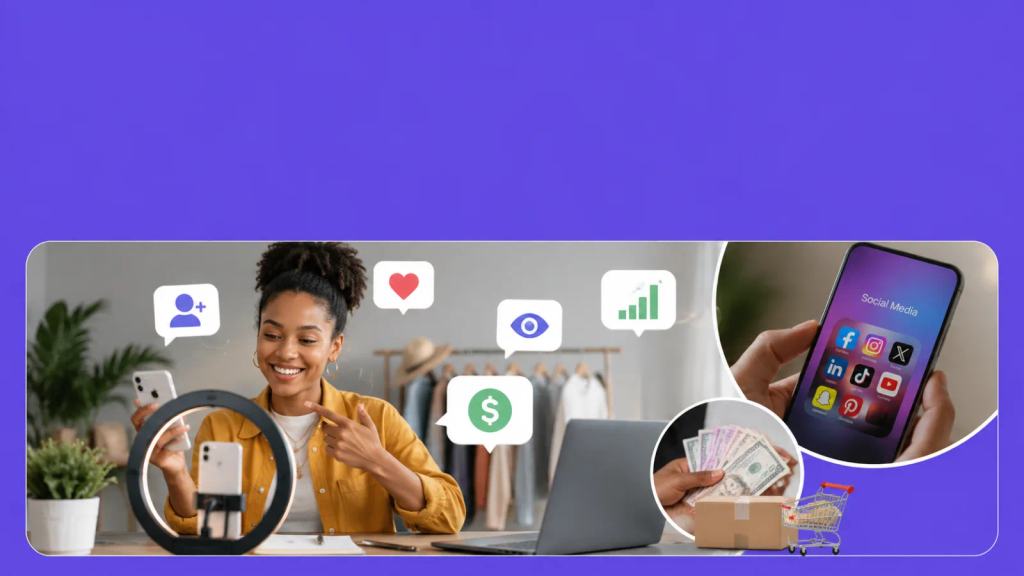
Social media attention has become one of the most valuable currencies in today's digital economy, but getting attention and knowing what to do with it are two completely different things.
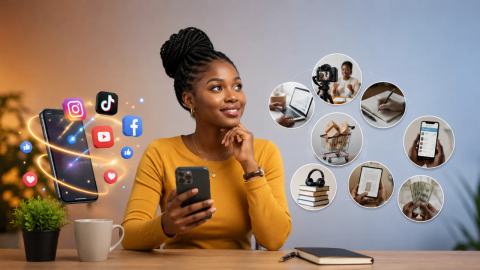
Every day, people spend hours scrolling through TikTok, Instagram, Facebook, YouTube and other platforms. They watch videos, read posts, discover products, follow creators, ask questions, share opinions and sometimes make buying decisions without ever leaving their phones. Yet while many people are focused on getting more likes, followers and views, I believe there is a much bigger opportunity hiding behind those numbers.
The question is no longer simply, "How do I become popular on social media?" For me, the more important question is, "How can I turn the attention I am receiving into something valuable that can eventually generate income?"
That distinction matters because followers alone are not a business. Views alone are not a business either. You can have a post reach hundreds of thousands of people and still make nothing from it if you have no idea how to turn that attention into trust, relationships, customers or opportunities.
At the same time, someone with a much smaller audience can be earning consistently because they understand exactly who they are speaking to, what those people need and how to provide it.
This is becoming increasingly important in Nigeria as more people move their lives, businesses and purchasing decisions online. DataReportal's Digital 2026 Nigeria report estimates that Nigeria had about 109 million internet users and 47.8 million social-media user identities at the end of 2025, while mobile connections stood at about 165 million.
When I look at numbers like these, I don't just see statistics. I see people.
I see business owners looking for customers.
I see young people searching for opportunities.
I see creators trying to build careers.
I see consumers discovering products.
I see people looking for information and solutions.
And wherever millions of people gather, there is usually an opportunity for someone who understands how to provide value.
That is why I no longer see social media simply as a place for entertainment. It has become a marketplace, a classroom, a marketing channel, a networking space and, for many people, the starting point of a digital business.
The interesting part is that you don't have to become a celebrity to participate in that economy.
You don't necessarily need 100,000 followers. You don't need a huge office. You don't need expensive equipment. You don't even need to have everything figured out before you begin.
What you need is something people care about.
It could be knowledge, creativity, entertainment, education, a useful skill, a product, a service or simply your ability to solve a problem that other people are struggling with.
Once you understand that, your approach to content begins to change.
Instead of asking only whether people will like your post, you start asking whether your post will help somebody. Instead of creating content simply because a particular trend is popular, you begin thinking about how the trend connects with your audience and what you can add to the conversation.
And that is where I believe the real transformation begins.
If people consistently find your content useful, you are not merely collecting followers. You are building trust.
Trust is extremely important online because people buy from people they believe. Businesses hire people they believe can deliver. Readers return to writers whose work they find credible. Customers recommend brands that have given them good experiences.
So, in my opinion, building an audience should never be separated from building trust.
You might have only 1,000 followers, but if those 1,000 people genuinely care about what you do, understand your expertise and believe your recommendations, that audience may be more valuable than a much larger audience that has no real connection to you.
And once attention and trust begin working together, the possibilities for making money become much clearer.
One of those possibilities is affiliate marketing, where creators recommend relevant products or services and earn commissions from qualifying purchases. But I believe there is an important principle here that should never be ignored: don't recommend something simply because you want the commission.
Your reputation is an asset.
If you repeatedly promote things your audience doesn't need, you may make a little money today and lose their trust tomorrow. But if you recommend products or services because they genuinely solve a problem, you are creating a relationship that can last much longer.
The same thinking applies to digital products.
One of the reasons I find digital products particularly interesting is that they allow people to package knowledge without needing a physical shop or warehouse. If you know how to solve a specific problem, you can potentially turn that knowledge into an ebook, guide, template, checklist, workbook, tutorial or other digital resource.
Someone who knows how to write effective CVs could create a beginner's CV guide. Someone who understands social-media marketing could develop content-planning templates. Someone who has learned how to use artificial intelligence tools could create a simple guide for beginners. Someone who knows how to budget could create a budgeting worksheet.
The possibilities are not limited to these examples.
What matters is identifying a problem and creating something that makes solving it easier.
And this is where the smartphone becomes much more powerful than many people realise.
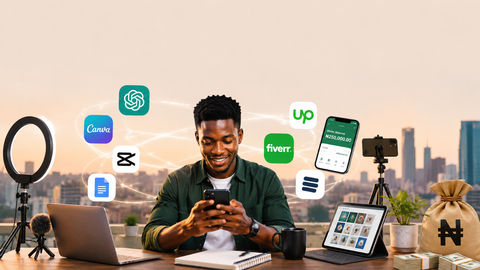
The same device you use to scroll through social media can be used to research an idea, write an article, create graphics, edit a video, communicate with customers, promote a service, sell a digital product and manage a growing online business.
You don't necessarily need to start with money.
Sometimes, you can start with knowledge.
You can start with a skill.
You can start with your experience.
You can start with your ability to explain something clearly.
You can start with the things you are already doing every day and find a way to make them useful to somebody else.
That opportunity becomes even more interesting when we look at the growth of social commerce. ResearchAndMarkets projects Nigeria's social-commerce market to reach approximately $12.43 billion in 2026, with continued growth expected over the following years.
What this tells me is that the line between social media and commerce is becoming increasingly difficult to separate.
Someone can discover a product through a TikTok video, visit the seller's page, ask questions through a direct message and make a purchase without ever visiting a physical shop.
That means attention can move much faster from content to conversation and from conversation to transaction.
But the opportunity isn't only for people selling physical products.
There are businesses everywhere that need people who understand digital communication.
A restaurant may need someone to create engaging videos.
A fashion business may need someone to manage its Instagram page.
A real-estate agent may need someone who can turn property listings into attractive social-media content.
A small business owner may need someone to write captions, design simple graphics or respond to customers online.
A coach may need help creating educational content.
A website may need someone who can write articles.
A creator may need a video editor.
And suddenly, the smartphone in your hand is no longer simply a device for consuming content. It becomes a tool for providing a service.
This is why I would encourage anyone who wants to make money online to look beyond the question of what is trending and start asking what people actually need.
If you can write, write.
If you can edit videos, learn to edit better.
If you can design, develop your design skills.
If you understand technology, teach people how to use it.
If you are good at research, turn that ability into a service.
If you understand social media, help businesses use it more effectively.
You don't have to know everything. You simply need to become useful at something and keep improving.
And as you improve, social media can become the place where people discover that skill.
This is also why I don't believe going viral should be the ultimate goal.
Going viral is exciting, but it is unpredictable.
A video can receive millions of views today and be forgotten tomorrow. Algorithms change. Trends disappear. Platforms introduce new rules. What worked last year may not work the same way next year.
But a valuable skill stays with you.
Your reputation stays with you.
Your knowledge stays with you.
Your customer relationships can stay with you.
And a digital product you create can continue providing value long after the day you publish it.
That is why I see social media attention as a doorway rather than the destination.
The content attracts attention.
The value builds trust.
The relationship creates an opportunity.
The offer creates income.
And the quality of your work determines whether people come back.
Once you start looking at social media this way, even your comments section can become useful.
The questions people ask can tell you what they need.
The problems they repeatedly mention can give you ideas for content.
The things they struggle to understand can become educational material.
The services they ask you for can reveal a possible business opportunity.
In other words, your audience can become your market research without you having to guess what people want.
Imagine someone who starts posting videos about how to use simple AI tools. At first, people may only ask questions in the comments. Eventually, those questions reveal that many of the viewers don't understand how to use AI for work. That person could create a beginner's guide, offer one-on-one assistance, organise a paid workshop or provide content services to businesses.
The business idea didn't necessarily come from sitting down and trying to invent a business.
It came from listening.
And I think that is something many aspiring online entrepreneurs overlook.
They spend so much time trying to copy what another creator is doing that they forget to pay attention to the people in front of them.
Your audience is telling you things.
You just have to listen.
Of course, I would never tell anyone that starting an online business is an overnight path to wealth. There are too many unrealistic promises on the internet already, and people need to be careful about anyone guaranteeing instant income.
Building something sustainable takes time.
You have to learn how to communicate.
You have to understand your audience.
You have to create consistently.
You have to learn how to market.
You have to improve your skills.
You have to understand how to price your services or products.
And you have to deliver what you promise.
But the encouraging part is that you can begin small.
Your first customer doesn't have to be a multinational company.
Your first digital product doesn't have to be a 200-page course.
Your first video doesn't have to receive a million views.
Your first business can begin with one person who has a problem you know how to solve.
From there, you learn.
Then you improve.
Then you find another customer.
Then another.
Eventually, what began as a simple skill on a smartphone can become a service, a brand or a genuine digital business.
That, for me, is the bigger lesson behind social media attention.
We spend so much time measuring how many people saw us that we sometimes forget to ask what those people saw.
Did they see someone who could help them?
Did they see someone who understands their problem?
Did they see someone they can trust?
Did they see something worth paying for?
Because attention is only valuable when you know what to do with it.
And in a world where almost everyone is competing for attention, the people who learn how to turn attention into trust, trust into value and value into sustainable income will have an enormous advantage.
So the next time you open TikTok, Instagram, Facebook or YouTube, I want you to look at those platforms a little differently.
Don't only think about what you can watch.
Think about what you can create.
Don't only think about how many followers you can gain.
Think about how many people you can genuinely help.
Don't only think about going viral.
Think about building something that can still have value when the trend is gone.
Because your smartphone may be more than a device for scrolling.
It can be your classroom.
It can be your portfolio.
It can be your marketing department.
It can be your communication tool.
And, with the right skill and strategy, it can become the starting point of a business.
The opportunity is not necessarily waiting for you in another country, another city or another person's success story.
It may already be sitting in your hand.
The question is whether you will continue using your phone only to consume other people's opportunities, or whether you will start using it to build your own.
If you have an article, opinion piece, event or news story you would like published, or you are ready to begin your journey toward building a profitable online content-writing business from your phone or laptop, Global News Arena would love to hear from you. Send an email to advertise@globalnewsarena.com.