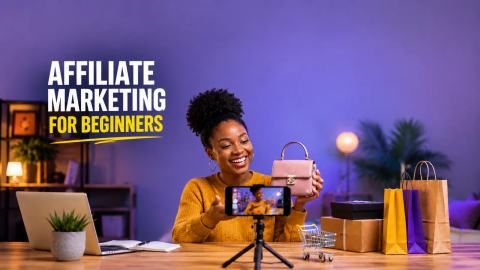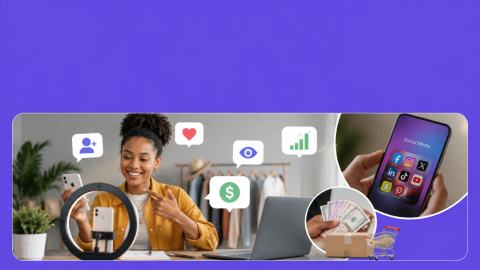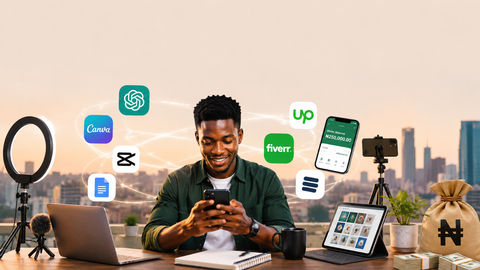
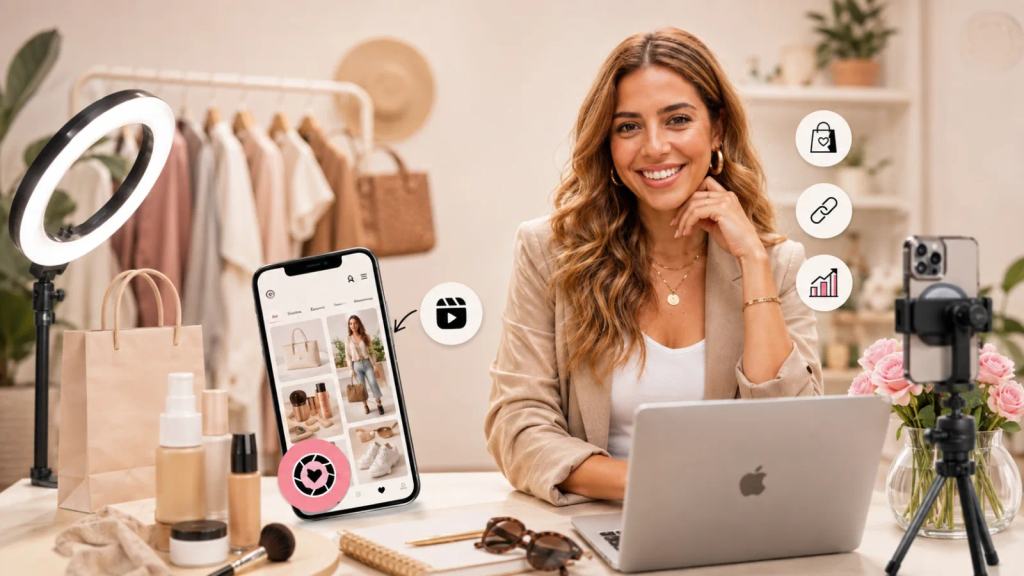
Affiliate marketing is becoming one of the biggest changes happening quietly across social media, and platforms such as ShopMy, LTK, TikTok Shop and Amazon are helping to turn ordinary content into opportunities for online commerce.
A social media post that once existed simply to entertain, inform or attract attention can now do much more. A creator can recommend a dress, smartphone accessory, beauty product, kitchen appliance, book, software tool or another useful product, and a viewer can move from discovering that recommendation to purchasing it through a trackable link. When the purchase qualifies, the creator can receive a commission.
To me, this is where the story becomes much more interesting.
The real development is not simply that people are earning commissions from products. It is that the line between content and shopping is becoming increasingly difficult to separate. Social media is no longer only where people go to see what is happening. It is becoming one of the places where people discover what they want to buy.
That change has created an entirely new role for creators.
ShopMy, for example, has built a platform around creator recommendations, allowing creators to create digital shops, share products and earn commissions from qualifying purchases. The company says it now works with more than 45,000 brand partners and has paid more than $100 million to its curators.
LTK has been developing a similar creator-commerce model, allowing creators to build personalised shopping experiences around products they recommend. The company says its platform reaches tens of millions of shoppers every month and generates billions of dollars in annual retail sales through creator-driven commerce.
TikTok Shop has pushed the idea even closer to the actual moment of discovery. Instead of seeing a product in an advertisement and remembering to search for it later, users can discover a product while watching a video or LIVE stream and, in supported markets, purchase it through TikTok's shopping system.
TikTok's affiliate programme allows creators to discover products, recommend them through videos and LIVE streams and earn commissions from sales generated through their content.
Amazon, meanwhile, has been part of affiliate marketing for decades through its Amazon Associates programme. Qualifying creators, publishers and bloggers can recommend products using customised links and earn commissions from qualifying purchases. Amazon has also expanded further into the creator economy with its Influencer Program in selected markets, giving eligible influencers a personalised storefront where they can showcase products they recommend.
When I look at these developments together, I see something much bigger than four companies trying to make shopping more convenient.
I see a change in how consumers make decisions.
People increasingly want to see products in use before they buy them. They want demonstrations, comparisons, reviews and honest opinions. They want someone to explain whether something is actually worth the money rather than simply being told that a product is "the best."
That is why a creator's influence can sometimes be more powerful than a traditional advertisement.
Imagine someone watching a short video about affordable smartphones. The creator explains which phone accessories they use, demonstrates a particular power bank, compares two wireless earbuds and explains which one offers better value. A viewer who was already considering buying one of those products now has information that can make the decision easier.
The content may only last a minute.
The commercial journey can be much longer.
And this is where I think many people misunderstand affiliate marketing.
It is easy to look at the final affiliate link and assume that the link is the business.
It isn't.
The real business is everything that happens before someone clicks.
The creator has to attract attention. They have to understand their audience. They have to identify a genuine problem or need. They have to find something relevant. They have to explain it clearly. They have to establish credibility. Then, and only then, does the affiliate link become useful.
In other words, affiliate marketing is not really a link business.
It is a trust business.
If I recommend a product but my audience has no reason to believe me, the link means very little. But if people have followed my content for months because I consistently help them make better decisions, a recommendation carries much more weight.
That is why I believe the future of affiliate marketing will not necessarily belong only to people with millions of followers.
A smaller creator with a highly focused audience can have something extremely valuable: relevance.
Someone with 3,000 followers who regularly discusses affordable technology may have an audience that is far more interested in buying a phone accessory than a celebrity with 300,000 followers whose audience has no particular interest in technology.
The same principle applies to almost every niche.
Fashion creators can recommend clothing and accessories. Beauty creators can discuss skincare and makeup. Parents can recommend educational products and household items. Fitness creators can discuss equipment. Food creators can recommend kitchen tools. Technology creators can explain gadgets and software.
The opportunity comes from knowing what your audience wants and being able to help them find it.
And this is where I think social media users need to change the way they look at their own platforms.
Instead of constantly asking how to gain more followers, perhaps we should also be asking what those followers actually need.
Instead of asking which product can make us money, we should ask which product genuinely solves a problem for the people listening to us.
That difference may seem small, but it changes the entire approach.
A person who creates content simply because they want to sell something will eventually become exhausting to follow.
A person who creates content because they want to help people make better choices can build something much more sustainable.
The commercial opportunity then becomes a result of the value rather than the entire purpose of the content.
That is particularly important because audiences are becoming more sophisticated. People can recognise when every post is secretly trying to sell them something.
Nobody wants to feel like a walking wallet.
People want information.
They want entertainment.
They want inspiration.
They want solutions.
And when a recommendation genuinely helps them, they are often much more comfortable supporting the person who provided it.
There is also something important here for people who believe they need to become famous before they can make money online.
You don't necessarily need to become an influencer in the traditional sense.
You can become useful.
That may be more important.
If you understand smartphones, create content explaining useful accessories. If you understand productivity apps, show people how to use them. If you are knowledgeable about fashion, create affordable outfit recommendations. If you understand home organisation, show people products that make everyday life easier.
You can even build content around things you are already researching for yourself.
The smartphone makes this increasingly accessible because the same device can be used to research, record, edit, publish and communicate with an audience.
But I would also be careful about the way affiliate marketing is presented online.
It is not guaranteed income.
There is no magic button that turns a social media account into a profitable business overnight.
A video can receive hundreds of thousands of views and generate very little money. Another video with far fewer views can generate more because it reaches people who are genuinely interested in the product.
Affiliate programmes also have different rules, commission structures and eligibility requirements, and availability can vary by country.
That means anyone entering this space needs to do more than simply copy what another creator is doing.
You have to understand the programme you are joining.
You have to understand what you are allowed to promote.
You have to understand how commissions are calculated.
You also have to be honest with your audience about commercial relationships.
Amazon, for example, requires Associates to disclose their affiliate relationship when sharing affiliate links and provides guidance on making those disclosures clear.
I think that transparency is important because affiliate marketing should not be built around tricking people into buying something.
If I earn a commission when someone purchases through my recommendation, there is nothing inherently wrong with that. What matters is whether I am being honest about it and whether the recommendation itself is genuinely useful.
That principle becomes even more important as social commerce grows.
Because when people begin to trust creators more than traditional advertising, creators have a responsibility not to abuse that trust.
A creator who recommends everything will eventually make their recommendations meaningless.
A creator who is willing to say, "I don't think this product is worth the money," can become much more credible.
And perhaps that is where the real long-term opportunity lies.
The strongest affiliate marketers may not be the people who promote the greatest number of products. They may be the people whose audiences believe that when they recommend something, there is a genuine reason behind the recommendation.
This also makes the trend particularly interesting for people trying to build digital income from their smartphones.
You do not need to start with a warehouse full of products.
You do not necessarily need to manufacture anything.
You can begin by creating information.
You can research products, compare them, explain them and help people decide whether they are worth considering.
From there, affiliate marketing can become one part of a larger digital business.
Someone might start with product recommendations and eventually create a website. Another person might build an email newsletter. Someone else might create downloadable buying guides. Another creator might turn their knowledge into an online course, digital product or content-writing service.
That is the direction I would encourage people to think about.
Don't look at affiliate marketing simply as a way to earn a commission from somebody else's product.
Look at it as an opportunity to learn how the digital economy works.
You learn how to attract attention.
You learn how to communicate.
You learn how to understand an audience.
You learn how people make purchasing decisions.
You learn content creation.
You learn basic marketing.
You learn how to turn information into value.
Those skills can become useful far beyond affiliate marketing.
And for someone in Nigeria or elsewhere who is looking for a realistic way to begin building something online, that matters.
The internet has reduced many of the traditional barriers to starting a small business. A person can now publish content without owning a media company, reach an audience without buying television airtime and promote products without owning a physical shop.
The opportunity is not necessarily easy, but it is more accessible than it was for previous generations.
What we do with that opportunity is another matter.
The same smartphone can be used for hours of endless scrolling, or it can be used to research a business idea, create useful content, learn a new skill and begin building an online income stream.
That is why I think the rise of affiliate marketing on social media is worth paying attention to.
It is not simply about ShopMy, LTK, TikTok Shop or Amazon.
It is about the changing relationship between attention, trust and commerce.
For years, we were told that having attention was the goal.
Get followers.
Get views.
Go viral.
But the next stage is understanding what to do with that attention.
Attention without trust can disappear quickly.
Trust without value can also disappear.
But when useful content creates trust and that trust leads people toward legitimate solutions, a completely different kind of digital business begins to emerge.
That is the opportunity I see in affiliate marketing.
Not a promise of overnight wealth.
Not a shortcut.
Not a reason to flood people's timelines with links.
Instead, it is an invitation to learn how to become useful in a digital world where people are increasingly discovering products through people they follow.
The creators who understand this shift may discover that their greatest asset is not the number of followers they have, but the number of people who genuinely believe their recommendations are worth listening to.
And for anyone starting from a smartphone, that is perhaps the most encouraging part of the story.
You can start small.
You can choose one area you understand.
You can create useful content.
You can learn how affiliate programmes work.
You can be transparent with your audience.
You can study what works.
You can improve.
And over time, what begins as a few helpful posts could become the foundation for something much bigger.
Social media may have started as a place to share our lives, but it is increasingly becoming a place where knowledge, influence and commerce meet.
The question now is not simply whether people will shop through social media.
They already are.
The more important question is who will become the trusted voices helping them decide what to buy, and who will learn how to turn that trust into a legitimate digital business.
If you have an article, opinion piece, event or news story you would like published, or you are ready to begin your journey toward building a profitable online content-writing business from your phone or laptop, Global News Arena would love to hear from you. Send an email to advertise@globalnewsarena.com.