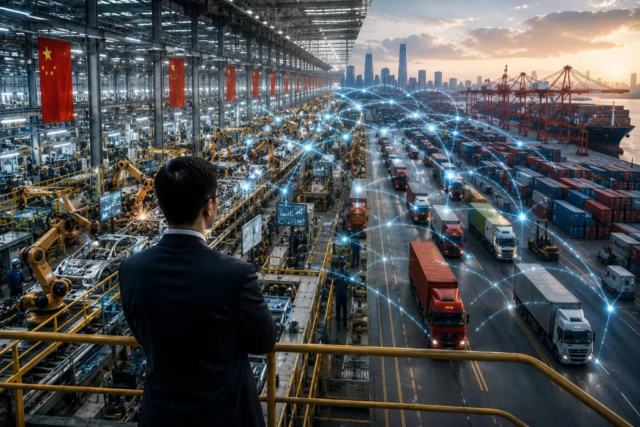
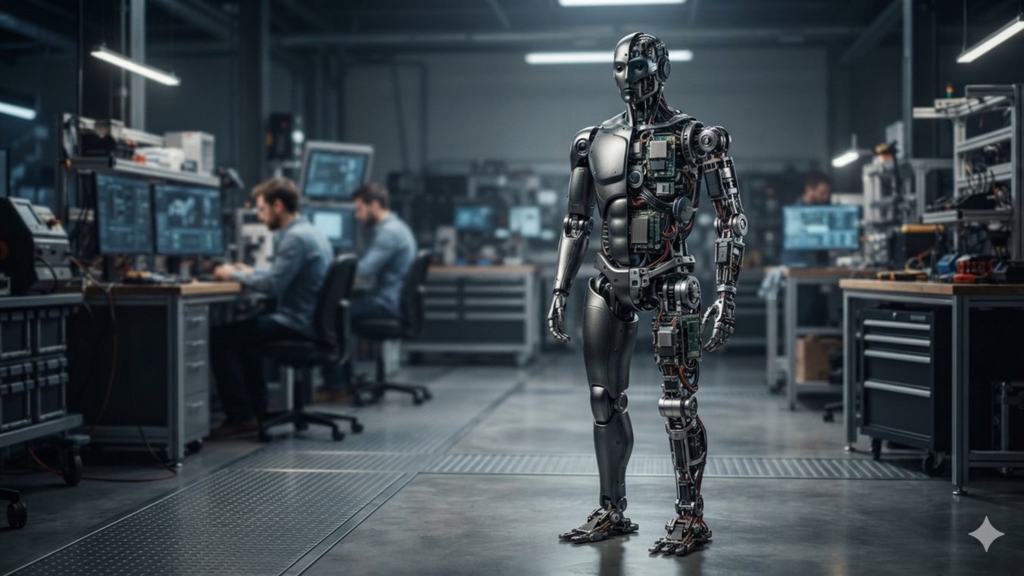
About 19,100 humanoid robots were delivered globally in the first half of 2026, with Chinese manufacturers accounting for about 97 percent of shipments.
Researchers expect global shipments to rise further as companies work to move humanoid robots from demonstrations into manufacturing, logistics and other real world environments.
The development is attracting attention because building a humanoid robot requires far more than artificial intelligence.
These machines need motors, gearboxes, sensors, bearings, grippers and other specialized components.
A humanoid robot can require more than 40 joints, creating a large ecosystem of parts and suppliers behind every finished machine.
That creates an important lesson for businesses entering new industries.
You do not always have to build the final product to benefit from a growing market.
A small company may not have the money, expertise or infrastructure to manufacture an entire robot.
But it may be able to produce one component, provide specialised software, offer maintenance services, supply materials or solve a specific problem for manufacturers.
This approach can reduce the amount of capital required to enter a new industry.
Instead of competing with companies that already have enormous manufacturing capacity, a business can find one part of the value chain where its skills are useful.
The same principle applies outside robotics. When a new industry grows, opportunities often appear around the main product.
Businesses can provide logistics, maintenance, marketing, software, packaging, training, research or other services that the industry needs to function.
The challenge is identifying the opportunity before investing heavily.
Businesses need to understand who is buying, what manufacturers need, where supply gaps exist and what customers are willing to pay for.
Deep Research can help businesses examine markets and competitors before making that commitment.
Through Auxi Sherpa, businesses can use research and business intelligence support to investigate new markets, identify potential opportunities and understand competitors.
This can help an owner move from simply hearing about a growing industry to identifying where their own business can realistically participate.
China’s humanoid robot industry shows that a new market can create opportunities at many levels.
Sometimes the smartest business opportunity is not building the biggest product.
It is becoming very good at supplying something the bigger product cannot work without.
If you have an article, opinion piece, event or news story you would like published, Global News Arena would love to hear from you.
Send an email to advertise@globalnewsarena.com.