There was a time when I barely paid attention to headlines about inflation, interest rates, or central bank decisions. They sounded like conversations for economists and financial analysts, not something that would have much to do with my everyday life. Over the past year, that mindset has changed completely. Now, whenever I see news about the global economy, I stop and read because I have come to understand that what happens in financial markets around the world eventually finds its way into our homes, our businesses, and our bank accounts.
The conversation around the global economy in 2026 has become impossible to ignore. While inflation has eased in some countries compared to the highs seen in previous years, many economies are still struggling to bring rising prices fully under control. Interest rates remain higher than many businesses and consumers would like, as central banks continue trying to balance economic growth with price stability. The result is an uncertain environment where families are spending more carefully, businesses are delaying expansion plans, and investors are paying closer attention to every economic update.
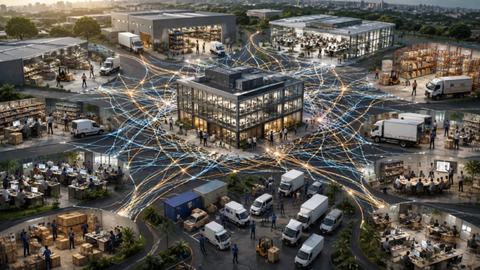
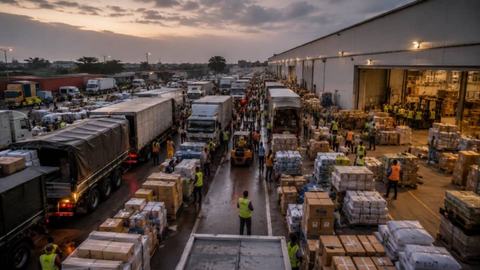
What strikes me most is how connected the world has become. A policy decision in one major economy can influence borrowing costs elsewhere. Supply chain disruptions, energy prices, global conflicts, and trade policies all have a ripple effect that eventually reaches local markets. Even if we never read an economic report, we notice the impact when groceries cost more, transportation becomes more expensive, or running a small business suddenly requires a bigger budget than it did just a year ago.
I've spoken with business owners who are finding it harder to manage operating costs, and with families who now think twice before making purchases they once considered routine. Inflation doesn't announce itself dramatically. It quietly changes spending habits, savings goals, and financial priorities until one day you realize your money simply doesn't stretch as far as it used to.
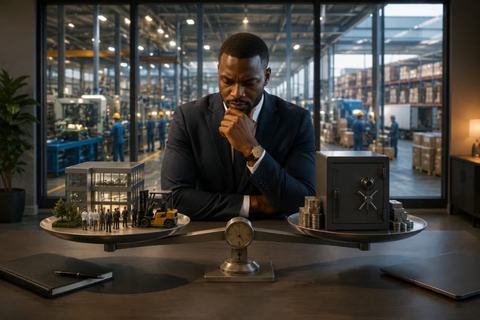
That realization pushed me to think differently about income and the way businesses operate. When costs are rising, businesses don't necessarily need to stop growing; sometimes they need to find smarter ways to work. This is where technology can make a real difference.
I've become particularly interested in how small businesses can use virtual assistants to handle time-consuming tasks such as customer communication, scheduling, research, administrative work, follow-ups, and day-to-day business support. Instead of trying to do everything alone, a business owner can delegate routine tasks and spend more time focusing on customers, sales, and growth.
The same idea applies to AI business automation. Tasks that once required hours of manual work can increasingly be streamlined with the right digital systems. From responding to enquiries and organizing leads to managing repetitive workflows and following up with potential customers, automation can help businesses save time and operate more efficiently.
This is one of the reasons Auxisherpa fits into this conversation. Through its virtual assistant and AI business automation services, Auxisherpa helps businesses take some of the repetitive work off their hands so they can concentrate on the parts of the business that require their attention.
For me, this is an important lesson from the current economic environment. When expenses rise, the answer isn't always simply to work longer hours. Sometimes the smarter approach is to look at where time and resources are being wasted and find technology that can help you work more efficiently.
That same lesson applies to individuals looking for additional income. Depending on a single source of earnings feels increasingly risky in a world where uncertainty has become the norm. More people are discovering practical ways to earn additional income online, whether by offering virtual assistance, creating digital products, providing freelance services, creating educational content, managing social media for businesses, or building online brands using nothing more than a smartphone and a reliable internet connection.
These opportunities are not shortcuts to wealth, but they can provide greater financial flexibility during uncertain times.
For me, the biggest lesson from everything happening in the global economy isn't about predicting inflation or guessing what interest rates will do next. It's about becoming adaptable. The people who continue learning, improving their skills, and creating new opportunities for themselves are often in a better position to handle whatever the economy throws at them.
We cannot control global financial markets, but we can decide how prepared we want to be. Every new skill learned, every additional income stream created, and every small step toward financial independence makes us less vulnerable to circumstances beyond our control.
In a world where change has become the only constant, adaptability may be one of the most valuable investments any of us can make.
If you have an article, opinion piece, or news story you'd like published on Global New Arena, or you're ready to begin your journey toward building a profitable digital business from your phone or advertise with us, I'd love to hear from you. Send us an email through our Contact Us page and let's start the conversation together.
Read more at Global News Arena