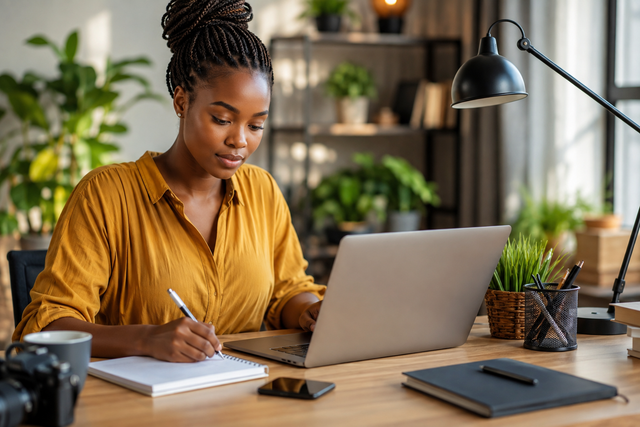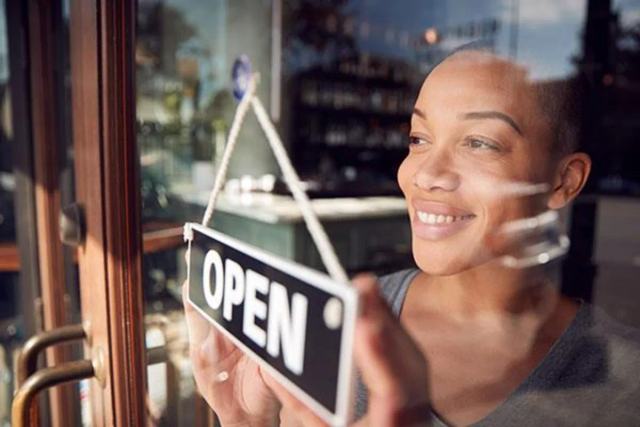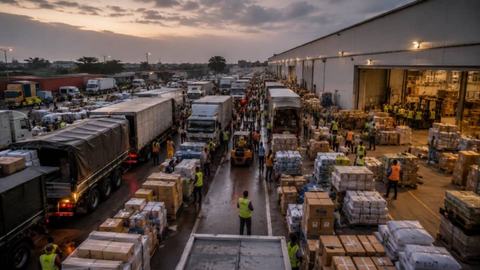

There is something about watching a woman build a business from almost nothing that makes me stop and pay attention.
Not because women building businesses is new. It isn't.
What feels different to me is the scale of the ambition.
Today, I see women moving beyond the traditional idea of what a "women's business" should look like. They are building technology companies, fashion brands, financial platforms, education businesses, media companies, beauty brands, consulting firms and digital businesses that can reach customers far beyond their immediate communities.
And increasingly, they are doing it in a world where a laptop is helpful but a smartphone can sometimes be enough to begin.
That is the part of the current entrepreneurship story that I find particularly interesting.
Recent developments across Africa and the wider business world show growing attention on women-led businesses, with entrepreneurship programmes increasingly focusing on access to finance, business development, digital skills and larger markets.
To me, those developments represent something bigger than statistics.
They represent a change in mindset.
For a long time, entrepreneurship was presented as something you pursued after you had enough money, enough connections, enough experience, enough confidence or enough permission.
But the women I see building businesses today increasingly seem to be asking a different question:
"What can I start with what I already have?"
That question changes everything.
Instead of waiting until everything is perfect, they are testing ideas. Instead of building enormous companies immediately, they are starting small. Instead of depending entirely on physical locations, some are using digital platforms to find customers, sell products, build communities and deliver services.
And I think this is where the story becomes particularly relevant for women watching from Africa.
This isn't just happening in Silicon Valley, London or other major business centres.
It is happening much closer to home.
Women across Africa are building businesses around fashion, agriculture, education, beauty, food, finance, media, technology, professional services and countless other industries.
A woman running a small business in Nigeria no longer has to think only about the people living around her.
Her potential customer could be in Lagos.
Or Abuja.
Or Accra.
Or London.
Or Toronto.
Or somewhere she has never visited.
The internet has made the marketplace much bigger than the street where the business began.
And that creates an extraordinary opportunity but also a responsibility.
One lesson I keep coming back to is that entrepreneurship is not really about having a beautiful logo, an impressive social media page or a sophisticated business name.
Those things can help.
But they are not the business.
The business is the problem you solve.
The person you help.
The value you create.
The reason someone is willing to exchange their money for what you offer.
That is why I think one of the most interesting opportunities emerging from this new business environment is the ability to sell services that help other businesses grow.
Think about lead generation.
Every business needs customers, but many business owners struggle to consistently identify the right people to sell to. Someone who learns how to research potential customers, identify qualified prospects and help businesses build a reliable pipeline can turn that skill into a genuine service business.
Platforms such as "AuxiSherpa's AI-Powered Lead Generation service" are examples of how this type of business support is becoming increasingly accessible to entrepreneurs and small businesses.
The same principle applies to email marketing.
A business may have hundreds or thousands of potential customers who have already shown interest, but without consistent communication, many of those relationships can disappear.
Email marketing helps businesses stay connected with their audiences, promote useful offers, nurture potential customers and encourage previous customers to return.
That means someone who understands email campaigns, customer communication and online marketing can build a service around helping businesses turn attention into relationships and relationships into revenue. "AuxiSherpa's Direct Email Marketing service" offers this type of support for businesses looking to use email campaigns and outreach as part of their growth strategy.
What I find fascinating is that neither opportunity necessarily requires someone to own a huge company before getting started.
A person can learn the skill, understand the market, begin offering the service and gradually build from there.
That is the beauty of the modern digital economy.
You don't necessarily need to start big.
You need to start intelligently.
Whenever I think about entrepreneurship, I often think about the woman who has an idea but keeps telling herself:
"I don't have enough money."
Maybe she doesn't.
But perhaps she has a smartphone.
She has internet access.
She has knowledge.
She has an experience that someone else needs.
She knows how to cook.
She understands fashion.
She can teach.
She can write.
She can design.
She can organise events.
She understands social media.
She knows how to solve a problem that other people struggle with.
Those things have economic value.
And this is where I believe the modern digital economy is quietly changing the rules.
A woman can start by turning her knowledge into a simple digital product,a guide, checklist, template, mini-course, workbook or educational resource.
She can offer a service through social media.
She can build a small audience around a specific problem.
She can manage social media accounts for small businesses.
She can learn lead generation and help businesses find potential customers.
She can learn email marketing and help businesses communicate with those customers.
She can become an affiliate marketer.
She can sell digital products without worrying about physical inventory.
None of these automatically guarantees success.
But they create something extremely important:
a low-cost place to begin.
And sometimes, beginning is more valuable than having the perfect business plan sitting inside a notebook for five years.
When I look at the women entrepreneurs emerging across different industries, I don't think the biggest story is simply that more women are becoming founders.
I think the bigger story is ownership.
Ownership of ideas.
Ownership of skills.
Ownership of income.
Ownership of time.
Ownership of personal brands.
Ownership of businesses that can potentially grow beyond one person's physical presence.
That is powerful.
And it changes how we should teach entrepreneurship to younger women and girls.
We should not only teach them how to look for jobs.
We should teach them how to identify problems.
How to understand customers.
How to price value.
How to communicate.
How to manage money.
How to use technology.
How to build an audience.
How to protect their ideas.
How to recover from failure.
And perhaps most importantly, how to start before they feel completely ready
But I don't want to romanticise entrepreneurship.
Being a woman in business does not suddenly become easy because technology exists.
Women still face serious challenges, including access to funding, profitability pressures, limited networks, family responsibilities and difficulties reaching larger markets.
That matters.
Because telling women to "just start" without acknowledging the realities they face isn't empowerment. It is an oversimplification.
Women need access to capital.
They need useful business education.
They need mentorship.
They need supportive networks.
They need digital skills.
They need markets.
And they need environments where failure doesn't permanently destroy their opportunity to try again.
Technology can lower some barriers.
It cannot eliminate all of them.
That distinction is important.
If there is one thing I would take from the rise of women entrepreneurs, it is this:
Don't underestimate the value of what you already know.
Sometimes we spend years looking outside ourselves for the business idea.
Meanwhile, the idea is hiding inside our experience.
The mother who knows how to prepare affordable meals may have knowledge worth packaging.
The fashion enthusiast who knows how to style outfits may have a service worth selling.
The teacher who explains difficult subjects exceptionally well may have an online education opportunity.
The woman who has spent years helping businesses manage their social media may have a consulting business waiting to be built.
Someone who understands how to find potential customers could build a lead generation service.
Someone who understands how to communicate with customers consistently could build an email marketing service.
The person who has learned something through years of trial and error may have a digital guide that saves somebody else years of frustration.
That is why I don't think the future belongs only to people with huge startup capital.
I think part of the future belongs to people who can recognise the value in their knowledge and creatively turn it into something useful.
And increasingly, that can begin with the device already sitting in their hands.
When we read stories about women building companies, it is easy to admire the founder at the top and forget the person she was before the business existed.
Before the company came the idea.
Before the idea came the problem.
Before the first customer came the decision to try.
And before the first sale, there was probably a moment when she wondered whether anyone would actually care.
That is the part of entrepreneurship I find most inspiring.
Not the polished success story.
The beginning.
Because every established business once looked like a risky idea.
And every entrepreneur once had to decide whether to keep waiting or take the first step.
For women considering entrepreneurship today, the opportunity is not necessarily to copy someone else's business.
It is to identify what you know, understand what people need, learn how to communicate that value, and use the tools available to you to test the idea.
The smartphone may not build the business for you.
But it can give you a starting point.
And sometimes, that is all you need to take the first serious step.
I believe the next generation of women entrepreneurs will not be defined simply by how many businesses they create.
They will be defined by the problems they solve.
By the communities they build.
By the opportunities they create for others.
And by their willingness to turn knowledge into value.
The women building businesses today are showing us something important: you don't always need to wait for the world to create a seat for you.
Sometimes, you can build the table.
And sometimes, you can start building it from the phone already in your hand.
If you have an article, opinion piece, or news story you'd like published on Global New Arena, or you're ready to begin your journey toward building a profitable digital business from your phone, or you'd like to explore ways to help your own business attract more customers and stay connected with them, I'd love to hear from you. Send us an email here and let's start the conversation.
Read more at Global News Arena