The 2026 midterms are the United States elections scheduled midway through the presidential term that began in January 2025. Unlike a presidential election, they do not select a president. Instead, voters choose lawmakers and other officeholders whose decisions shape national policy, state priorities and public services.
READ: Dr. Oye Owolewa: Biography, Career and Public Service
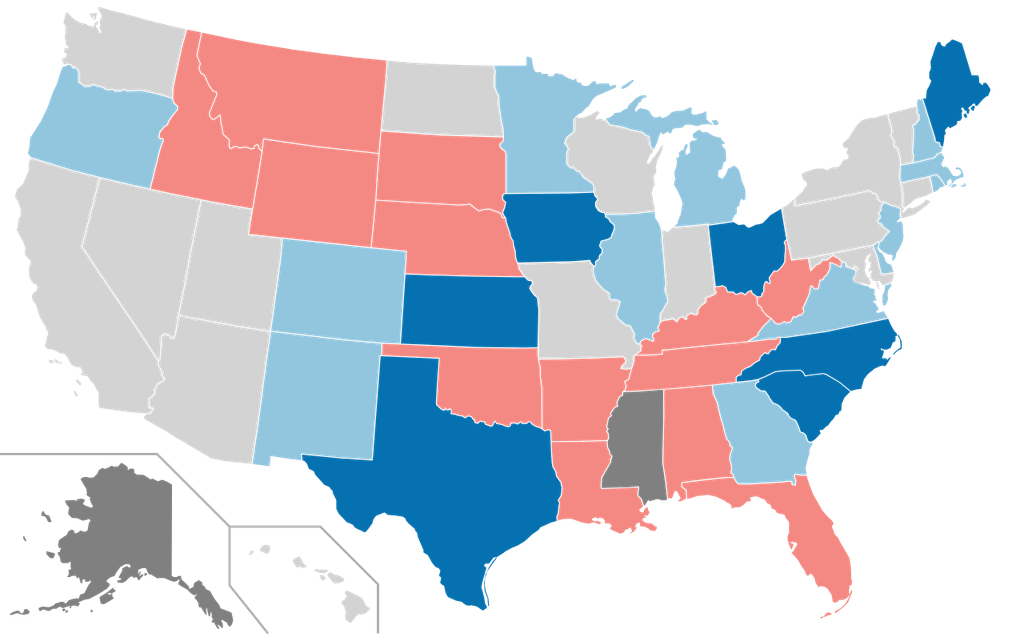
The regular federal general election is scheduled for November 3, 2026. All 435 voting seats in the House of Representatives are contested, alongside roughly one-third of the Senate. Many states also elect governors, legislators and other officials, although the offices on each ballot depend on where a voter lives.
2026 midterms: Origins and constitutional history
READ: Lead City University: Biography, History and Learning
Midterm elections arise from the different terms of office established by the US Constitution. House members serve two-year terms, senators serve six-year terms and presidents serve four-year terms. This arrangement ensures that congressional elections occur both alongside presidential contests and halfway between them.
The Senate is divided into three classes, with one class normally facing election every two years. That staggered structure provides continuity, while the House faces a complete electoral test each cycle. Special elections can add contests when vacancies occur.
Over time, midterms have become a major measure of public opinion about an administration. The president’s party has often lost House seats in these elections, although that historical tendency is not a rule or a prediction. Candidate quality, economic conditions, turnout and local concerns all influence outcomes.
How the 2026 elections work
The midterms are not one nationwide contest with a single winner. They comprise separate elections conducted under federal and state law. House candidates compete in congressional districts, while Senate candidates run statewide. Each state has two senators, regardless of its population.
Political parties generally select nominees through primaries or other procedures permitted under state law. Independent and minor-party candidates may also qualify for the ballot. Registration deadlines, early voting arrangements and mail voting rules vary by jurisdiction.
For Congress, the central institutional question is which party holds a majority in each chamber. The House and Senate can be controlled by different parties. Their members serve in a separate branch of government from the president, with constitutional powers that do not depend on presidential approval.
Why the midterms matter
Congress writes federal legislation, approves spending and oversees the executive branch. The Senate also considers presidential nominations for many senior government positions and federal judgeships. Changes in congressional control can therefore affect both policy and the administration’s ability to advance its agenda.
State contests have their own importance. Governors and legislatures influence education, transportation, public health, criminal justice and state budgets. Some jurisdictions also put ballot measures before voters, allowing direct decisions on constitutional amendments or other policy questions.
For voters, the consequences are both national and local. A congressional election can alter the balance of power in Washington, while a state legislative race can affect decisions much closer to home.
Nigerian American participation and representation
Nigerian Americans are part of the wider range of communities participating in US civic life as voters, organizers, donors and candidates. Their involvement belongs to a longer history of immigrant communities building political influence through local institutions and public service.
READ: Pennsylvania: Biography, History and State Identity
Representation can bring different professional backgrounds, cultural experiences and community concerns into government. However, Nigerian American candidates, like other candidates, have individual political positions and constituencies. Shared ancestry does not imply a single party affiliation or policy agenda.
The 2026 midterms provide an electoral setting in which that participation can develop. Understanding any candidate’s achievement requires identifying the office contested and distinguishing a party nomination from a general election victory. The broader story is the continuing process through which Americans seek a voice in government.
More from Global News Biography. Further reading: 2026 midterms on Wikipedia.
Are you interested in learning how to write professionally and earn money as a writer and content creator? Contact Auxi Chat today to start your writing journey immediately.
Need a professional website in 72 hours? Contact Auxi Chat
If you have an article, opinion piece, event or news story you would like published, Global News Arena would love to hear from you.