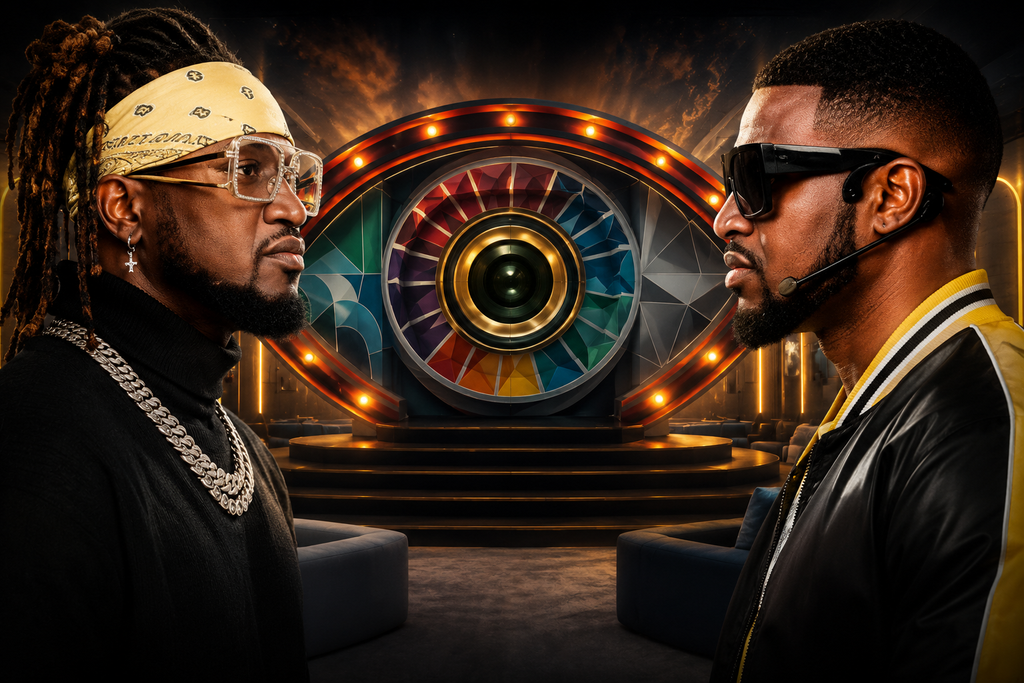
I have been thinking about something since this P-Square drama started taking over Nigerian social media.
For years, I have watched Big Brother Naija become almost like a national calendar.
You know what I mean.
Once Big Brother starts, Nigeria knows.
People who claim they don't watch Big Brother somehow know who was nominated.
People who say they don't care about the housemates somehow know who fought with whom.
People who don't even vote somehow have strong opinions about who should win.
And I understand why.
Big Brother is very good at getting our attention.
The show is designed around it.
There is a house.
There are cameras.
There are characters.
There are challenges.
There are relationships.
There are arguments.
There are nominations.
There are evictions.
There is suspense.
There is a prize.
And there is an audience waiting for the next thing to happen.
Season 11 is currently running with 24 housemates competing for a record ₦160 million prize package, with ₦100 million in cash and an SUV among the rewards. The show launched on July 26, 2026, and the organisers have positioned the season around a new crop of personalities, twists and entertainment.
So you would expect Big Brother to be one of the biggest things Nigerians are talking about right now.
And it is.
But then P-Square entered the conversation.
And suddenly, I started noticing something.
People who were supposed to be discussing Big Brother were discussing Peter.
Then Paul.
Then Jude.
Then another family member.
Then another statement.
Then another reaction.
Then another video.
And before long, people were asking each other:
“Please, who can explain what is happening?”
That is when it occurred to me that we are watching two very different examples of the same thing.
Attention.
Big Brother has built a machine for capturing attention.
P-Square has built something that is naturally generating attention because people already care about the people and the story involved.
One is scheduled.
The other is unfolding.
One is produced.
The other is organic.
But both are teaching us something about the economy we are now living in.
Because whether you realise it or not, attention has become one of the most valuable currencies on the internet.
Think about what happens when people pay attention to something.
They search for it.
They talk about it.
They share it.
They comment.
They watch videos.
They follow accounts.
They buy things.
They subscribe.
They recommend it.
They tell somebody else.
And suddenly, a person's attention has economic value.
This is why companies spend billions on advertising.
It is why brands sponsor television shows.
It is why influencers get paid.
It is why YouTubers can build businesses.
It is why bloggers can make money from websites.
It is why TikTok creators can sell products.
It is why businesses want followers.
But there is something I think many people misunderstand.
They think the goal of the internet is to get attention.
It isn't.
The real goal is to earn attention and then know what to do with it.
There is a huge difference.
You can have 500,000 followers and still have a terrible business.
You can have 5,000 followers and have a very profitable one.
You can have a viral video and make nothing.
You can have a small audience that trusts you and makes a living.
That is why I find the P-Square story so useful for thinking about this.
Look at what is happening.
Peter speaks.
People pay attention.
Paul responds.
People pay attention.
Another family member speaks.
People pay attention.
Somebody posts a reaction.
People pay attention.
Someone creates a summary.
People pay attention.
A blogger writes an article.
People click.
A YouTuber explains the timeline.
People watch.
A TikTok creator gives an opinion.
People comment.
One story creates hundreds of pieces of content.
That is the attention economy happening right in front of us.
And the really interesting part is that nobody planned all of it.
There isn't a producer sitting somewhere saying, “Today at 4pm, let's make Nigerians discuss Peter Okoye.”
The audience itself is helping distribute the story.
That is the power of organic attention.
And it is something ordinary people can learn from.
You don't need to be P-Square.
You don't need to be Big Brother.
You don't need millions of followers.
You need to understand what people care about.
That doesn't mean you should start spreading celebrity gossip.
Please don't.
😂
It means you need to find the intersection between what you know and what people want to know.
Maybe you understand fashion.
People want to know how to dress better.
Talk about it.
Maybe you understand real estate.
People want to know how to find affordable property.
Talk about it.
Maybe you know skincare.
People have questions.
Answer them.
Maybe you understand farming.
Teach people.
Maybe you are good at business.
Explain things.
Maybe you are a teacher.
Create educational content.
Maybe you understand AI.
Help people use it.
Maybe you know how to find scholarships.
Share what you know.
Maybe you understand travel.
Help people plan better.
The point is not simply to “create content.”
The point is to become useful enough that people choose to give you their attention.
That distinction matters.
Because attention without trust is fragile.
Today you are trending.
Tomorrow somebody else is trending.
We have seen this happen so many times.
One celebrity dominates social media on Monday.
Another person takes over on Tuesday.
A new controversy arrives on Wednesday.
By Friday, nobody remembers the Monday story.
That is why I don't think virality should be the ultimate goal of a digital business.
Virality is attention.
An asset is what you build with the attention.
This is where Big Brother is particularly interesting.
Look at what surrounds the show.
Sponsors.
Advertising.
Voting.
Social media.
Content.
Merchandising.
Brand partnerships.
Media coverage.
Clips.
Interviews.
Fan communities.
The programme doesn't simply attract attention.
It has an entire commercial ecosystem around that attention.
That is the difference between having attention and monetising attention.
And that is where I want to bring this conversation to the person reading this who may be thinking, “Okay, but what does this have to do with me?”
Everything.
Because you also have an attention economy.
Maybe it is smaller.
Maybe your audience is 100 people.
Maybe it is 500.
Maybe 2,000.
Maybe 10,000.
But if those people trust you, you have something valuable.
Imagine you are a fashion designer with 3,000 followers.
You could simply post pictures of clothes every day.
Or you could teach your audience how to choose fabrics, how to measure themselves, how to style outfits, how to avoid common tailoring mistakes, how to prepare for weddings and how to build a wardrobe.
Now you are not simply showing clothes.
You are becoming a resource.
That creates trust.
And trust creates opportunities.
Maybe you sell clothes.
Maybe you sell a course.
Maybe you sell a styling guide.
Maybe you offer consultations.
Maybe you create templates.
Maybe you recommend products through affiliate marketing.
Maybe brands eventually pay you to reach your audience.
The same thing works in almost every industry.
And this is why I think content creation is one of the most misunderstood online opportunities.
People hear “content creator” and immediately imagine somebody dancing on TikTok.
No.
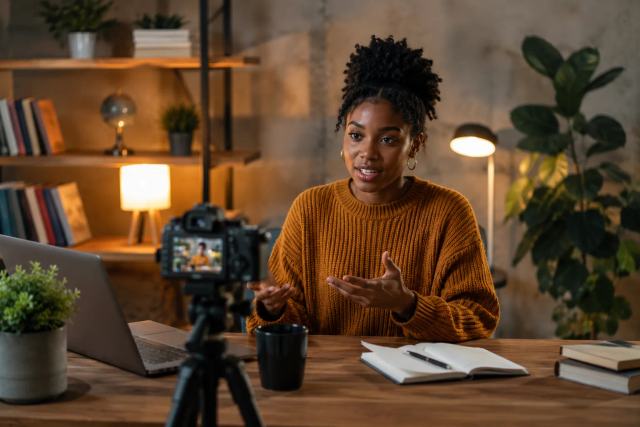
A content creator can be a teacher.
A lawyer.
A farmer.
A doctor.
A travel consultant.
A fashion designer.
A business coach.
A mechanic.
A chef.
A real estate agent.
A writer.
A researcher.
A parent.
Anybody with useful knowledge can become a content creator.
The question is:
Can you explain what you know in a way that makes another person want to keep listening?
That is a skill.
And storytelling is part of it.
Look at P-Square again.
Why are people still interested after all these years?
Because there is a story.
There is history.
There are characters.
There is conflict.
There are unanswered questions.
There is emotion.
There is nostalgia.
There is suspense.
There is a reason to come back tomorrow.
That is storytelling.
And storytelling is not just for entertainment.
It is one of the most valuable skills in marketing.
A business that can tell its story well can make people care.
A creator who can explain an idea well can build an audience.
A freelancer who can communicate their value clearly can win clients.
A blogger who can make an ordinary subject interesting can get readers.
A YouTuber who knows how to keep people watching can build a channel.
A business owner who understands attention can sell without shouting.
This is why I am so interested in helping people develop skills around digital marketing, entrepreneurship, personal branding, content creation and AI.
Courses such as Digital Marketing, Personal Branding, Entrepreneurship 101, Freelancing Foundations, AI Literacy, Prompt Engineering and Content Creation & Video are really about helping people understand how to participate in this new economy rather than simply watch it.
And once you understand the attention side, you can start thinking about the business side.
How do I turn readers into subscribers?
How do I turn followers into customers?
How do I build an email list?
How do I create a website?
How do I rank on Google?
How do I generate leads?
How do I sell a digital product?
How do I use WhatsApp properly for business?
How do I automate parts of the customer journey?
Those are the questions that turn attention into an actual business.
That is why services around SEO, lead generation, website design, social media management, WhatsApp automation, blogging automation, AI automation and digital business systems exist.
And perhaps the most important thing is this:
You don't need to wait until you have a huge audience before you start.
Start with the audience you have.
If ten people are listening, serve the ten people.
If 100 people are reading, serve the 100.
If 1,000 people are watching, serve the 1,000.
Don't become obsessed with numbers that don't yet exist.
Build trust with the people who are already there.
I think this is where many people get social media wrong.
They say:
“I only have 300 followers.”
Okay.
But who are the 300?
Do they know you?
Do they trust you?
Do they understand what you do?
Do they have a problem you can solve?
Would they recommend you?
Would they buy something useful from you?
Those questions are much more important than simply asking how many people clicked “follow.”
Because attention is not automatically an asset.
Attention becomes an asset when you can build something around it.
That something could be a business.
A newsletter.
A website.
A community.
A course.
An ebook.
A digital product.
A service.
An affiliate marketing business.
A YouTube channel.
A consulting practice.
A freelance career.
A brand.
And I think that is perhaps the biggest lesson I am taking from the strange situation we are watching between Big Brother Naija and P-Square.
Big Brother demonstrates what happens when you deliberately build an environment designed to capture attention.
P-Square demonstrates what happens when years of history, emotion, fame and curiosity suddenly collide and create organic attention.
But neither example matters if we don't understand what comes after attention.
What do you build?
That is the question.
Because attention without an asset disappears.
Attention without trust disappears.
Attention without a relationship disappears.
Attention without a useful offer disappears.
And attention without a plan can simply become noise.
So if you are reading this and thinking about starting an online business, don't start by asking:
“How do I go viral?”
Start by asking:
“Who do I want to help?”
Then ask:
“What do they need?”
Then:
“What can I teach, create, sell or solve?”
Then start creating content around that problem.
Answer questions.
Tell stories.
Share experiences.
Explain things.
Show people how to do something.
Be useful.
Do it consistently.
Eventually, people will begin to associate your name with a particular solution.
That is how a personal brand starts.
That is how an audience starts.
That is how a business starts.
And sometimes, that is how an income stream starts.
The P-Square story has reminded Nigerians of the power of an old catalogue.
Big Brother is reminding us of the power of a carefully built entertainment machine.
And the internet is giving the rest of us the opportunity to build our own smaller versions of these things.
Not necessarily entertainment empires.
Not necessarily millions of followers.
But something that belongs to us.
Something people can discover.
Something people can trust.
Something that can eventually pay us.
So, yes, I will probably keep watching Big Brother.
And yes, I am still curious about the next episode of the P-Square saga.
But I also keep thinking about the person sitting somewhere in Nigeria with a smartphone, an idea and a skill they haven't monetised yet.
That person may not realise it, but they are already holding some of the tools they need.
The question is whether they are going to use the phone to spend another three hours watching other people build their stories, or whether they will spend one of those hours learning how to build their own.
Because in this new economy, attention is valuable.
But ownership is even better.
And if you can learn how to earn attention, build trust and turn that trust into something useful that people are willing to pay for, you are no longer just part of the audience.
You have become part of the business.
If you have an opinion, an article, a story or an idea that you believe Nigerians should be talking about, send it to Global News Arena. I would love to give more people a platform to explain what they see, what they know, and what they think.
And if you are ready to turn your own knowledge, creativity or skills into something digital, start where you are. You don't need to wait for a perfect moment. Your first audience may be small. Your first product may be simple. Your first income may be modest.
But every big digital business begins with somebody deciding to create something instead of simply consume.
If you are ready to advertise with us, or you have an article, opinion piece, or news story you'd like published on Global News Arena, I'd love to hear from you. Send me an email. And if this has made you think about turning something you know into a digital product, perhaps that is your sign to stop thinking about it and start building.
Read more at Global News Arena.