Cancer prevention does not always begin in a hospital. Sometimes, it begins with something as ordinary as what we put on our plates, how much we move our bodies, whether we smoke, how much alcohol we drink, how we protect ourselves from the sun and whether we take unusual changes in our bodies seriously.
That is why I believe the conversation about cancer should not begin only when someone receives a diagnosis. By then, everyone is already asking questions about treatment, medication, hospitals and survival. We also need to talk about what we can do before that moment.
Cancer cannot always be prevented. Age, genetics, infections, environmental exposures and other factors can influence a person's risk. However, that does not mean we are completely powerless.
The World Health Organization says about 38% of cancers can currently be prevented by avoiding risk factors and implementing evidence-based prevention strategies.
That statistic alone should make us pause.
If a significant proportion of cancers can be prevented or their risks reduced, then healthy living should not be something we discuss only when illness arrives. It should become part of our everyday lives.
And the good thing is that cancer prevention does not necessarily require an expensive lifestyle.
It can begin with our food.
A healthy diet does not mean spending huge amounts of money on imported "superfoods" or following every diet trend that becomes popular on social media. Sometimes, it is simply about making better choices more consistently.
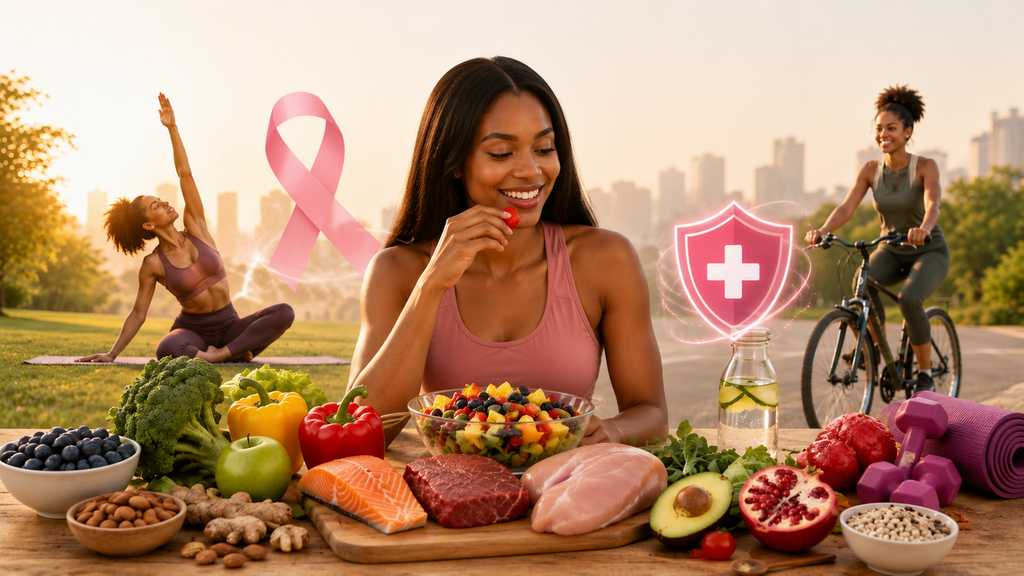
Eating more vegetables, fruits, beans and whole grains while reducing excessive consumption of highly processed foods, sugary drinks and processed meat can contribute to a healthier lifestyle. The World Cancer Research Fund recommends a dietary pattern built around whole grains, vegetables, fruits and beans, while limiting fast foods, sugary drinks, red and processed meat and alcohol.
For me, the important word here is consistency.
We do not have to transform our entire diet in one day. We can start by adding more vegetables to our meals. We can choose fruit instead of another sugary snack. We can drink more water. We can reduce how frequently we consume heavily processed foods.
These decisions may appear small, but small decisions repeated over many years can become powerful.
The same thing applies to physical activity.
Many people hear the word "exercise" and immediately think about gym memberships, expensive equipment or spending hours lifting weights. But staying active does not have to look like that.
Walking counts.
Dancing counts.
Climbing stairs counts.
Moving around instead of sitting for hours counts.
Regular physical activity is associated with a lower risk of several cancers and can also help with maintaining a healthier weight.
So, if you have been waiting for the perfect time to start exercising, perhaps the perfect time is simply now.
You may not have two hours every morning.
You may not be able to afford a gym.
You may have a busy schedule.
But you can start with what is possible. Take a walk. Move more during the day. Spend less time sitting. Build gradually.
The objective is not to become extremely fit for one week and then stop. It is to create habits that can remain part of your life.
And while we are talking about habits, tobacco is one area that deserves particular attention.
The World Health Organization identifies tobacco as the leading preventable cause of cancer globally. Its 2026 analysis found that tobacco was responsible for about 15% of all new cancer cases in 2022.
Smoking is associated with lung cancer and several other cancers, making quitting one of the most important health decisions a smoker can make.
For someone who has never smoked, avoiding tobacco is equally important.
And for someone who is trying to quit but finding it difficult, seeking professional support should not be viewed as weakness. Addiction can be difficult to overcome, and getting help can be part of taking responsibility for your health.
Alcohol is another issue we should be honest about.
Because drinking is socially accepted in many communities, it is easy to forget that alcohol is also linked to cancer. WHO notes that alcohol consumption is associated with several types of cancer, with risk generally increasing as alcohol consumption increases.
This does not mean that everyone who drinks alcohol will develop cancer. It means we should understand the risk instead of pretending it does not exist.
Sometimes prevention is simply about asking ourselves difficult questions.
Do I really need to drink this much?
Can I reduce my intake?
Can I make healthier choices?
Those questions may not seem dramatic, but they can be important.
The same applies to body weight. Unfortunately, conversations about weight are often dominated by beauty standards, social media and the pressure to look a certain way. But maintaining a healthy weight should not be primarily about appearance.
It should be about health.
Excess body weight is associated with an increased risk of several cancers, including colorectal, breast, endometrial, kidney and oesophageal cancers.
That does not mean people should become obsessed with weighing themselves every morning or comparing their bodies with celebrities online.
It means we should focus on sustainable habits: nutritious food, regular physical activity and a lifestyle that supports our overall health.
There is also something else many people overlook, especially those who live in places with strong sunlight.
Our skin needs protection too.
Excessive exposure to ultraviolet radiation increases the risk of skin cancer, which is why WHO recommends reducing ultraviolet exposure and using appropriate sun-protection measures.
Seeking shade, wearing protective clothing and using sunscreen where appropriate are simple ways to reduce unnecessary exposure.
Then there is vaccination, which is another part of cancer prevention that deserves more attention.
Cancer prevention is not only about what we eat or how much we exercise. Some infections can increase cancer risk. Human papillomavirus, commonly known as HPV, is associated with several cancers, while hepatitis B can increase the risk of liver cancer. WHO recommends vaccination against HPV and hepatitis B as important cancer-prevention measures where appropriate.
This is one reason credible health information matters.
Today, we can find thousands of health claims online within seconds. Unfortunately, having access to information does not mean that everything we see is accurate.
A WhatsApp message claiming that a particular herb can cure cancer is not automatically medical evidence.
A TikTok video saying that one particular food can "destroy cancer cells" should not automatically be trusted.
A celebrity's personal experience should not replace medical advice.
Cancer is not one single disease, and there is no universal food, drink or home remedy that can guarantee protection from cancer.
Before sharing a health claim, I believe we should ask ourselves a simple question: where did this information come from?
Is it supported by credible evidence?
Has it been confirmed by a recognised health organisation or qualified healthcare professional?
Those questions can prevent us from spreading information that could cause someone to delay proper medical treatment.
And that brings me to another important part of protecting ourselves: paying attention to our bodies.
A persistent lump, unexplained bleeding, unusual weight loss, prolonged cough, changes in bowel or bladder habits or another unusual symptom should not simply be ignored.
Having one of these symptoms does not automatically mean a person has cancer. There are many possible causes for different symptoms.
But when something unusual persists, getting appropriate medical attention is far better than spending weeks searching for answers on social media.
Early detection can make some cancers easier to treat, which is why prevention and early diagnosis should go hand in hand.
The internet can help us learn, but it cannot replace a proper medical assessment.
Interestingly, this is also where I see an important lesson about the way we use our smartphones.
The same phone that many people use for entertainment, celebrity gossip and endless scrolling can also become a powerful tool for learning, creating and earning.
Think about what is already in our hands.
We can learn content writing.
We can learn digital marketing.
We can create videos.
We can build a website.
We can start a blog.
We can research topics.
We can create educational content.
We can communicate with clients.
We can even use artificial intelligence tools to help us brainstorm, organise and edit our work.
But there is a major difference between consuming information and creating value from information.
That difference is what can turn a smartphone from an entertainment device into a business tool.
For instance, someone who enjoys researching health topics can learn how to create useful health and lifestyle content. Someone who understands travel can create travel guides. Someone who loves technology can teach people how to use digital tools. Someone who enjoys writing can offer content-writing services to businesses and websites.
The possibilities are enormous, but they all have one thing in common: you have to solve a problem for someone.
That is where the real opportunity lies.
It is not simply about saying, "I want to make money online."
It is about asking, "What useful skill can I learn, and what problem can I solve with it?"
Content writing is one example because businesses, websites, blogs and organisations constantly need people who can explain information clearly.
And you do not necessarily need an expensive office to begin.
You can start learning from your smartphone.
You can practise writing from your phone.
You can create samples from your phone.
You can build an online portfolio.
You can reach potential clients.
You can gradually turn a skill into an income stream.
Of course, success will not happen simply because someone owns a smartphone. The phone is only the tool. Your discipline, research ability, creativity, consistency and willingness to learn are what determine what you can build with it.
That is actually very similar to cancer prevention.
We cannot control everything about our health, just as we cannot control everything about our financial future. But we can control some of our choices.
We can choose to eat better.
We can choose to move more.
We can choose to avoid tobacco.
We can reduce alcohol consumption.
We can protect ourselves from excessive sunlight.
We can follow appropriate vaccination recommendations.
We can pay attention to unusual changes in our bodies.
And when something concerns us, we can choose to seek qualified medical help rather than relying entirely on information circulating online.
The same mindset can apply to building a digital career.
We can choose to learn.
We can choose to create.
We can choose to improve.
We can choose to start small instead of waiting for everything to be perfect.
Because the truth is that most meaningful things in life are built gradually.
Health is built through daily choices.
Knowledge is built through continuous learning.
Trust is built through consistency.
And a digital business is also built one useful piece of content, one client, one skill and one opportunity at a time.
Cancer prevention cannot guarantee that a person will never develop cancer. No responsible health article should make such a promise.
What prevention can do is help us reduce avoidable risks and make better decisions about the things within our control.
That is enough reason to take it seriously.
We should not wait until a health crisis forces us to start caring about our bodies.
We should not wait until misinformation becomes a problem before learning how to identify credible information.
And we should not wait until financial pressure becomes overwhelming before learning a skill that can potentially create another source of income.
Sometimes, the best time to start protecting your future is before there is a crisis.
Start with one healthier meal.
Take that walk.
Quit that harmful habit.
Ask your doctor about the health concern you have been ignoring.
Verify the information before sharing it.
And if you have been thinking about building something online, start learning.
Your smartphone may be small enough to fit into your hand, but what you can learn, create and build with it can be much bigger than the device itself.
If you have an article, opinion piece, event or news story you would like published, Global News Arena would love to hear from you. And if you are ready to begin your journey toward building a profitable online content-writing business from your phone or laptop, you can take that first step today.
Send your article, story or business enquiry to advertise@globalnewsarena.com.