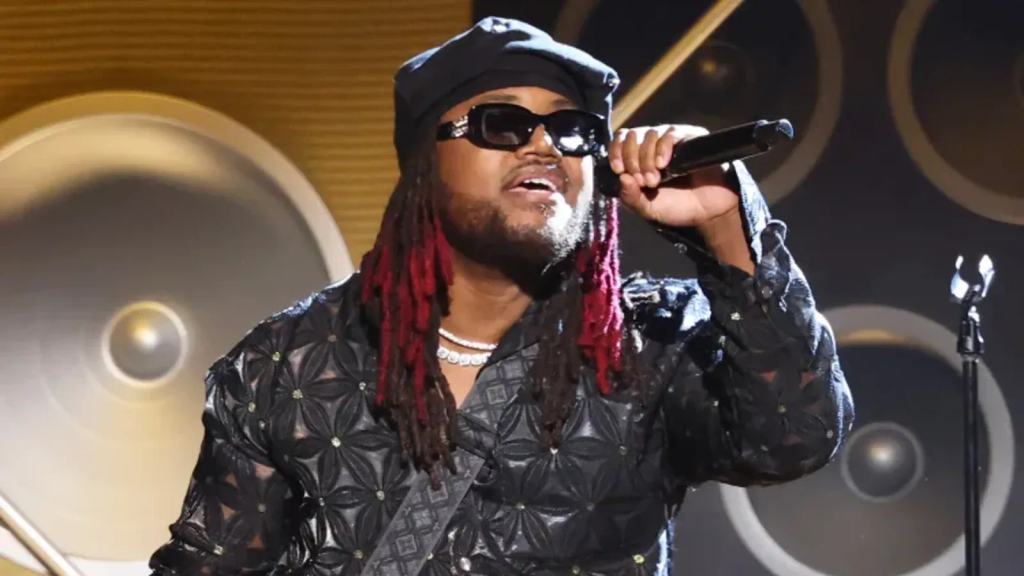
Sometimes, the person helping to create a hit song is not the person whose face appears on the cover. For years, Leon Thomas worked in that space: writing, producing, collaborating and helping other artistes bring their ideas to life. Then a song called “MUTT” began drawing attention to him as a performer in his own right. I find that shift fascinating because it challenges the idea that a career must follow a straight line from discovery to fame.
Leon Thomas III was born in Brooklyn, New York, on August 1, 1993. He began performing at a young age and made an early impression on Broadway, playing Young Simba in The Lion King. He later became familiar to television audiences as Andre Harris on Nickelodeon's Victorious, where his acting and musical abilities were both on display.
But child stardom can be a complicated beginning. Audiences often remember the character long after the performer has moved on. Thomas had to build a musical identity that could stand independently of the television role that introduced him to millions.
He continued developing his music, releasing early solo material and working with other performers. Over time, his reputation as a songwriter and producer grew. One of the most significant examples was his contribution to SZA's “Snooze,” which won the Grammy for Best R&B Song at the 2024 awards. Thomas had also contributed to music by artists including Drake and Ariana Grande.
That behind-the-scenes experience mattered. Songwriting and production require a different kind of discipline from performing. The writer must understand what makes a melody memorable, how a lyric fits a rhythm and how an arrangement supports a voice. Thomas was developing those skills while gradually building his own catalogue.
His solo albums Electric Dusk (2023) and MUTT (2024) brought that work into sharper focus. The title track from MUTT became his breakthrough as a lead artist, combining R&B with elements of funk, rock and a rawer, more restless sound. It showed that he was not simply a songwriter who happened to sing; he had a musical personality of his own.
In 2025, he expanded the MUTT project with a deluxe edition and released the EP Pholks. His profile continued to grow, and in 2026 he received six Grammy nominations. He won Best R&B Album for MUTT and Best Traditional R&B Performance for “VIBES DON'T LIE,” while also receiving nominations in major categories including Best New Artist and Album of the Year.
I think the most interesting part of Leon Thomas's story is the time it took for the public to catch up with the work he had already been doing. We tend to celebrate the breakthrough moment as if success appeared overnight. Yet his journey involved acting, years of musical development, songwriting for other artists and the patient construction of a sound.
His story also offers a useful reminder about creative careers: being talented in one role does not mean you must remain there forever. A person can be the writer in one chapter, the producer in another and the performer in the next.
Leon Thomas has spent years helping other voices become memorable. Now, with his own work receiving major recognition, the question is no longer whether he belongs in the room. It is how far he can take the music he has been building all along.
If you have an article, opinion piece, or news story you'd like published on Global News Arena, or you're ready to begin your journey toward building a profitable digital business from your phone, I'd love to hear from you.
Read more at Global News Arena and Advertise with us