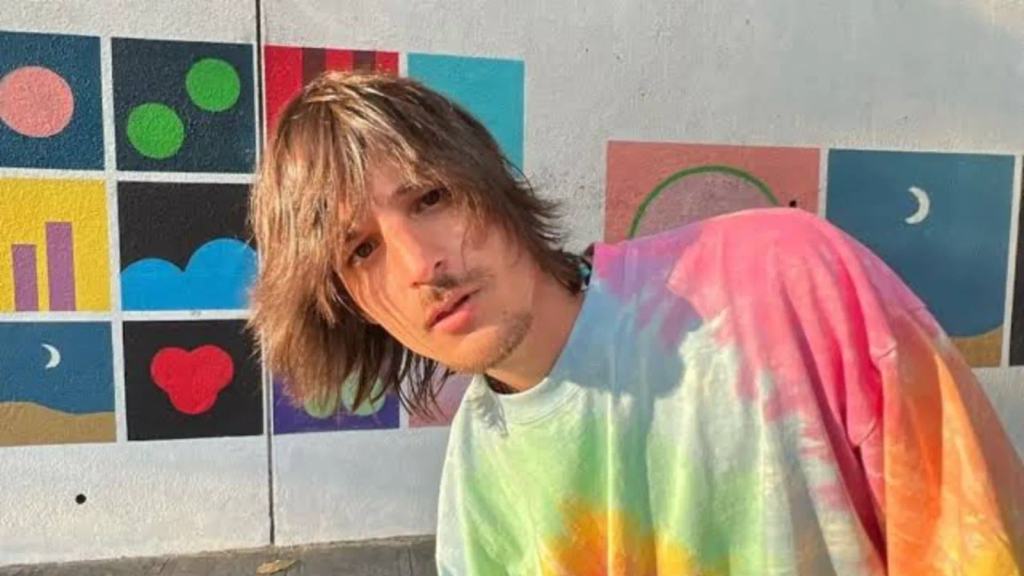
Some songs begin with a marketing plan. Others begin with a feeling the songwriter cannot quite put into words. Danny Ocean's “Me Rehúso” belongs to the second category. It started as a personal song about separation from someone he loved, but it eventually became an international hit that resonated with people experiencing distance, migration and the uncertainty of starting again.
Danny Ocean's real name is Daniel Alejandro Morales Reyes. He was born in Caracas, Venezuela, on May 5, 1992, and grew up in a family shaped by both music and travel. His father was a musician, while his mother's diplomatic work meant that he spent parts of his childhood in different countries. Those experiences exposed him to different cultures and sounds long before he began building his own musical identity.
He studied graphic design and experimented with music independently, releasing early work online. In 2015, he moved to Miami, joining many other Venezuelans who had left home amid the country's difficult political and economic circumstances.
That move became central to the story behind “Me Rehúso.” In 2016, Danny wrote the song for a girlfriend he had left behind in Venezuela. He did not have an elaborate campaign behind it. The song was a personal expression of longing, and he released it online.
Then the audience found it.
“Me Rehúso” spread across Latin America and beyond, eventually becoming one of the defining Latin pop hits of its period. An English-language version, “Baby I Won't,” followed. The song's appeal was not limited to romantic heartbreak. For many listeners, it also carried the feeling of being separated from a person, place or life they wanted to return to.
I think that is what makes the story more compelling than the usual account of a viral hit. The song's emotional centre was specific, but its meaning expanded as other people made it their own. Migrants could hear the pain of distance in it. Couples separated by borders could recognise themselves in it. Listeners who had never left their home countries could still understand the feeling of not wanting to let go.
Success did not instantly turn Danny into a conventional celebrity. In interviews, he has described not being ready for the demands of performing and public attention when the song first took off. He took time to learn and adjust rather than rushing into a life he had not yet prepared for. I find that detail important because viral success can arrive much faster than the confidence or infrastructure needed to sustain it.
He later released projects including 54+1 (2019), @dannocean (2022), Reflexa (2024) and Babylon Club (2025). The latter explored a more summery, escapist sound, offering listeners a different atmosphere from the longing that defined his breakthrough.
Danny Ocean has also continued speaking about Venezuela and the experiences of people who have left it. He has described his relationship with the country as deeply personal, while maintaining that his music is not simply a political manifesto.
His career reminds me that a songwriter cannot always control what a song becomes once it leaves the studio. A track written for one person can become meaningful to millions. A private experience can turn into a public soundtrack.
Danny Ocean began with a song about not wanting to let go. The remarkable thing is how far that feeling travelled.
If you have an article, opinion piece, or news story you'd like published on Global News Arena, or you're ready to begin your journey toward building a profitable digital business from your phone, I'd love to hear from you.
Read more at https://globalnewsarena.com/