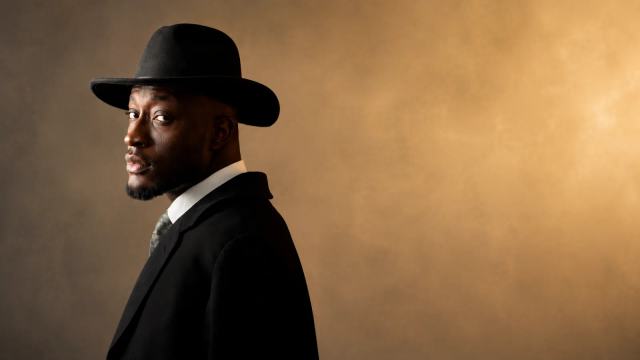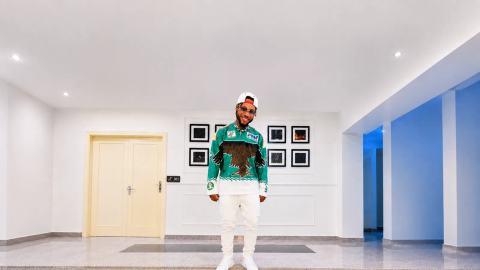
Poco Lee's UK legal case has taken a more serious turn after a London court confirmed that the Nigerian dancer and entertainer is facing five sexual-offence charges and is expected to return to court on September 15, 2026.
The development has brought more clarity to a story that has generated considerable attention online since reports first emerged that Poco Lee had been detained in the United Kingdom. While social media has been filled with questions, reactions and different versions of what happened, the latest information from the court provides something much more important: confirmed details about the legal proceedings.
According to Snaresbrook Crown Court in London, Poco Lee, whose real name is Iweh Pascal Odinaka, has been charged with one count of attempted rape, two counts of rape and two counts of assault by penetration. His next hearing is scheduled for September 15 and has been listed as a plea and trial preparation hearing.
However, there is something I believe everyone following this story needs to understand before jumping into the comments section or sharing another social-media post: being charged with an offence does not mean that someone has been found guilty of that offence.
Poco Lee has not been convicted of the charges. The case is still before the court, and the allegations will have to go through the appropriate legal process before any final determination is made.
That distinction is especially important because this is the kind of story that can easily become bigger on social media than it is in the courtroom. Once the name of a popular entertainer becomes attached to serious allegations, people naturally become curious. They want to know what happened, who is involved and what the outcome might be. Unfortunately, that curiosity can also create an environment where rumours spread faster than verified information.
In Poco Lee's case, that happened almost immediately.
Reports about his detention began circulating in August after his appearance in the United Kingdom. Poco Lee had travelled to London for the Davido and Friends event at the Crystal Palace Bowl on August 14, 2026, and had shared moments from his time in the UK with his followers.
Then came reports that he had been detained, and suddenly the conversation changed.
People who had been following his performances were now asking why he had not returned home, what had happened and whether the reports were true. Different claims began appearing online, but at that point there was limited publicly confirmed information about the exact nature of the case.
As enquiries were made with the court, however, the picture gradually became clearer.
The court confirmed that a case involving Iweh Odinaka was listed and that he was due to appear again on September 15. Further reporting subsequently identified the five charges currently before the court.
And this is where I think responsible reporting becomes particularly important.
There is a huge difference between telling readers what a court has confirmed and repeating everything that people are saying online.
For example, Poco Lee's management and legal representatives have pushed back against some claims circulating online about the case, including claims involving alleged drink spiking. His representatives have said that such claims do not form part of the charges before the court and have urged people to avoid spreading unverified information.
That is something I believe readers should pay attention to.
When a story is trending, it can be tempting to believe that every new post contains another piece of the puzzle. But sometimes it is simply another person repeating information they have not independently verified.
And because this is a criminal case involving serious allegations, careless reporting can have consequences for everyone involved.
The court has also imposed a reporting restriction protecting the identity of the complainant. This is important because sexual-offence cases in the UK can carry anonymity protections for complainants, meaning journalists, bloggers and social-media users need to be extremely careful about publishing information that could reveal the person's identity.
For me, this is one of those moments when being responsible matters more than being first.
Anyone can copy a viral post.
Anyone can write a sensational headline.
Anyone can take an unconfirmed claim and put it on Facebook, TikTok or X.
But it takes something different to stop, check the information and tell readers exactly what has been confirmed and what remains unknown.
That is particularly important when reporting on someone who has not been convicted of a crime.
Meanwhile, the September 15 hearing is now the date many people will be watching. The hearing is listed as a plea and trial preparation hearing, which forms part of the process through which the court deals with the defendant's plea and prepares the case for its next stages.
What happens after that will depend on the legal proceedings, so it would be wrong to predict an outcome before the court has dealt with the matter.
And honestly, that is another reason I think this story is bigger than celebrity gossip.
It shows us how quickly attention can move in today's digital world.
Poco Lee is a well-known entertainer whose career has been built partly on talent and partly on visibility. His dancing, performances, collaborations and social-media presence have helped him build an audience far beyond Nigeria.
Now, the same digital ecosystem that can turn an entertainer into a household name is also turning his legal case into a widely discussed story.
That is the power of attention.
But there is another lesson here that I think ordinary people can take from the situation.
Attention itself can become an asset when you know how to use it responsibly.
You do not have to be a celebrity before you can build an audience online. You do not need a television studio, a newspaper office or a huge team sitting behind you. Today, a smartphone can give you the basic tools needed to research, write, record videos, publish content and connect with people who are interested in what you know.
Someone who enjoys entertainment can build a platform around entertainment news.
Someone who understands technology can create useful smartphone and gadget content.
Someone who understands business can write practical business explainers.
Another person can learn content writing and offer writing services to businesses, bloggers and publishers.
The possibilities are there, but there is an important difference between building an audience and simply chasing views.
If all you care about is going viral, you may eventually find yourself publishing things you cannot prove.
But if you care about building trust, every article becomes an opportunity to show readers that they can depend on you.
That is the kind of digital business I find much more interesting.
Imagine being able to take information that people are already searching for, research it properly, explain it in simple language and publish it from your phone. Over time, that consistency can help you build an audience. From there, legitimate opportunities can include freelance writing, digital publishing, social-media management, affiliate marketing and creating useful digital products.
The important thing is that the foundation is not noisy.
It is valuable.
And perhaps that is one of the biggest lessons I take from the attention surrounding the Poco Lee case. People are searching for information because they want to understand what is happening. The person who can provide that information clearly, accurately and responsibly has something valuable.
So while the internet continues to debate Poco Lee's situation, I believe we should remember that the case is still ongoing.
The confirmed position is that Poco Lee faces five sexual-offence charges in the UK: one count of attempted rape, two counts of rape and two counts of assault by penetration. His next court appearance is scheduled for September 15, 2026, at Snaresbrook Crown Court for plea and trial preparation.
Those charges remain allegations unless and until they are established through the legal process.
Beyond the headlines, there is also a human side to any criminal case, which is why the court's reporting restrictions and the protection of the complainant's identity should be respected.
There will undoubtedly be more reactions before September 15. More social-media posts will appear, more people will have opinions and more information may emerge as the proceedings continue.
But I would rather wait for verified developments than allow speculation to become the story.
Because when everything is competing for our attention, responsible information is becoming increasingly valuable.
And for anyone hoping to build something online, that is a lesson worth remembering: you can use your phone to get attention, but you need trust, consistency and valuable information to turn that attention into something that lasts.
If you have an article, opinion piece, event or news story you would like published, or you are ready to begin your journey toward building a profitable online content-writing business from your phone or laptop, Global News Arena would love to hear from you. Send an email to advertise@globalnewsarena.com.