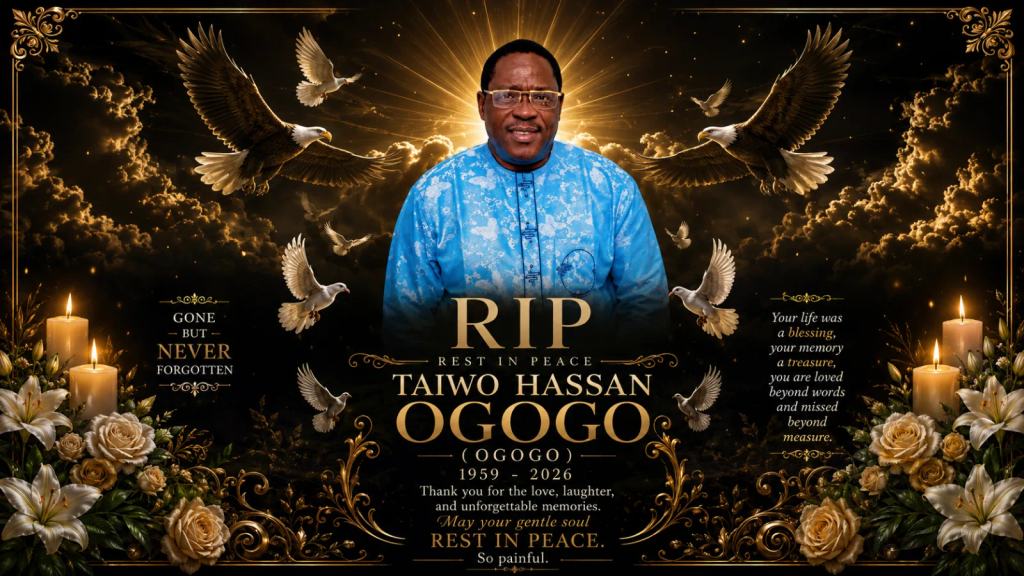
Veteran Nollywood actor Taiwo Hassan, popularly known as Ogogo, has been laid to rest in his hometown of Ilaro, Ogun State, following his death at the age of 66.
His burial on Monday, August 24, brought together family members, friends, colleagues, community leaders, government representatives and admirers who gathered to pay their final respects to one of the most respected figures in Yoruba entertainment.
As I looked at the tributes surrounding Ogogo’s final journey, one thing became clear to me: his death was not just the loss of another famous actor. It marked the end of a remarkable career that stretched across decades and became part of the story of Yoruba theatre and Nigerian cinema.
President Bola Tinubu joined Nigerians in mourning the late actor, describing him as a distinguished artiste whose decades of work contributed to the development of Yoruba-language theatre, Nigerian cinema and the preservation of Nigeria’s cultural heritage. Ogun State Governor Dapo Abiodun also paid tribute to Ogogo, describing him as an exceptional theatre practitioner and an icon whose contribution to the creative industry would not be forgotten.
But beyond the statements from political leaders, it was the presence of Ogogo’s colleagues that perhaps gave the burial its deepest emotional meaning.
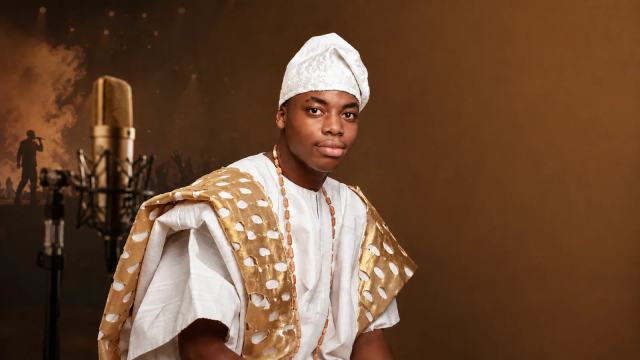
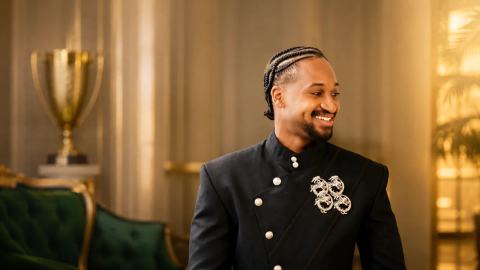
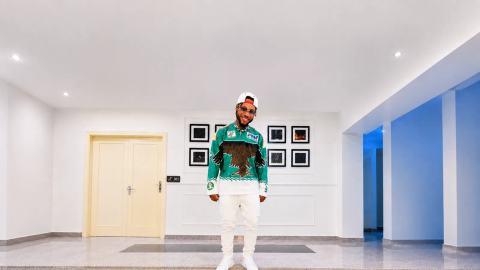
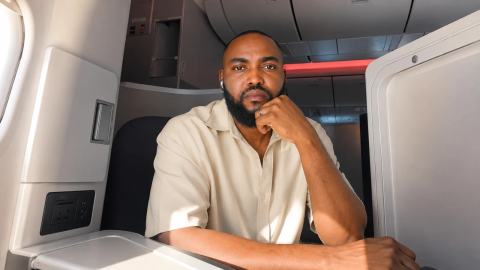
Veteran actors including Jide Kosoko, Yinka Quadri, Mr Latin, Faithia Balogun, Femi Adebayo, Ireti Osayemi and Toyosi Adesanya were among those who gathered to honour their colleague and friend. For people who watched Yoruba movies for years, seeing these familiar faces together at Ogogo’s burial was a powerful reminder of how much history this generation of actors carries.
Yinka Quadri, who shared a long friendship and professional relationship with Ogogo, was visibly affected by the loss. And when I think about the relationship between these veterans, I realise that many of them were not simply entertainers who appeared in movies. They were among the people who helped create the foundation upon which today's Nigerian entertainment industry stands.
That is why I believe Ogogo’s story deserves to be looked at beyond the announcement of his death.
Long before he became a household name, Taiwo Hassan had a different career. Reports indicate that he worked as a mechanic at the Ogun State Water Corporation for about 13 years while developing his passion for acting. He eventually left the job in 1994 to pursue acting full-time.
That part of his story is particularly interesting to me because it reminds us that people do not always begin their lives knowing exactly where their talents will eventually take them.
Sometimes, the dream begins quietly.
Ogogo started acting in 1981, at a time when the entertainment industry was very different from what we know today. There were no TikTok videos capable of reaching millions overnight, no Instagram Reels, no YouTube channels where an upcoming actor could build an audience directly and no smartphones that could turn almost anyone into a publisher or content creator.
Yet Ogogo built his name gradually.
Through theatre and film, he became recognised for his distinctive performances and his contribution to Yoruba-language entertainment. His career continued through different eras of Nigerian cinema, allowing him to remain relevant while the industry itself changed around him.
And that is where I see a lesson for today's generation.
We are living in an age where attention has become one of the most valuable currencies. A single video can make someone famous overnight, while a controversial statement can generate thousands of comments within minutes. Everybody wants to go viral, everybody wants followers and everybody wants their content to be seen.
But Ogogo’s career reminds me that attention is only the beginning.
What you build with that attention is what matters.
A person can have millions of views and still have nothing meaningful to show for them. Another person can have a much smaller audience but build a business, create a useful product, establish a respected brand and develop a career that lasts for years.
That is why I believe young Nigerians should look at the opportunities available through their smartphones differently.
The phone in your hand is not only for watching other people's content. It can become your publishing platform, your classroom, your production studio and even the starting point of a digital business.
Someone who enjoys writing can start producing articles and build a content-writing career. Someone who understands entertainment can create a niche platform around celebrity news, movie reviews or industry analysis. Someone who understands a particular skill can teach it through digital content. Another person can explore affiliate marketing, create useful digital products or provide online services.
The opportunities are there, but the real challenge is developing the discipline to build something consistently.
Ogogo's career did not become significant because he had one viral performance. It became significant because he continued working.
And that is an important distinction in today's digital world.
Going viral can give you attention, but consistency can give you a career.
At the same time, Ogogo's death reminds us that behind the celebrity image is a human being. His family had reportedly sought medical assistance as he battled cancer before his death, adding another painful dimension to the news.
For me, this is also a reminder that we should learn to appreciate people while they are still alive.
It is easy to celebrate someone after death. We suddenly remember their greatest movies, repost their photographs, share their achievements and tell stories about how talented they were. But perhaps the better thing is to recognise people's contributions while they are still here to hear the appreciation.
Ogogo received decades of recognition through his work, and the gathering of colleagues, government officials and admirers at his burial showed the extent of the mark he left behind.
He helped tell Nigerian stories. He helped preserve Yoruba culture through entertainment. He worked with some of the industry's most respected names and became part of the generation that inspired actors who came after him.
That is a legacy worth remembering.
And perhaps this is where Ogogo's story becomes relevant even to those of us who have nothing to do with acting.
Whatever talent you have, take it seriously.
You may not have the resources you want today, but you can begin with what is available to you. You may not have thousands of followers, but you can start by helping the few people who are already listening. You may not have the perfect equipment, but you can learn, practise and improve with what you have.
The digital economy has created opportunities that previous generations did not have, but opportunities alone are not enough. You still need patience, consistency, creativity and the willingness to keep learning.
Most importantly, do not build your entire life around attention.
Build something behind the attention.
That is the part of Ogogo’s story that stays with me.
He did not simply become a familiar face. He created a body of work that remained valuable across generations. Even after his passing, people are still talking about his performances, his career and his contribution to Nigerian entertainment.
That is the difference between popularity and legacy.
As President Tinubu, Governor Abiodun, Nollywood stars, family members and admirers gathered to say goodbye, Ogogo's final journey became more than a funeral. It became a moment for the Nigerian entertainment industry to remember one of its own and for the rest of us to reflect on what we are doing with the opportunities in front of us.
His final journey may have ended in Ilaro, but the stories he told, the characters he brought to life and the influence he had on Nigerian entertainment will continue.
And perhaps the biggest question his life leaves behind is one we should all ask ourselves: when our own journey eventually comes to an end, what will remain because we were here?
For me, that is the real meaning of legacy. It is not only about how many people know your name. It is about what you created, who you inspired, what value you contributed and whether your work continues to mean something even when you are no longer there to promote it.
May Taiwo Hassan “Ogogo” rest in peace, and may his family, friends, colleagues and admirers find strength during this difficult period.
If you have an article, opinion piece, event or news story you would like published, or you are ready to begin your journey toward building a profitable online content-writing business from your phone or laptop, Global News Arena would love to hear from you. Send an email to advertise@globalnewsarena.com.