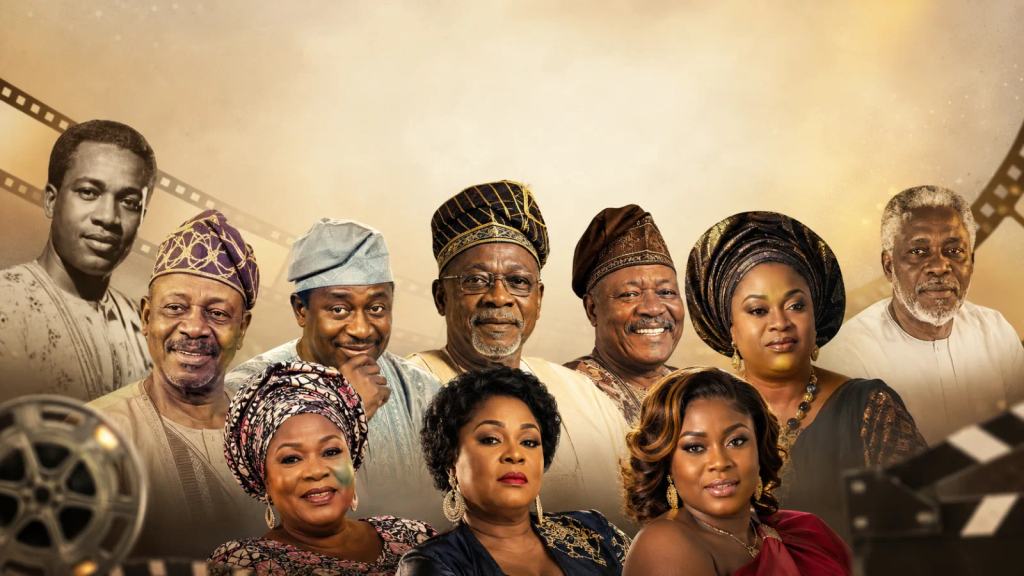
If we are talking about the people who truly changed Nollywood, I cannot talk about the industry's history without giving serious recognition to the Yoruba actors, filmmakers and theatre pioneers who built the foundation long before Nollywood became the global brand it is today.
Hubert Ogunde is one of the first names that comes to mind because his contribution went far beyond acting. He was an actor, playwright, musician, theatre manager and filmmaker who played a major role in the development of modern Nigerian theatre. Through his productions, he combined drama, music, dance and social commentary to tell stories that Nigerians could understand and connect with.
What makes Ogunde's story particularly interesting to me is that he understood the power of Nigerian identity. He did not need to abandon Yoruba culture or imitate foreign storytelling before his work could matter. Instead, he used language, culture and everyday Nigerian experiences as the foundation of his creativity. His work helped demonstrate that indigenous stories could attract audiences and become commercially successful.
And that brings me to another important pioneer, Adeyemi Afolayan, popularly known as Ade Love. His career was closely connected to the Yoruba travelling theatre tradition, but his influence became even more significant as Yoruba storytelling moved into filmmaking. His work, particularly his involvement in Ajani Ogun, helped establish the tradition of Yoruba-language cinema that would later become an important part of Nollywood.
When I look at Ade Love's journey, I see something that young creators can still learn today. Sometimes, what makes you different is exactly what can make you valuable. Your language, background, experience and culture do not necessarily have to be obstacles. They can become the foundation of your brand.
Then there was Moses Olaiya, popularly known as Baba Sala, whose name remains strongly associated with Nigerian comedy and theatre. Baba Sala had a special ability to turn ordinary experiences into entertainment. Through comedy, acting and storytelling, he connected with audiences across Nigeria and helped establish the popularity of Yoruba comedic performance.
What I admire about that generation is their understanding of their audience. They knew that entertainment was not just about appearing on stage or in front of a camera. It was about creating something people could recognise, enjoy and remember. That same principle applies today, whether someone is making a movie, running a TikTok page, writing entertainment articles or building a YouTube channel.
From there, the influence of the Yoruba travelling theatre tradition takes us to Ojo Ladipo, popularly known as Baba Mero. His importance cannot be measured only by the characters he played because his influence also extended to the performers and theatre tradition that followed him.
This is an aspect of Nollywood's history that I believe deserves more attention. The industry was not built only by the people who eventually became household names. Some people created the environment in which future stars could learn, perform and develop their talents.
One person whose career perfectly demonstrates that transition is Adebayo Salami, popularly known as Oga Bello. He began acting in the 1960s with the Ojo Ladipo Theatre Group before becoming one of the respected figures in Yoruba film and television.
What makes his career remarkable is the number of changes he has witnessed. He experienced the travelling theatre era, television, celluloid filmmaking and the home-video revolution. Instead of allowing technological and industry changes to make him irrelevant, he continued adapting.
And honestly, I think that is one of the biggest lessons hidden inside the story of these legends.
The world does not stop changing because we are comfortable.
Technology changes. Audiences change. The way people consume entertainment changes. What worked yesterday may not work tomorrow. The people who survive these changes are often those who are willing to learn something new without losing the identity that made them successful in the first place.
That same cultural strength can be seen in the career of Lere Paimo, popularly known as Eda Onile Ola. His name is deeply connected with the golden era of Yoruba theatre and film, and his performances helped preserve a distinctive style of Yoruba dramatic storytelling.
Through actors like Lere Paimo, audiences were not only entertained. They heard Yoruba language, proverbs, humour and cultural expressions presented in ways that could be remembered by generations.
That is why I believe entertainment can be much more powerful than we sometimes realise. A movie can make someone laugh, but it can also preserve a language. A character can entertain people, but it can also preserve a cultural memory.
Kola Oyewo also deserves his place among these influential figures. His career stretched across theatre, television and film, while his work as an educator allowed him to contribute to the development of younger performers.
His story is particularly important because it reminds us that building an industry is not only about being talented yourself. It is also about helping other people become better.
When experienced professionals share their knowledge, they create a chain that can continue long after they leave the stage.
And then we have Idowu Phillips, popularly known as Iya Rainbow, whose journey into entertainment is another remarkable story of courage and reinvention. Before becoming a household name in Yoruba cinema, she trained and worked as a nurse before eventually pursuing acting.
She went on to build a career that has lasted for decades and became one of the most recognisable faces in Yoruba entertainment.
For me, her story carries a simple but powerful message: your first chapter does not have to determine the rest of your life.
Sometimes people discover their strongest talent later than expected. Sometimes a person changes careers. Sometimes the thing they thought was only a passion becomes their greatest opportunity.
That brings us to Sola Sobowale, another actress who successfully carried Yoruba talent into modern Nollywood.
Her powerful performances have made her one of Nigeria's most recognisable veteran actresses, but what stands out to me is not only her talent. It is her ability to remain relevant while the industry continues to change around her.
In 2026, she received an Industry Merit Award at the Africa Magic Viewers' Choice Awards, recognising her contribution to Nigerian film and television.
That kind of longevity does not happen by accident.
It takes talent, discipline, adaptability and the willingness to keep giving audiences something worth watching.
And then there is Funke Akindele, who represents the newer generation of Yoruba talent and shows just how far the industry has travelled.
Her breakthrough as Jenifa turned a character into a cultural phenomenon and eventually expanded into a wider film and television brand. Beyond acting, she has built a reputation as a producer and filmmaker, showing how entertainment can grow beyond simply performing in front of the camera.
This is where the story of these legends becomes especially relevant to young Nigerians today.
The older generation built audiences without Instagram, TikTok, YouTube, Facebook or streaming platforms. They travelled, performed and relied heavily on traditional forms of distribution to reach people.
Today, a young person can sit in a room with a smartphone and reach an audience that could potentially stretch across Nigeria and beyond.
That opportunity should not be taken lightly.
Someone who loves entertainment can start writing movie reviews or celebrity stories from a phone. Someone who understands social media can manage pages for businesses. Someone who enjoys writing can offer content-writing services. Another person can learn affiliate marketing, promote useful products and earn commissions, while someone else can create digital products based on a skill they already understand.
The tools have changed, but the principle remains exactly the same.
Create something people value.
Understand your audience.
Tell stories people want to hear.
Keep improving.
And never become so comfortable with yesterday's success that you refuse to learn what tomorrow requires.
That, to me, is one of the strongest lessons from the careers of these Yoruba legends.
Hubert Ogunde helped establish a foundation for Nigerian theatre and film. Ade Love helped push Yoruba storytelling further into cinema. Baba Sala demonstrated the power of comedy and relatable stories. Ojo Ladipo influenced the theatre tradition that produced future generations. Oga Bello showed the importance of adaptation and longevity. Lere Paimo helped preserve Yoruba dramatic traditions. Kola Oyewo demonstrated the value of passing knowledge forward. Iya Rainbow built an extraordinary acting legacy. Sola Sobowale proved that talent can remain relevant across generations, while Funke Akindele showed how acting, storytelling, production and business can come together in the modern entertainment industry.
When I look at all of them together, I do not simply see ten actors.
I see a chain of storytellers.
One generation created something, another generation expanded it, and the next generation found new ways to take it even further.
That is how industries grow.
And perhaps the most important part of this story is that the next generation of legends is already somewhere in Nigeria.
Someone may be writing their first article from a smartphone. Someone may be recording their first short film. Someone may be learning video editing, building a social-media audience, creating a digital product or starting an online business with very little money.
They may not have the resources that established professionals have today, but the Yoruba pioneers did not have today's technology either.
They started with what they had.
They learned.
They created.
They kept going.
And eventually, they changed Nigerian entertainment forever.
That is why their names deserve to be remembered, not simply because they acted in movies, but because they helped create the industry that gave countless Nigerians the opportunity to tell their own stories.
If you have an article, opinion piece, event or news story you would like published, or you are ready to begin your journey toward building a profitable online content-writing business from your phone or laptop, Global News Arena would love to hear from you. Send an email to advertise@globalnewsarena.com.