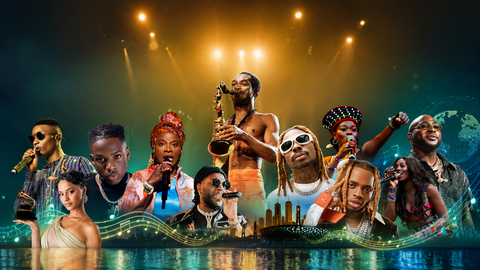

Afrobeats did not become a global force by accident. The sound that now fills stadiums, dominates playlists, inspires dance challenges and brings African artists onto some of the world's biggest stages was built gradually by generations of musicians who kept changing, experimenting and pushing African music further.
When I look at the journey of Afrobeats, I do not just see a story about hit songs and famous artists. I see a story about evolution. I see what can happen when people refuse to throw away their identity simply because the world has not yet learned how to appreciate it. African musicians took sounds that were already part of their lives, mixed them with new influences, adapted to changing technology and eventually created a movement that the world could no longer ignore.
However, to understand how Afrobeats became what it is today, I think it is important to start with one simple fact: Afrobeat and Afrobeats are not the same thing.
Afrobeat, without the “s”, is the revolutionary sound closely associated with Fela Anikulapo-Kuti and his musical innovations from the late 1960s and 1970s. It blended African rhythms with highlife, jazz and funk, while Fela used the music to confront political and social issues. Modern Afrobeats, with the “s”, are much broader and more fluid. It grew into an umbrella term for a new generation of African popular music, particularly the sounds developing through Nigeria, Ghana and the African diaspora, drawing from influences including highlife, hip-hop, R&B, reggae and other styles.
That difference matters because people sometimes speak about Afrobeats as though it simply appeared after Fela. The truth is more interesting than that. Fela helped establish an important musical and cultural foundation, but modern Afrobeats developed through its own journey, with different generations adding their own ideas.
By the late 1990s and early 2000s, something was already changing in Nigerian and Ghanaian music. Younger artists were listening to more music from around the world, especially American R&B and hip-hop, reggae and dancehall, but they were not simply copying what they heard. Instead, they began filtering those influences through their own languages, cultures and experiences.
That was where the new sound started becoming more exciting.
Artists such as The Remedies, 2Baba, Styl-Plus, Daddy Showkey, P-Square and others helped shape an era of experimentation that would become crucial to the rise of contemporary Afrobeats. The music sounded modern and youthful, yet it still carried rhythms, languages and melodies that audiences at home could recognise.
For me, one of the most important songs in this story is 2Baba's “African Queen.” Released in 2004, it became much more than a successful Nigerian song. Its international success showed that African pop music could travel and connect with audiences outside the continent. The song won major recognition and even appeared on the soundtrack of an American film, making it an important early moment in the international journey of Nigerian popular music.
And once that door started opening, more artists began walking through it.
P-Square helped take Nigerian pop to wider audiences across Africa and Europe, while the rise of indigenous and street-oriented music showed that artists did not need to abandon local languages before becoming popular. Dagrin's 2009 hit “Pon Pon Pon”, for example, became a defining moment for indigenous rap, helping prove that Yoruba-language music could occupy a powerful place in mainstream popular culture. Its influence would later be felt in the careers and sounds of artists such as Olamide and others who continued to make local identity part of commercial success.
This, to me, is where the Afrobeats story becomes especially powerful.
For years, there was often an assumption that African artists had to sound Western before they could become internationally successful. Yet the evolution of Afrobeats began proving something different. An artist could sing in Yoruba, Pidgin, Igbo, Twi or another African language and still create music that people around the world wanted to hear.
People did not always need to understand every word.
They could understand the feeling.
They could feel the rhythm.
They could connect with the melody.
And as more artists realised this, African music began gaining confidence in its own identity.
Then technology arrived and changed the journey even more.
The rise of the internet, music blogs, YouTube, social media and streaming gave African artists opportunities that earlier generations did not have. Music could now move faster across borders. A song released in Lagos could reach listeners in London, New York, Johannesburg or Accra without waiting for traditional international gatekeepers to decide whether it deserved attention.
At the same time, African communities in the diaspora became an important bridge between home and the rest of the world. DJs, promoters, fans and artists helped introduce these new sounds to wider audiences, particularly in cities with large African communities.
It was during this growing international movement that the term “Afrobeats” became widely popular. According to the Recording Academy's account of the genre's evolution, British-Ghanaian DJ Abrantee helped popularise the term in the early 2010s as a broad label for the new wave of African pop music gaining attention in the United Kingdom. The label may have helped the music become easier to identify internationally, but the sounds themselves had already been developing for years.
And from there, the movement accelerated.
By the 2010s, Afrobeats was producing stars whose music was travelling across continents. Wizkid, Davido, Tiwa Savage, Olamide, Yemi Alade and many others were releasing songs that became major hits both inside and outside Africa.
Wizkid's “Ojuelegba” became one of the defining songs of this period. What started as a deeply personal song connected to his journey and a familiar part of Lagos eventually gained international attention and received a major boost when Drake and Skepta appeared on its remix. The song helped open another important door for Wizkid and became part of a bigger crossover moment for Afrobeats.
That moment was significant because it showed how much the world had changed. A song rooted in a Lagos experience could now travel internationally without losing the identity that made it special in the first place.
Davido, meanwhile, continued building a catalogue of major hits and international collaborations, while Tiwa Savage emerged as one of the most influential female voices in the movement. Olamide continued proving that local language and street culture could be powerful commercial assets, not barriers to success.
Then, as Afrobeats grew bigger, it also became more difficult to define as one single sound.
That is because Afrobeats kept evolving.
Ghanaian highlife influences became part of major hits. House music and amapiano influences from South Africa entered the production style of Nigerian artists. Caribbean sounds, R&B, rap, electronic music and other global influences continued mixing with African rhythms.
Runtown's “Mad Over You” reflected the influence of Ghanaian highlife and rhythms associated with what became known as the “pon pon” or Banku sound. Niniola pushed further into the meeting point between Afrobeats and house music. Later, the amapiano wave became impossible to ignore, and its distinctive log drums and shakers became part of the Afrobeats production toolkit. Asake's rise, particularly with “Sungba,” became one of the clearest examples of how Nigerian artists could absorb new influences and make them part of an evolving Afrobeats sound.
That is why I believe one of Afrobeats' greatest strengths is that it has never remained completely still.
Every generation arrives with something different.
One artist brings a new rhythm.
Another brings a new language or style of storytelling.
Another experiment with a sound that people have not heard in quite the same way before.
And rather than destroying Afrobeats, that constant change has helped keep it alive.
Burna Boy expanded the global conversation around African music with his Afro-fusion approach. Tems brought a distinctive voice and songwriting style that helped create new international opportunities. Rema became part of a younger generation pushing the sound into new directions, while artists such as Asake and Ayra Starr helped demonstrate that Afrobeats was not running out of new voices or ideas. Rema's success, particularly with the global reach of “Calm Down,” became another powerful example of how African pop could compete at the highest international level while still carrying its own identity.
The global music industry also had to start paying closer attention. The Recording Academy introduced the Best African Music Performance category at the 2024 GRAMMY Awards, reflecting the increasing global visibility and influence of African music. The category was deliberately broader than Afrobeats alone, which is important because African music is too diverse to be placed inside one single box.
Even Fela's earlier legacy continues to receive international recognition. In 2026, he became the first African to receive the Grammy Lifetime Achievement Award, a posthumous honour that underlined the lasting influence of his work and the long history behind Africa's current global music moment.
But this is where I believe we should look beyond the awards, the streaming figures and the celebrity headlines.
What is the real lesson in the evolution of Afrobeats?
For me, it is simple: talent becomes more powerful when it learns how to adapt.
Africa has always had talented musicians. The difference today is that a new generation has been able to combine creativity with technology, social media, branding, digital distribution and global collaboration.
And that lesson is not only for musicians.
This is where I think every ordinary person should pay attention.
We are living in an age where the same smartphone many people use only for entertainment can also become a working tool. You can use it to learn a skill, create content, write articles, promote a business, build an audience or offer a service online.
If you are good at writing, you can begin developing your skills and building a content writing business. If you understand how social media works, you can learn social media management and help businesses grow their online presence. If you know something useful, you can turn that knowledge into valuable digital content. You can also learn skills such as digital marketing, video editing, graphic design or content creation and begin looking for ways to offer those services.
Of course, none of this means that success comes overnight.
Afrobeats itself is proof of that.
Before the global awards came years of experimentation.
Before the stadium tours came years of performances.
Before billions of streams came artists recording songs, taking risks and building audiences one listener at a time.
That is the part of the story I do not think we should forget.
Sometimes, people see the final success and assume it happened quickly. They see Wizkid on a global stage, Burna Boy winning international recognition, Tems working with global stars or Rema breaking records, but behind the visible success is a much longer story of preparation, creativity, persistence and evolution.
The same principle applies when building something online.
You may begin with one article.
One client.
One skill.
One small digital service.
One idea created with your smartphone.
It may not look like much at first, but the important thing is to start learning how to make what you have more valuable.
That, in many ways, is what Afrobeats did.
It did not wait until African culture looked like somebody else's culture. It took African sounds, African languages and African experiences and found new ways to present them to a changing world.
So I think the question for all of us is not whether we have enough to begin. The better question may be whether we are willing to develop what we already have.
Perhaps you enjoy writing but have never considered turning it into an online skill.
Perhaps you have useful knowledge but have never thought about creating digital content around it.
Perhaps you spend hours on your phone every day without realising that the same device could help you learn, create and build another source of income.
Afrobeats teaches us that what starts locally can travel globally when it is developed properly. A sound that begins in one community can eventually be heard around the world. In the same way, a skill that begins as something small can grow when you learn how to package it, improve it and connect it with the right audience.
That is why the history of Afrobeats is more than a music story to me.
It is a reminder that identity can be an advantage.
Creativity can become an opportunity.
Technology can help ideas travel.
And continuous learning can turn something small into something far bigger than we originally imagined.
Afrobeats is still evolving, which means its biggest chapter may not even have been written yet. New artists will emerge, new sounds will appear and technology will continue changing how music is created and shared. Yet the journey from local African sounds to global influence has already left us with an important message.
Do not wait until you have everything before you begin. Start with what you have, learn what you need to know, improve as you go and keep adapting. The world may not notice you immediately, but consistent growth can take your talent, your ideas or your skills much further than you think.
If you have an article, opinion piece, event or news story you would like published or you are ready to begin your journey toward building a profitable online content writing business from your phone or laptop, Global News Arena would love to hear from you. Send an email to advertise@globalnewsarena.com