I have always believed that if you really want to understand Nigeria, you should listen to its music.
Sometimes, a song can tell you more about a particular generation than a history book ever could. There are songs that take me back to a particular season of my life, songs that remind me of where Nigerian music was at a certain time, and songs that make me realise just how far our sound has travelled.
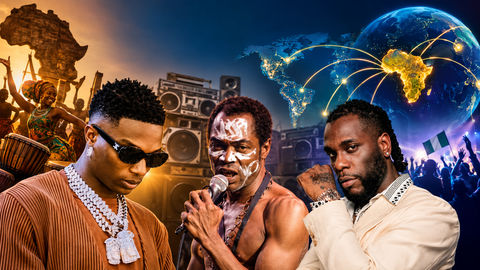
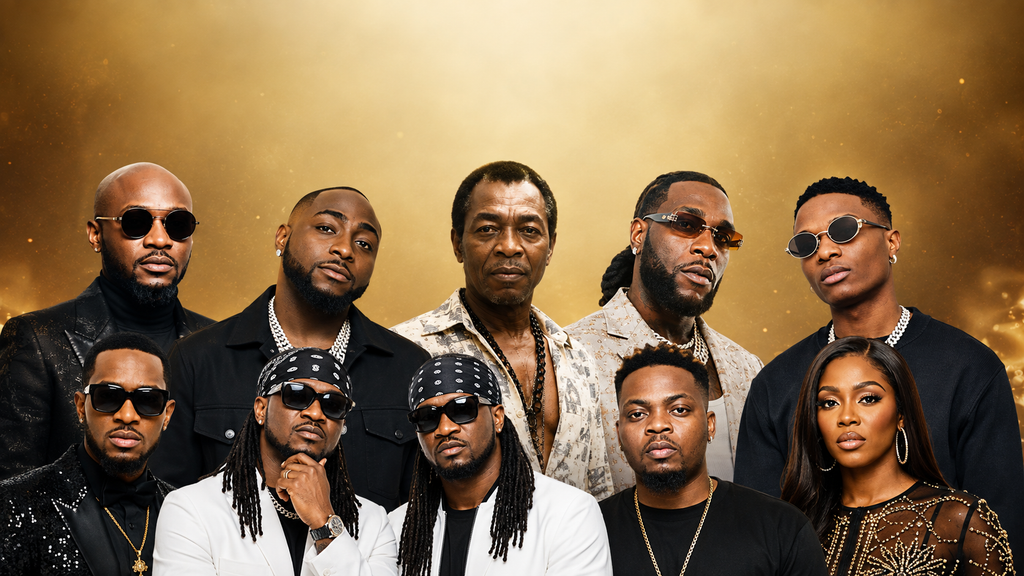
That is why whenever I hear people debate the greatest Nigerian hitmakers of all time, I find the conversation fascinating. Everybody seems to have a favourite, and honestly, I understand why. One person will mention 2Baba. Another will argue for D'banj. Someone else will immediately bring up P-Square, Wizkid, Davido or Burna Boy. Others will remind us that we cannot tell the story of Nigerian music without Fela Kuti.
But the more I think about it, the more I realise that asking who has the most hit songs is probably not the best way to answer the question.
For me, the bigger question is: Who changed the game?
Because making a hit song is one thing. Making hit after hit is another. But changing the direction of Nigerian music, influencing an entire generation and helping Nigerian sounds travel beyond our borders is something much bigger.
And that is why I have to start with Fela Kuti.
There is an important distinction that is sometimes lost when we talk about Afrobeats. Fela Kuti pioneered Afrobeat, while the modern genre popularly known around the world as Afrobeats developed later from a much broader mixture of Nigerian and West African pop sounds.
Fela's music combined African rhythms with jazz, funk and other influences, but what made him different was that he used music as a powerful voice for social and political commentary. His influence went far beyond entertainment, and his legacy continues to inspire musicians around the world.
That foundation matters because every generation that came after him was, in one way or another, building on the confidence that African music could have its own identity and still command attention.
Then Nigerian pop began entering another era, and that is where 2Baba becomes difficult to ignore.
Before many of today's biggest stars were household names, 2Baba had already shown that Nigerian music could be emotional, melodic, romantic and proudly African while still appealing to a wider audience.
His time with Plantashun Boiz helped shape the Nigerian pop and R&B sound of the early 2000s, but his solo career took that influence even further.
Then came "African Queen."
For many people, it was simply a beautiful song.
For me, it represented something bigger. It showed that a Nigerian artist could create music rooted in African identity and still connect with listeners far beyond Nigeria.
That was an important moment because it helped change the way many people outside the country viewed Nigerian pop music.
But Nigerian music was about to become even louder.
Then came D'banj.
There was something about D'banj that went beyond the songs. He understood the importance of personality, performance and creating moments that people wanted to talk about.
"Oliver Twist" became one of those songs that helped Nigerian pop demonstrate its international potential, while the wider Mo' Hits era helped shape one of the most exciting periods in Nigerian music.
And behind much of that sound was Don Jazzy, another person who reminds me that hitmaking is not always about the person standing in front of the microphone.
Sometimes, the real game-changer is the person building the sound, developing artists and creating the platform that allows other people to succeed.
That lesson became even clearer when P-Square dominated the African music scene.
Peter and Paul Okoye were not simply singers. They were performers. Their music videos, choreography, production and stage presence turned their songs into complete entertainment experiences.
At their peak, P-Square showed that Nigerian artists could take global influences, mix them with African sounds and create something that still felt unmistakably Nigerian.
Their success also demonstrated just how large the African market could be.
And then another generation arrived.
Wizkid entered the scene with a different kind of energy.
What I find interesting about Wizkid's journey is how naturally his music evolved. He moved from the Nigerian pop sound of his early career toward a more international style without losing the identity that made people connect with him in the first place.
His collaborations helped place Nigerian music inside global pop conversations, while songs such as "Essence" with Teams became important moments in the continuing international rise of Afrobeats.
But Wizkid's contribution, in my opinion, is bigger than individual songs or awards.
He helped make Nigerian music feel normal on the global stage.
It was no longer strange to hear Nigerian sounds alongside some of the biggest names in international music.
And while Wizkid was taking one route to global success, Davido was taking another.
Davido brought a different kind of energy.
His music has always carried a sense of celebration, confidence and ambition, and his ability to create songs that people wanted to sing and dance to made him one of the defining hitmakers of his generation.
But what I particularly admire about Davido's career is his understanding of collaboration.
He has consistently worked with artists across Africa and beyond, reinforcing the idea that Nigerian music should not be confined to Nigerian borders.
The ambition had changed.
Nigerian artists were no longer simply trying to become famous at home.
They were thinking globally.
And that shift helped create the environment in which Afrobeats could become one of Africa's biggest cultural exports.
However, while many artists were reaching international audiences, Olamide was proving another important point: you do not have to abandon your roots to become successful.
Olamide's use of Yoruba in his music helped demonstrate that local language could be commercially powerful.
He connected strongly with audiences because his music reflected the language, experiences and energy of the people around him.
But his influence goes beyond his own catalogue.
Through YBNL, Olamide also became an important platform for developing other artists.
That is a different kind of hitmaking.
Some people create hits.
Others create hitmakers.
And I believe the second group deserves just as much recognition.
That brings me to another artist who deserves a place in this conversation: Tiwa Savage.
For years, Nigerian music was often dominated by male voices, but Tiwa Savage helped challenge that narrative.
Her songwriting, vocals, performances and international collaborations helped strengthen the visibility of Nigerian female artists on the global stage.
What makes her journey particularly interesting to me is her versatility. She has been able to move across Afrobeats, R&B, pop and other sounds while maintaining her own identity.
That is another lesson I see repeatedly in the careers of Nigeria's biggest artists.
Adaptability does not necessarily mean losing yourself.
Sometimes, adapting is exactly how you remain relevant.
Then we arrive at Burna Boy, an artist whose career has become one of the clearest examples of Nigerian music turning cultural identity into global power.
Whether someone considers him the greatest Nigerian artist or not, it is difficult to tell the modern Afrobeats story without mentioning him.
Burna Boy has consistently embraced African sounds, Nigerian culture and a strong sense of artistic identity.
His Grammy win for Twice as Tall in 2021 became another major milestone for Nigerian music on the international stage.
But when I look at Burna Boy's success, the thing that stands out to me is not only the awards.
It is the confidence in his identity.
He has demonstrated repeatedly that African music does not have to become something else before the world can appreciate it.
It can remain African.
It can sound Nigerian.
It can carry African stories.
And it can still become global.
That is powerful because one of the biggest lessons I see in the entire journey of Nigerian music is that our differences can actually become our greatest advantages.
When I put all these artists together, however, I still find it difficult to name one person as the greatest Nigerian hitmaker.
If we are talking about historical influence, Fela Kuti has an enormous claim.
If we are talking about the transition into modern Nigerian pop, 2Baba deserves serious recognition.
If we are talking about performance and continental dominance, D'banj and P-Square cannot be ignored.
If we are talking about the global expansion of modern Afrobeats, Wizkid, Davido and Burna Boy have all played enormous roles.
If we are talking about artist development and building platforms, Olamide and Don Jazzy belong in the conversation.
And when we consider the rise and global visibility of Nigerian female artists, Tiwa Savage's contribution is significant.
So perhaps the answer is not supposed to be one name.
Perhaps Nigerian music is better understood as a relay race.
One generation carried the baton.
Another picked it up.
Another ran farther.
And the current generation is carrying it into places that earlier generations could only dream about.
That thought actually makes me look at the story differently, because there is a lesson here that has nothing to do with music.
When I look closely at the careers of these artists, I notice that the biggest ones did not simply make songs.
They built identities.
They built audiences.
They collaborated.
They created communities.
Some developed other artists.
Some created businesses around their music.
Some turned their personal stories into brands.
In other words, they learned how to turn attention into opportunity.
And that is where I believe ordinary people can learn something useful from them.
You may never record an Afrobeats song, but you can still learn from the way these artists built their careers.
Today, someone with nothing more than a smartphone can begin creating content around something they know or enjoy.
You could start a TikTok or YouTube page explaining Nigerian music history. You could create entertainment commentary. You could write articles about African music and culture. You could make short videos explaining the stories behind classic Nigerian songs. You could create digital guides, templates or educational products. You could even turn your writing skills into an online content-writing service.
The important thing is not to copy what these artists are doing.
It is to understand the principle behind what they are doing.
They have something people want.
They create consistently.
They build an audience.
And eventually, they learn how to turn that attention into opportunities.
The same thing can happen on a much smaller scale with a smartphone.
You do not need a recording studio.
You do not need millions of followers.
You do not even need an expensive computer to begin creating useful content.
What you need is something valuable to share, the willingness to learn and enough consistency to keep going when nobody is paying attention yet.
Of course, I would never tell anyone that starting an online business means instant money. It does not.
Building an audience takes time.
Learning a skill takes time.
Creating something people are willing to pay for takes time.
But the opportunity is there.
The internet has changed the rules.
The same digital world that allows someone in Nigeria to listen to an artist in another country also allows a Nigerian writer, creator, teacher or entrepreneur to reach people far beyond their immediate environment.
That is why I think the story of Nigerian hitmakers is much bigger than music.
It is a story about identity.
It is a story about persistence.
It is a story about taking something that already exists inside you and finding a way to make other people value it.
When I look back at the journey from Fela Kuti to the modern Afrobeats generation, I don't see one formula for success.
Fela had his message.
2Baba had his emotions.
D'banj had his personality.
P-Square had their performance.
Wizkid developed his sound.
Davido brought his energy.
Olamide embraced his language and culture.
Tiwa Savage demonstrated versatility.
Burna Boy turned African identity into global confidence.
Different people.
Different eras.
Different sounds.
But there is one thing they all had in common.
They had something worth sharing.
And perhaps that is the most important lesson for anyone reading this today.
You do not have to become the next Wizkid.
You do not have to become the next Davido.
You do not even have to become famous.
You simply have to discover what you can consistently create that other people find useful, entertaining or valuable.
Because the world has changed.
The gatekeepers are no longer the only people who decide who gets heard.
A person with a smartphone can publish.
A writer can build an audience.
A video creator can reach thousands of people.
A teacher can turn knowledge into a digital product.
A small business owner can find customers outside their neighbourhood.
And someone who starts with almost nothing can gradually build something that did not exist before.
That, for me, is what makes the story of Nigeria's greatest hitmakers so inspiring.
They did not simply give us songs.
They showed us what can happen when talent meets persistence, identity, collaboration and the courage to keep creating.
So when someone asks me who the greatest Nigerian hitmaker of all time is, I don't think there is one name that can completely answer the question.
The better answer is a story.
It is the story of generations of Nigerians who took local sounds, local languages, local experiences and local ambition and turned them into something the world could not ignore.
And perhaps the next great Nigerian success story is not sitting in a recording studio at all.
Perhaps that person is sitting somewhere with a smartphone, thinking about an idea, a skill, a story or a talent and wondering whether anybody will care.
If that is you, I would say this: start anyway.
The first video may not go viral.
The first article may not attract thousands of readers.
The first digital product may not sell immediately.
But every great body of work begins somewhere.
And every great hitmaker once had to release the first song.
If you have an article, opinion piece, event or news story you would like published, Global News Arena would love to hear from you. And if you are ready to begin your own journey toward building a profitable online content-writing business from your phone or laptop, you can also take that first step today.
Send your article, opinion, event or news contribution to advertise@globalnewsarena.com.