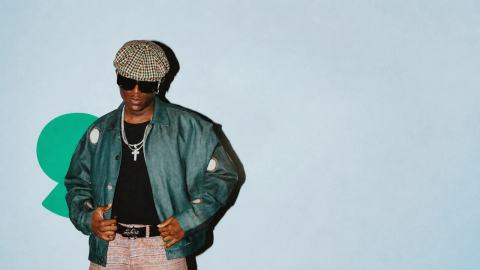

Afrobeats is no longer just Nigerian music. It has become one of Africa's most powerful cultural exports, with Nigerian songs now reaching listeners across Europe, North America, Asia, the Caribbean and Latin America. What makes that achievement even more remarkable is that this global success did not happen overnight. It was built through years of creativity, experimentation, persistence and an unwavering belief that Nigerian music could compete on the world stage.
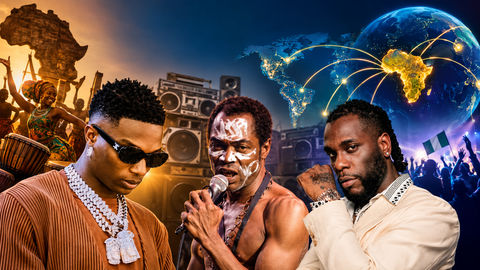
When I look at how far Nigerian music has travelled, I cannot help but think about how different the conversation is today. There was a time when African artists had to work extremely hard to get international attention, but today, the sound coming out of Nigeria can become a global conversation almost instantly. Artists such as Burna Boy, Wizkid, Davido, Tems, Rema, Ayra Starr and Asake have all played different roles in making that possible.
However, to understand the evolution of Afrobeats, we have to look further back than today's biggest stars. We also have to understand that Afrobeat and Afrobeats are not exactly the same thing. Afrobeat is strongly associated with Nigerian music legend Fela Kuti, whose music combined African rhythms with jazz, funk and other influences while often addressing political and social issues. Afrobeats developed much later as a broader contemporary African pop sound, drawing inspiration from different genres and continuing to change with every new generation.
That difference is important because it shows that Nigerian music has always had an ability to evolve. Instead of remaining trapped in one sound, musicians have consistently taken what already existed and added something new to it. That spirit of experimentation helped create the modern Afrobeats movement and eventually gave it the flexibility to connect with audiences far beyond Nigeria.
During the 2000s, artists such as 2Baba, D'banj and P-Square helped push Nigerian music into wider international conversations. Songs such as 2Baba's "African Queen" demonstrated that a Nigerian song could connect with people outside Africa, while D'banj's "Oliver Twist" became another significant international moment.
Then another generation arrived and took things even further.
Wizkid's rise showed how a Nigerian artist could build an international audience while remaining deeply connected to Nigerian culture. His music attracted listeners outside Africa and eventually led to major international collaborations. Davido was also building a strong global following, while Burna Boy developed a distinctive sound that connected contemporary Nigerian music with wider African influences and global sounds.
Burna Boy's success became even more significant when his album Twice as Tall won the Grammy Award for Best Global Music Album in 2021. For me, that moment represented more than an award. It was evidence of how far Nigerian music had travelled. A sound that was once largely associated with African audiences was now being recognised at one of the biggest music award ceremonies in the world.
But even then, the story was far from over.
A new generation began changing the sound again. Teams brought a distinctive voice and songwriting style to the international stage. Rema introduced a youthful, genre-blending approach that connected with listeners around the world. His song "Calm Down", especially after its remix with Selena Gomez, became a major international success and demonstrated just how powerful the combination of Afrobeats and global pop could be.
According to Spotify, "Calm Down" became the first Nigerian artist-led Afrobeats song to reach one billion streams on the platform. That achievement was significant because streaming is no longer simply another way to listen to music. It has become one of the major ways global audiences discover artists.
And that brings me to one of the biggest reasons Afrobeats has grown so quickly: technology.
The internet changed the rules.
Streaming platforms made Nigerian music available to listeners who might never have encountered it through traditional radio. Social media allowed fans to share songs across borders. YouTube helped artists build international audiences, while short-form video platforms created new ways for songs to become trends.
Suddenly, a Nigerian musician did not have to wait for a foreign record executive, radio station or television network to decide whether the music deserved international attention. A song could be uploaded, shared and discovered by someone thousands of kilometres away.
Spotify's data demonstrates just how dramatic this transformation has been. The company has reported enormous growth in Afrobeats streaming over the past decade, describing it as one of the fastest-growing genres in its history.
Yet the technology alone does not explain the success.
The music itself had to give people a reason to listen.
Afrobeats has managed to do that because it is flexible. It can absorb elements of R&B, hip-hop, dancehall, pop, Fuji and amapiano while still retaining a recognisable African character. That flexibility has allowed different artists to create completely different sounds under the same broad Afrobeats umbrella.
Asake is a good example of this evolution. His music combines contemporary Afrobeats with Nigerian street-pop influences, Fuji elements and amapiano-inspired sounds. Instead of simply copying what previous artists had done, he added his own identity to the conversation.
And that is exactly how music movements survive.
They change.
They borrow.
They experiment.
They respond to their audiences.
Most importantly, they give younger creators permission to do something different.
The influence of amapiano on Nigerian music is particularly interesting because it shows that African music does not have to compete along national borders. Nigerian and South African sounds can influence each other, just as African artists can collaborate with musicians from Europe, America and other parts of the world.
This cross-cultural exchange is helping Afrobeats become even more international.
Spotify has reported growing Afrobeats listenership in regions such as Latin America, showing that the genre's audience is expanding well beyond the markets where it first became internationally popular.
At the same time, Nigerian listeners have remained important to the genre's growth. The global success of Afrobeats did not happen because Nigerians stopped listening to their own music. In many ways, the opposite happened. A strong home audience gave Nigerian musicians the confidence, visibility and commercial foundation to continue developing their careers.
That is why I think the Afrobeats story offers a lesson that goes far beyond entertainment.
It shows what can happen when people take something local and develop it until the rest of the world begins to recognise its value.
For years, Nigerian musicians had talent. What changed was their ability to distribute that talent more effectively. The internet gave them a global stage, but they still had to create something worth watching, listening to and sharing.
That same opportunity exists today for people outside the music industry.
A smartphone can be a camera, a writing tool, a publishing platform, a learning device and even the starting point for a small digital business. Someone who enjoys writing can build an online portfolio. Someone who understands fashion, entertainment, sports, business or education can create useful content around that knowledge. Someone with strong communication skills can learn how to provide content-writing services to businesses and publications.
The lesson is not that everybody should expect overnight success.
Afrobeats itself proves that success rarely works that way.
Many of the artists now considered global stars spent years building their careers before reaching the international level. Their journeys remind us that being unnoticed today does not mean your work will remain unnoticed forever.
Sometimes, the audience arrives later.
Sometimes, technology creates a new opportunity.
Sometimes, one collaboration changes everything.
And sometimes, years of preparation finally meet the right moment.
That is why the rise of Afrobeats is so inspiring to me. It shows that creativity does not have to remain limited by geography. A person can create something in Lagos and have somebody in London, New York, Toronto, Johannesburg or São Paulo discover it.
The same principle applies to digital content.
You can write from your bedroom and reach readers you have never met. You can create a video with a smartphone and introduce your ideas to thousands of people. You can learn a digital skill and offer it to clients in another city or even another country.
The device in your hand may be ordinary, but what you create with it does not have to be.
And perhaps that is the most important lesson hidden inside the evolution of Afrobeats.
Nigerian musicians did not wait until the world was completely ready for them. They kept creating, experimenting and improving. They took inspiration from different places while remaining connected to where they came from. Eventually, the world started listening.
The next global sound could come from Nigeria. It could come from another African country. It could come from a creator working quietly from a smartphone today.
Nobody knows exactly where the next big idea will come from.
What we do know is that the barriers have become smaller.
The internet has made it easier than ever for talent, knowledge and creativity to travel beyond borders. The challenge now is not simply having access to the technology. It is learning how to use it, creating something valuable and staying consistent enough for people to notice.
Afrobeats has already shown us what happens when Nigerian creativity refuses to stay local.
From the foundations laid by earlier generations to the international success of today's artists, the genre has evolved into something much bigger than a musical trend. It has become a symbol of Nigerian creativity, African identity and the growing influence of African culture around the world.
And the story is still being written.
Perhaps that is why Afrobeats remains so exciting. It is not a finished product. It is constantly changing, constantly absorbing new influences and constantly introducing new voices.
The same can be true of our own journeys.
You do not need to know exactly where your idea will take you before you begin. You simply need to start creating, keep learning and give your work enough time and consistency to find its audience.
If you have an article, opinion piece, event or news story you would like published, Global News Arena would love to hear from you. And if you are ready to turn your writing, knowledge or creativity into a digital opportunity that you can begin from your smartphone or laptop, there is no better time to start learning and building than now.
If you have an article, opinion piece, event or news story you would like published, or you are ready to begin your journey toward building a profitable online content-writing business from your phone or laptop, Global News Arena would love to hear from you. Send an email to advertise@globalnewsarena.com.