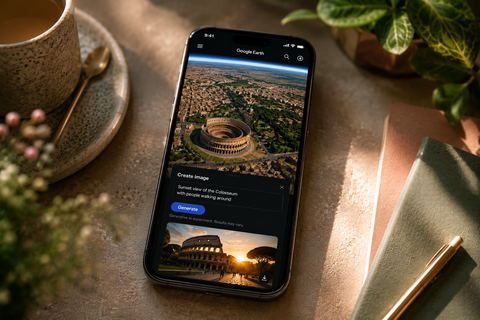

Every other day, a new digital tool appears.
One promises to write your content. Another edits your videos. Another builds websites. Another turns a podcast into social posts while you sleep.
And every week, someone online is telling you that this is the tool you absolutely need to learn if you want to make money online.
So you sign up.
Watch a tutorial.
Try it once.
Save another video for later.
Then a new tool appears.
Before you know it, you've “learned” ten different platforms and still don't have anything you confidently offer to a paying client.
That's the trap.
The goal is to become useful, not to learn every digital tool that pops up.
Knowing the Tool Isn't the Skill
Let's say you know how to use an AI writing tool.
Great.
But what can you actually do with it for someone else?
Can you turn a business owner's messy ideas into useful social media content?
Can you take a long article and turn it into several posts?
Can you organise a pile of customer questions into clear responses?
Can you help a business save hours every week?
That's where the value starts.
A client isn't paying you because you know where the buttons are.
They're paying because you can take something they don't have time, patience or expertise to deal with and make it easier.
The tool is what you use. The solution is what you're selling.
Businesses Don't Really Want More Technology
Think about a small business owner for a second.
They have customers to answer.
Products to promote.
Emails sitting in their inbox.
Social media accounts that haven't been updated.
Videos they filmed weeks ago and never edited.
Information scattered across different apps.
They probably don't want someone walking in and saying, “I've mastered seven new AI platforms.”
They want someone to say:
“I can help you sort this out.”
That difference matters.
A restaurant owner doesn't necessarily care whether you used AI, automation, Canva or three different apps to create their content.
They care that their social media is finally being handled.
A creator doesn't care which editing software you used.
They care that their videos are actually getting finished.
A business owner doesn't necessarily want automation.
They want fewer routine processes eating up their day.
That's why problem-solving is becoming such a valuable digital skill.
Start With the Problem, Not the App
This is probably the biggest mindset shift you can make.
Instead of asking:
“What tool should I learn?”
Ask:
“What problem could I help someone solve?”
A business may have hours of a video sitting unused.
That's a content repurposing problem.
Maybe they keep answering the same customer questions.
That's an organisation and communication problem.
Maybe they have amazing products but terrible descriptions.
That's a writing problem.
Maybe they have plenty of content ideas but no system for turning them into regular posts.
That's a workflow problem.
Once you know the problem, then you can decide which tools might help.
The tool becomes secondary.
And that's a much less stressful way to learn.
You don't have to chase every new platform because you're learning for a reason.
This Is Where Beginners Often Get Stuck
There is something incredibly satisfying about learning a new tool.
You watch a tutorial and suddenly feel productive.
You discover a new feature and think, “I could definitely make money with this.”
Then another tutorial appears.
Then another.
Soon you're spending more time learning about freelancing than actually freelancing.
It feels like progress because you are doing something.
But there is a big difference between collecting knowledge and building an ability.
Knowing how ten tools work isn't particularly useful if you can't use any of them to produce something valuable.
One useful skill practiced repeatedly is worth much more.
You might spend two weeks learning how to turn long-form content into short social posts and become genuinely good at it.
That's something you can show people.
That's something you can offer.
That's something someone can pay for.
You Don't Have to Be the Most Technical Person
Here's the encouraging part.
You don't have to become the smartest person in the room.
You don't need to understand how every AI model works.
You don't need to call yourself an “AI expert” after watching six tutorials.
In fact, being able to communicate clearly may matter more than knowing the most complicated tool.
A client explains a problem.
You listen.
You ask the right questions.
You figure out what needs to happen.
You choose the simplest tools that can help.
Then you deliver the result.
That is a skill.
And it's one that becomes more valuable as technology keeps changing because you're not tied to one particular platform.
Turn the Skill Into Something Someone Can Buy
This is where learning becomes earning.
Don't say:
“I know AI tools.”
Say what you can actually do.
“I turn one long video into five short social media clips.”
“I help small businesses turn their existing content into a week's worth of social posts.”
“I organise repetitive customer questions into clear response templates.”
“I turn rough product information into simple, persuasive descriptions.”
Now someone can understand what they're getting.
You have moved from “I know technology” to “I solve this particular problem.”
That's a much easier thing to sell.
And you don't need to build an entire digital agency on day one.
One useful service is enough to start.
Small Businesses Are a Good Place to Look
Big companies already have people whose entire jobs involve technology, content, data and automation.
Small businesses often don't.
And that's because they simply have fewer people available to do everything.
A business owner might know exactly what they should be doing online but have no time to do it.
That's an opportunity.
You don't have to promise to transform their entire business overnight.
Find one annoying problem.
Solve it well.
Then see what else you can help with.
A small service can grow from there.
And as we've covered before, small businesses are desperate for practical help. The opportunity isn't necessarily in knowing more technology than everyone else, noticing where people need help is your superpower.
The Tools Will Keep Changing
This is the part worth remembering.
The tool you're learning today might be replaced next year.
That's normal.
If your entire value is knowing how to use one particular app, you're always going to feel behind.
But if your real skill is understanding problems, communicating with clients and using available technology to create useful solutions, you're in a much stronger position.
And if you're using AI, learning how to give tools clear instructions and improve poor results is part of that process. My guide to prompt engineering for beginners can help with that, but don't mistake prompting for the entire skill.
The bigger skill is knowing what you're trying to achieve in the first place.
The technology can change.
Your ability to adapt is what stays with you.
So the next time you see someone announcing the latest “must-learn” digital tool, you don't necessarily need to download it immediately.
Ask yourself:
What problem does it solve?
Who has that problem?
Could I learn to solve it well?
Would someone actually pay for the result?
Those questions will take you much further than collecting another dozen tools you never end up using.
You don't need to know everything.
You need to be useful.
And that's a digital skill worth building.
Frequently Asked Questions
What digital skill should I learn first?
Choose a practical skill you can consistently use to solve a real problem, such as content writing, video editing, content repurposing, research, customer support or basic automation.
Do I need to learn every new AI tool?
No. Focus on the problem you want to solve first, then learn the tools that help you solve it. New platforms will keep appearing.
Can I make money from digital skills as a beginner?
Yes, but knowing a tool isn't enough. You need to turn what you know into a clear service that solves a problem someone is willing to pay for.
Do I need coding skills to work with digital tools?
Not necessarily. Many useful digital services can be delivered using existing platforms without advanced programming skills.
How do I know if a digital skill is worth learning?
Look for skills that solve problems businesses or individuals already have. If a skill saves time, improves content, organises information or helps someone make or keep money, it has potential value.
Should I learn one skill or several?
Start with one. Once you can deliver it confidently, you can add complementary skills that make your service more valuable.
Where can I learn digital skills?
You can learn independently through tutorials and practice, or use structured training such as Auxi Sherpa's Digital Skills Resources to follow a more organised path from learning to practical application.
If you have an article, opinion piece, event or news story you would like published or you are ready to begin building a profitable online content writing business from your phone or laptop, Global News Arena would love to hear from you.
Send an email to advertise@globalnewsarena.com