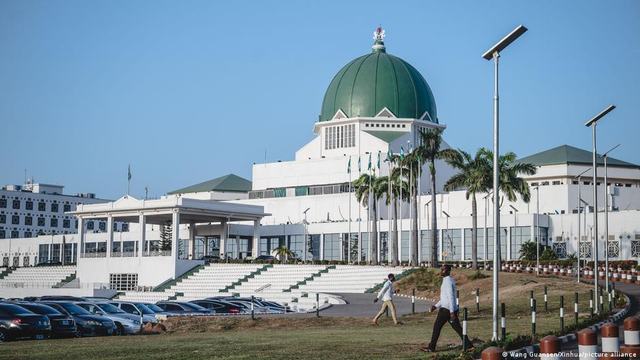
The UniAbuja land reallocation protest has brought renewed attention to a dispute between the university community and the Federal Capital Territory Administration over the institution's land and future development plans.
READ: State Police Bill: All 36 Assemblies Approve Proposal
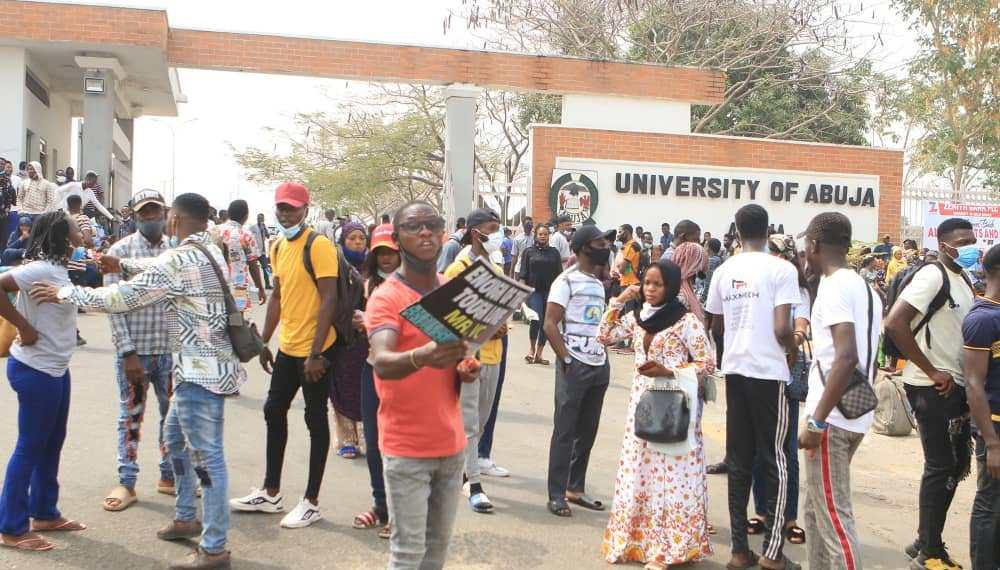
The demonstration took place on Monday, November 16, 2026, at the university's main campus in Abuja. Participants included lecturers, non-academic staff, students and alumni who called on President Bola Tinubu to intervene and direct the FCT Minister, Nyesom Wike, to reconsider the disputed land decision.
Read: Do you need a professional writer in 72 hours? Contact Auxi Chat
The protesters argued that the land was originally allocated to the university for academic activities, research facilities and future expansion. However, the FCTA maintained that its position followed recommendations made by a committee established during a previous administration.
READ: Vanguard Online Editor Olufemi Ajasa Dies at 44
The disagreement has raised questions about university development, land administration and the responsibilities of government agencies towards public educational institutions.
What Happened During the UniAbuja Land Reallocation Protest?
Read: Need a professional website in 72 hours? Contact Auxi Chat
The protest involved five groups within the university community: the Academic Staff Union of Universities (ASUU), Senior Staff Association of Nigerian Universities (SSANU), Non-Academic Staff Union of Educational and Associated Institutions (NASU), Students' Union Government (SUG) and the university's alumni association.
Operating under a Joint Action Committee, the protesters demonstrated against what they described as an attempt to transfer portions of the institution's land to private individuals and organisations.
The Chairman of ASUU at the University of Abuja, Sylvanus Ugoh, maintained that the land was allocated to the institution when it was established in 1988.
He argued that reducing the university's land could affect its ability to expand academic facilities, establish research centres and accommodate future generations of students.
The SSANU chairman, Nurudeen Yusuf, also expressed concerns about the implications for specialised academic programmes, including Nuclear Engineering and Aeronautical Engineering.
According to the unions, these programmes require sufficient space for research, practical training and other specialised facilities.
The protesters therefore called on President Tinubu to intervene and ensure that the institution's development interests are protected.
Why University of Abuja Unions Oppose the Land Reallocation
The university community believes that the disputed land is important for its long-term academic and infrastructural development.
One of the major concerns raised by the protesters is the possibility that reducing the available land could limit the institution's ability to establish new facilities.
The Students' Union Government also raised concerns about existing accommodation and infrastructure challenges. Students argued that the university needs sufficient space to provide additional hostels, classrooms and other facilities as its population grows.
The university's main campus contains several academic and administrative facilities. Its official campus location and facilities information provides further background on the institution's physical layout and development needs.
For the protesting groups, the disagreement is therefore not simply about land ownership. They believe that the available space is connected to the university's ability to expand its academic programmes and improve the learning environment.
FCTA Responds to the UniAbuja Land Reallocation Protest
The Federal Capital Territory Administration has rejected suggestions that the disputed land decision was a unilateral action by the current FCT Minister.
In a statement issued through Wike's Senior Special Assistant on Public Communications and Social Media, Lere Olayinka, the administration said the decision followed recommendations by a joint committee established in 2016 under former FCT Minister Mohammed Musa Bello.
According to the FCTA, the committee was established to examine the university's land allocation, encroachment issues and other land-related matters involving the institution.
The administration claimed that the committee recommended a smaller land allocation for the university, citing the National Universities Commission's recommended requirements.
It further stated that the previous FCT administration approved the committee's recommendations and that Wike subsequently approved approximately 4,519.80 hectares for the university instead of the 100 hectares recommended by the committee.
The FCTA also questioned the university's need to retain more than 11,000 hectares of land, arguing that the institution had not sufficiently developed large portions of its original allocation.
The administration's position is connected to its wider responsibility for land administration in the Federal Capital Territory. Its Department of Land Administration oversees land administration, allocation and related matters across the territory.
However, the university community maintains that the land is necessary for its future development and should not be transferred without properly considering the institution's needs.
Court Dispute Adds to the University of Abuja Land Controversy
The disagreement has also taken a legal dimension, with the university instituting a case before the High Court of the Federal Capital Territory in Abuja concerning the disputed property.
ASUU has alleged that the FCTA's actions regarding the land conflict with a court order directing parties to maintain the existing position concerning part of the disputed property.
The union has called on the relevant authorities to respect the legal process while the matter is being determined.
READ: Lagos NNPC Filling Station Explosion: Fire Damages Nearby School in Alimosho
However, the allegations surrounding the court order and subsequent land allocations remain matters requiring proper legal determination.
The outcome of the case could influence how the dispute is resolved and whether the disputed land remains available for the university's future development.
What the UniAbuja Land Reallocation Protest Means for Students
The UniAbuja land reallocation protest has highlighted concerns about the relationship between university development and government land administration.
For students, the disagreement raises questions about the availability of land for additional hostels, lecture halls, research facilities and other academic infrastructure.
The university's staff members are also concerned about the possible effects on specialised programmes and future research activities.
On the other hand, the FCTA maintains that its decision was based on an earlier administrative review and that the university has retained a substantial land allocation.
As both sides maintain their positions, attention is now focused on the Federal Government's response and the ongoing legal proceedings.
The resolution of the dispute will be important to the University of Abuja's future development and could also raise broader questions about the management of land allocated to public universities in Nigeria.
Are you interested in learning how to write professionally and earn money as a writer and content creator? Contact us today to start your writing journey immediately.
Need a professional website in 72 hours? Contact us
Do you need a professional writer in 72 hours? Contact us
If you have an article, guest story, event or news tip you would like published, Global News Arena would love to hear from you.