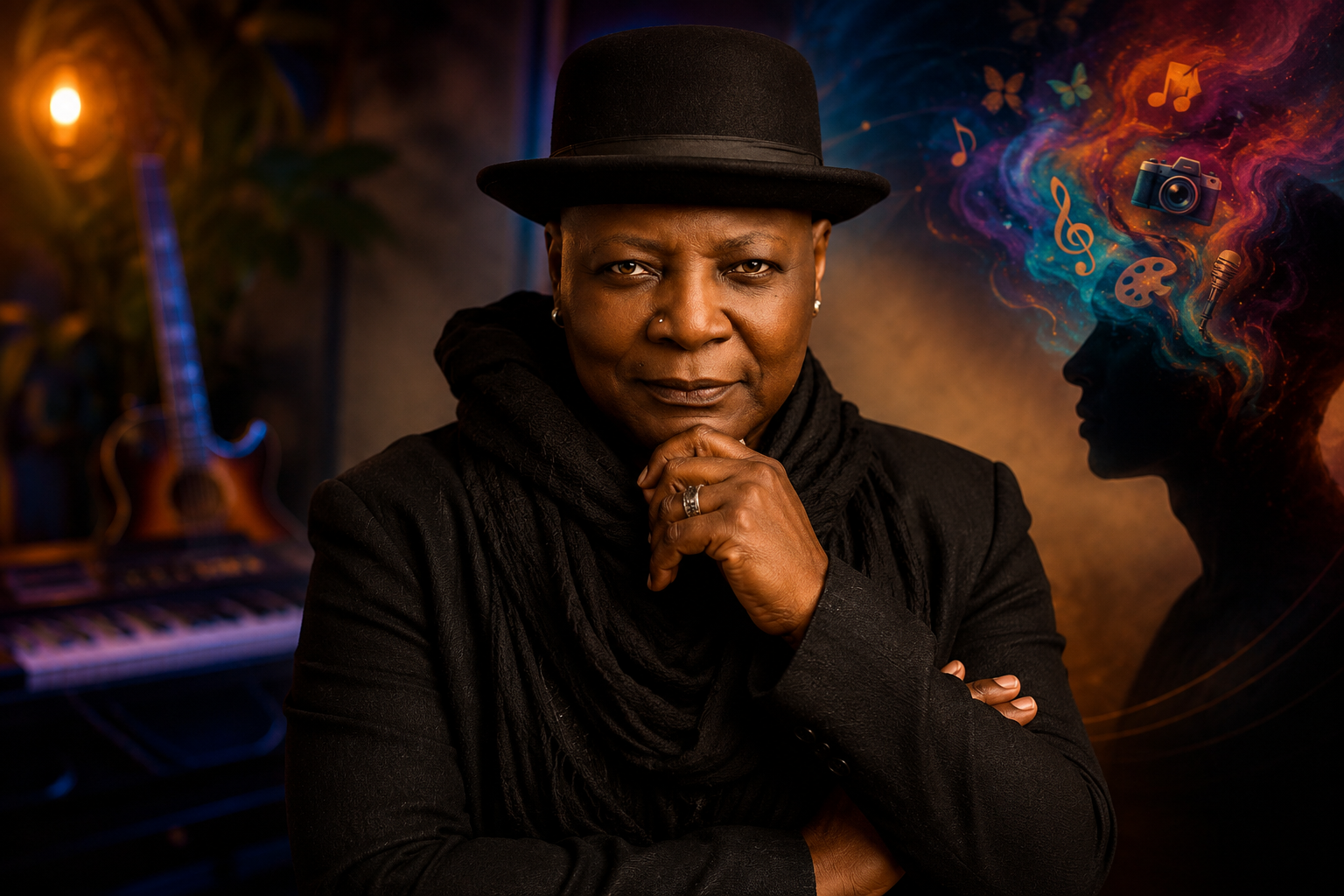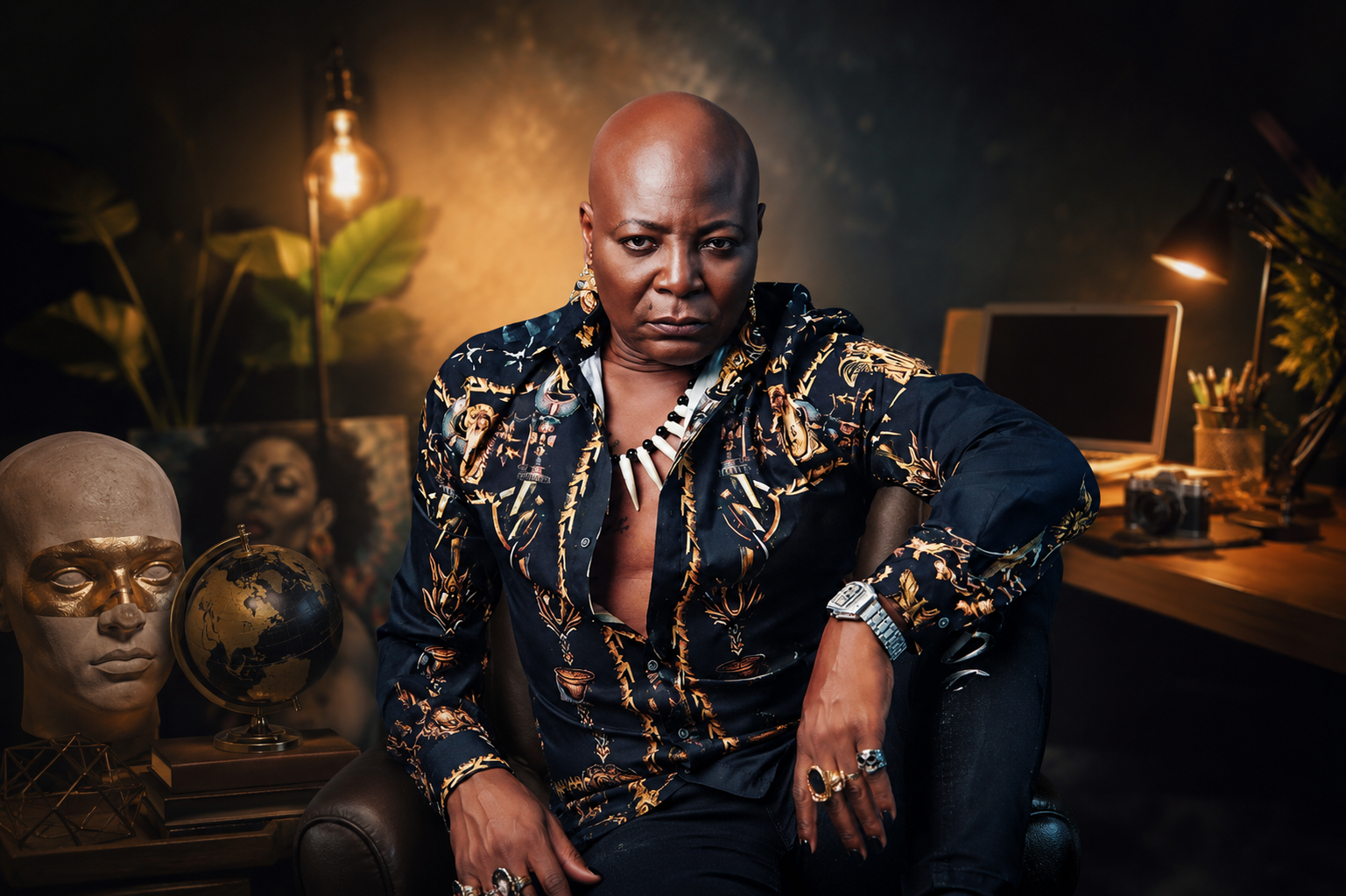
There is something about Charly Boy’s story that keeps making me think beyond the headlines.
For years, people have had something to say about him. His appearance. His clothes. His makeup. His unusual personality. His female alter egos. His music. His activism. And, perhaps most persistently, rumours about his sexuality.
But the more I think about it, the more I realise that the most interesting part of the story is not the rumour itself. It is what happens when a person becomes so distinctive that people begin creating their own interpretations of who that person is.
And that is where, for me, Charly Boy’s story becomes much bigger than celebrity gossip.
It becomes a lesson in personal branding.
Because the moment you put yourself online, you are no longer in complete control of how people perceive you. Someone can watch one video and form an opinion about you. Someone else can read one post and decide they know your personality. Another person can take something you said out of context and share it with thousands of people.
Before long, people may begin telling a story about you that is completely different from the story you believe you are telling.
Charly Boy, whose real name is Charles Oputa, has experienced that kind of public interpretation for decades. His unconventional style, his artistic characters and his willingness to challenge traditional ideas about how a man should look and behave have consistently made him stand out.
He has previously explained that his experiences while living in the United States, including interactions with gay and transgender people, influenced some aspects of his artistic expression. He also created female alter egos such as Linda and Miss Zigizigi. Those choices contributed to years of speculation about his sexuality, which he has publicly addressed by explaining that having a feminine side or expressing himself through female characters did not mean he was gay.
What strikes me about that is how quickly people can confuse expression with identity.
And, honestly, social media has made that problem even bigger.
Today, someone can wear something unusual, make a particular joke, support an unconventional idea or create a different kind of video, and within minutes strangers can decide what that person "must" be like.
That is why I think anybody trying to build a personal brand online needs to understand something very early: you cannot control every opinion people will have about you, but you can influence what you consistently give them to remember you for.
That distinction is incredibly important.
Charly Boy has spent much of his career being different. He has experimented with music, television, fashion, performance and public activism. He has created characters, adopted unusual looks and deliberately moved outside the boundaries of what many people considered conventional.
Whether people agreed with him or not, they remembered him.
And that, to me, is one of the strongest principles of personal branding.
You don't necessarily need everyone to like you.
You need people to remember you.
That may sound strange in a world where social media constantly tells us to chase likes, shares and followers, but I think it is worth considering. A person with 2,000 followers who clearly knows what they represent may have a stronger personal brand than someone with 200,000 followers whose audience has no idea why they should follow them tomorrow.
Because followers are numbers.
Recognition is an asset.
Think about the people you remember online. You probably don't remember them simply because they had a nice profile picture. You remember them because of something distinctive.
Perhaps they explain technology in a particular way. Maybe they tell stories that make you laugh. Maybe they teach people how to cook. Perhaps they have a unique fashion style. Maybe they talk about money, travel, relationships, business or personal development from an angle you rarely see elsewhere.
There is something that makes them recognisable.
That "something" is where your personal brand begins.
And this is where I think many aspiring creators get distracted.
They see someone else's success and immediately want to copy the format.
A particular video goes viral, so everybody makes the same video. A particular sound becomes popular, so everyone uses it. One person starts selling a particular digital product, and suddenly thousands of people are selling almost identical products.
There is nothing wrong with studying what works. In fact, I encourage it.
But studying someone else's success should help you understand the principles behind it, not erase your own identity.
Because if you become a copy of someone else, you are always competing with the original.
If you develop your own voice, however, you create something that belongs to you.
That is why I would rather ask, "What can I learn from this creator?" then, "How can I become this creator?"
The difference may seem small, but it can completely change the direction of an online business.
And perhaps this is where Charly Boy's story becomes particularly relevant to the creator economy.
His uniqueness became part of his identity.
For today's creator, your uniqueness can become part of your business.
Imagine that you love music. Instead of spending all your time listening to whatever is trending, you could begin experimenting with creating your own music. You could write lyrics, develop song ideas, experiment with beats, record vocals, share snippets and document your progress.
You don't necessarily have to wait until you have an expensive studio before you begin.
Your smartphone can be the place where the journey starts.
This is one reason I find digital music creation particularly interesting. Services such as the music creation tools available through Auxi Sherpa give aspiring creators another avenue to experiment with songwriting, beats and original music digitally.
The bigger opportunity, however, is not simply creating one song and hoping it goes viral.
It is building an identity around your creativity.
You could create content showing how you develop your songs. You could share short previews. You could invite your audience to suggest themes. You could document your learning process. You could eventually explore legitimate opportunities around music, content creation, digital products, creative services or other online income streams.
The music becomes part of the story.
You become the brand.
And that is an important distinction.
A viral post can disappear tomorrow.
A recognisable personal brand can continue creating opportunities long after one post has been forgotten.
This principle applies far beyond music.
If you are good at writing, your smartphone can help you start a writing business. If you understand social media, you can learn to manage accounts for small businesses. If you are knowledgeable about a particular subject, you can turn that knowledge into an ebook, guide, template or online course. If you enjoy recommending useful products, affiliate marketing can become another potential income stream.
The possibilities are enormous, but they all begin with the same question: what value can I consistently provide?
I think that is a much better question than asking, "How can I make money online quickly?"
The internet is full of promises of instant wealth. But sustainable digital businesses are rarely built overnight.
They are built through skills, trust, consistency, experimentation and solving problems for real people.
Your content attracts attention.
Your expertise builds trust.
Your consistency builds recognition.
And eventually, those things can create opportunities to earn.
That is why personal branding matters so much.
It gives your skills a name.
It gives your ideas an identity.
And it gives people a reason to remember you.
Of course, building a public identity comes with another challenge: criticism.
This is another part of Charly Boy's story that I find particularly relevant.
When you deliberately stand out, not everyone will understand you.
Some people will criticise you.
Some will misunderstand you.
Some will make assumptions about you.
Others may even try to define you based on one thing you did years ago.
If you are building a personal brand online, you have to learn how to deal with that reality.
That doesn't mean ignoring every criticism. Some criticism is useful. Sometimes your audience will point out something you genuinely need to improve, and having the humility to listen can make you better.
But there is a difference between constructive criticism and noise.
If you react emotionally to every comment, you will eventually lose your direction.
You will start changing your personality because somebody didn't like a post.
You will abandon your niche because another creator received more views.
You will start copying trends because your original idea did not immediately perform.
And slowly, the brand you were trying to build will disappear.
That is why I believe you need to know what you stand for before you start worrying about what everybody else thinks.
Ask yourself: What do I want people to associate with my name?
What problem can I help people solve?
What experience do I have that could help somebody else?
What can I create that is genuinely mine?
And perhaps most importantly, what am I willing to keep doing even when the algorithm does not reward me immediately?
Those questions can help you build something much stronger than a collection of viral posts.
They can help you build a digital asset.
And once you start thinking that way, your smartphone looks very different.
It is no longer just the device you use to scroll through other people's achievements.
It becomes your camera.
Your writing desk.
Your editing studio.
Your research centre.
Your publishing platform.
Your communication tool.
Your storefront.
And potentially, the starting point for a digital business.
You can use it to create content, communicate with an audience, offer freelance services, promote digital products, build an email list, explore affiliate marketing or develop creative projects.
You don't need to have everything figured out before you start.
In fact, I think waiting until everything is perfect is one of the biggest reasons people never begin.
Start with what you know.
Learn what you don't know.
Create.
Listen.
Improve.
Then create again.
Over time, your audience begins to see the journey.
And that journey itself can become part of your personal brand.
This is particularly powerful because people don't always connect with perfection. They connect with progress.
Someone who watches you go from knowing nothing about music creation to producing your first song may feel more connected to your story than someone who suddenly appears online pretending to be an expert.
Someone who watches you learn how to create digital products may want to follow your journey.
Someone who sees you build a freelance business from your phone may become inspired to try it themselves.
Your process can become your content.
Your content can become your audience.
And your audience can eventually become the foundation of a business.
That, to me, is the deeper opportunity hidden inside personal branding.
You are not simply trying to become famous.
You are trying to become valuable.
And there is a huge difference.
Fame can bring attention, but value gives people a reason to stay.
That is why I don't think the lesson from Charly Boy's story is that you should deliberately become controversial or make people talk about you at all costs.
No.
The lesson is much simpler.
Be distinctive.
Be willing to develop your own voice.
Be willing to experiment.
Be willing to create something different.
Be willing to let your personality show through your work.
And most importantly, build something that is useful enough for people to remember.
Because people may misunderstand you.
They may disagree with you.
They may speculate about you.
They may even create stories about you that you never intended to tell.
But you can still decide what you contribute to the conversation.
You can decide what you create.
You can decide what you learn.
You can decide what you stand for.
And you can decide whether your online presence becomes nothing more than a place where you post pictures and videos or the foundation of something that can eventually support your livelihood.
That is what I take away from Charly Boy's long-running experience with public perception.
His story reminds me that being different can attract attention, but it is what you build with that attention that really matters.
So, if you are currently trying to grow your presence online, don't spend all your energy asking how to become viral.
Ask yourself a more important question:
What do I want people to remember me for?
Then start building it.
One post at a time.
One skill at a time.
One idea at a time.
And, eventually, one income stream at a time.
If you have an article, opinion piece, personal story or news story you'd like published on Global News Arena, or you're ready to begin your journey toward building a profitable digital business from your phone, I'd love to hear from you.
Continue Reading: Charly Boy Explains the Truth Behind Years of Gay Rumours — What His Story Taught Me About Identity, Public Perception and Owning Your Creativity
Send me an email
Read more at Global News Arena