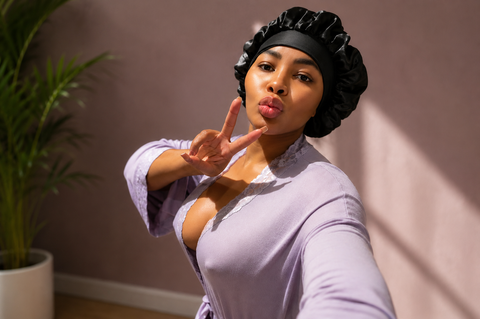
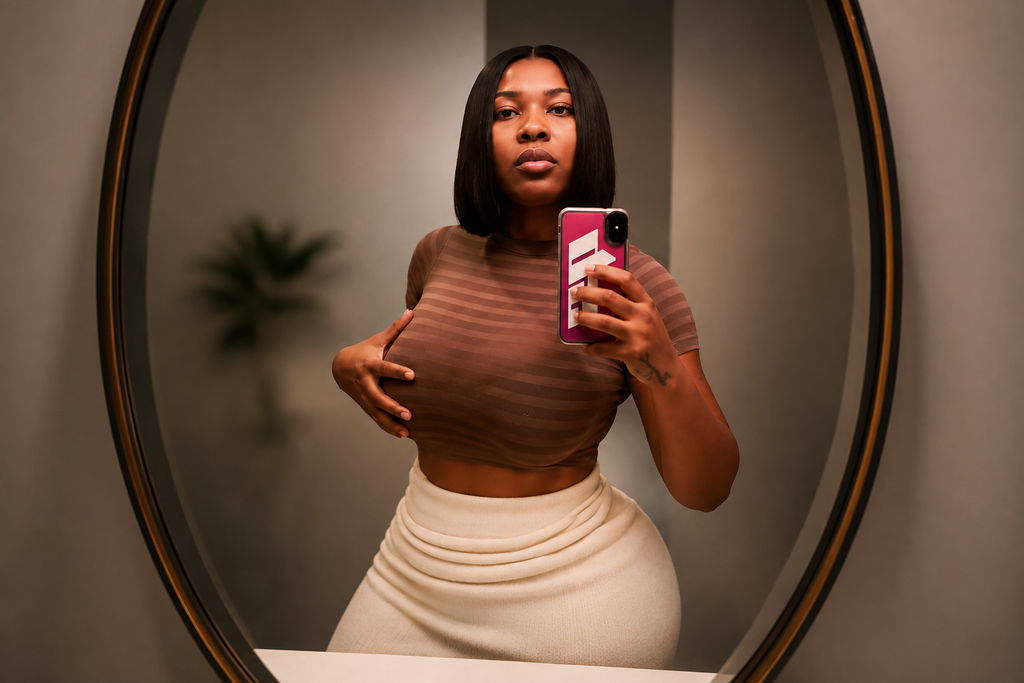
There are some viral videos I watch and scroll past almost immediately. Then there are those that make me stop for a moment, think about what I have just seen and, more importantly, ask myself why we are so fascinated by the way other people look.
Sandra Benede’s latest viral moment belongs to the second category for me.
The video has once again pushed conversations about cosmetic surgery, beauty standards and body image into the centre of online discussions, with social-media users sharing opinions about what they think, what they see and what they believe public figures should or should not do with their bodies.
But the more I thought about it, the less interested I became in deciding whether Sandra Benede should or should not have cosmetic surgery. Instead, I found myself thinking about something much bigger: why has appearance become such a powerful form of currency on the internet?
We live in a time when a photograph can attract thousands of likes, a short video can generate millions of views and a particular body shape can suddenly become the beauty standard everyone wants to copy. Someone changes their appearance and it becomes news. Someone gains weight and people notice. Someone loses weight and people notice. Someone looks different in a video and suddenly thousands of strangers believe they have the right to analyse, criticise and explain what they think has happened.
That part of social media has always fascinated me.
And when the conversation involves somebody's body, I think we should be even more careful because a viral video does not necessarily tell us the complete story. Social media can remove context from a moment and turn assumptions into "facts" within minutes. So, while I understand why people are discussing Sandra Benede's video, I would rather not turn speculation about her body or medical history into an established fact.
What we can discuss, however, is the culture surrounding the conversation.
Because somewhere along the way, social media stopped being just a place where we shared our lives and became a place where many people began measuring their value against what they saw on their screens.
A woman sees another woman's body and starts questioning hers.
Someone sees a celebrity's face and begins wondering whether their own face is good enough.
A young person watches influencers living what appears to be a perfect life and starts believing that something is wrong with their own life.
And the problem is that we are often comparing our complete, complicated and imperfect lives with carefully selected moments from somebody else's.
That is not a fair comparison.
There is nothing inherently wrong with cosmetic procedures. Adults make personal decisions about their bodies for different reasons, and those decisions are deeply personal. What concerns me is the possibility that someone may begin to believe they have to change themselves simply because the internet has convinced them that their natural appearance is not good enough.
That distinction is important.
There is a difference between saying, "I want to make this personal decision for myself," and saying, "I need to do this because otherwise people will not accept me."
And perhaps that is why the Sandra Benede conversation has stayed in my mind.
It is not really about one woman.
It is about all of us and the standards we are constantly being exposed to.
The internet is very good at showing us what is trending, but it is not always good at reminding us that trends eventually disappear.
Today, one particular body shape may be celebrated. Tomorrow, something completely different may be considered beautiful. Today, a particular hairstyle may dominate social media. Next month, another one will take its place.
If we keep changing ourselves every time the internet changes its mind, when exactly do we get the opportunity to become comfortable with who we are?
That question becomes even more interesting when I think about Sandra's own journey online.
She has built a significant social-media presence and became particularly known for interactive livestreaming content. Her journey is a reminder that social media can be more than a place to post pictures and receive compliments. It can become a career, a community and a platform for building an audience.
And that is where my thoughts began to move in a completely different direction.
Because if social media can give somebody the power to attract attention, shouldn't we also be asking what we can do with that attention?
I think this is where many of us need to change the way we use our smartphones.
We spend hours watching celebrities.
We watch influencers.
We follow viral arguments.
We comment on trending stories.
We share funny videos.
We argue about people's relationships, appearances and lifestyles.
Then, after spending several hours consuming everybody else's content, we put down our phones and wonder why we are not making progress ourselves.
I have come to believe that our smartphones should not only be entertainment devices. They can also be classrooms, offices, studios, publishing platforms and business tools.
And that realisation has become particularly interesting to me when I think about creativity.
Take music, for example.
We can hear a song on social media and immediately start singing along. A catchy beat can become the soundtrack to thousands of videos. A chorus can become a trend. An unknown artist can suddenly find themselves being searched by people all over the world because one song connected with an audience.
But we rarely stop to think about what happened before the song became viral.
Somebody had an idea.
Somebody wrote words.
Somebody imagined a melody.
Somebody created or arranged a beat.
Somebody experimented with sounds.
Somebody made the decision to stop saying, "One day I will create something," and actually started creating.
That is why I find the growth of accessible digital music-creation tools so interesting.
Today, you do not necessarily need to rent an expensive studio before you can begin experimenting with your musical ideas. If you have a smartphone and an idea, you already have a starting point.
For example, someone who has always wanted to write songs, create cool beats or experiment with music can explore the music-creation service on Auxi Sherpa as part of that creative journey.
I am not suggesting that using a digital music tool will suddenly make someone the next Davido. That would be unrealistic.
What I am saying is that technology has made experimentation much easier.
You could have lyrics sitting inside your phone's Notes app right now and never do anything with them. Or you could take those lyrics and begin exploring what they could become.
You could have a melody constantly playing in your head and assume you need expensive equipment before you can turn it into something.
Or you could start learning.
You could even discover that you have a creative ability you never knew existed.
And once you start creating, you can begin thinking about what comes next.
Maybe you create music simply because you enjoy it.
Maybe you eventually build a social-media page around your music.
Maybe you create sounds that content creators can use.
Maybe you offer songwriting or beat-making services.
Maybe you collaborate with independent artists.
Maybe you create digital music products.
Maybe you build an audience around your creative process.
Maybe, eventually, the hobby becomes an online business.
That is the part I wish more people understood about the digital economy.
You do not always have to begin with the question, "How can I make money?"
Sometimes the better question is, "What can I learn to create?"
Because when you develop a useful skill, income opportunities can follow.
If you learn to write, you can freelance.
If you learn design, you can create digital products.
If you learn video editing, you can work with creators and businesses.
If you understand social media, you can help brands build their presence.
If you learn affiliate marketing, you can recommend useful products and earn commissions.
If you learn music creation, you can explore an entirely different creative economy.
The important thing is that you are building something.
And that is where I think the conversation around Sandra Benede's viral video offers a lesson that goes beyond cosmetic surgery.
The internet has trained many of us to chase attention.
But attention is not the same thing as an asset.
Going viral can feel exciting, but virality can disappear just as quickly as it arrives. A trend can last for three days. A controversy can dominate the internet for a week and then be forgotten.
But a skill you develop can stay with you.
A digital product you create can continue to be useful.
A portfolio can help you attract clients.
A music catalogue can grow.
A YouTube channel can become an audience.
A personal brand can become a business.
That is why I think we should stop asking only, "How can I go viral?" and start asking, "What can I build because people are paying attention?"
There is a huge difference between those two questions.
The first one makes you dependent on the algorithm.
The second one makes you think like a creator, entrepreneur and builder.
And perhaps that is the mindset shift many people need today.
Instead of spending all our energy trying to look like somebody else, what if we spent some of that energy becoming better at something that is uniquely ours?
Instead of constantly comparing our bodies, clothes, faces and lifestyles with what we see online, what if we compared our skills today with where they were six months ago?
Instead of asking why another person is getting attention, what if we asked ourselves what value we could create?
These questions may not generate as many comments as a celebrity controversy, but they can change the direction of a person's life.
Because beauty standards will change.
Social-media trends will change.
Algorithms will change.
Celebrities will continue to trend.
Another viral video will replace Sandra Benede's video eventually, just as another story replaced the one before it.
But what we build during all that noise can remain.
That is why I do not want anyone reading this to look at Sandra Benede's viral moment simply as another entertainment story.
Look beyond the headline.
Think about the pressure people face when their appearance becomes part of their public identity. Think about how quickly strangers can turn someone's body into a public discussion. Think about the effect that constant comparison can have on someone's confidence.
But then take the lesson one step further.
Think about your own presence online.
What are you building?
Are you simply consuming?
Or are you creating?
Are you spending all your time watching other people's success?
Or are you developing a skill that could eventually create opportunities for you?
Are you waiting for somebody to discover you?
Or are you creating something that gives people a reason to find you?
Your smartphone can be the beginning.
You do not need to have everything figured out.
You do not need the perfect camera.
You do not need an expensive office.
You do not need to become famous first.
You can start with an idea, learn a skill, create something useful and improve as you go.
Maybe your starting point is writing.
Maybe it is content creation.
Maybe it is freelancing.
Maybe it is affiliate marketing.
Maybe it is a digital product.
Maybe it is music.
Maybe there is something you have been carrying around in your mind for months that you simply have not given yourself permission to try.
Start there.
Because when I look at stories like Sandra Benede's viral video, the lesson I keep returning to is that the internet can either make us obsessed with how other people are living, or it can give us the tools to build a life that actually belongs to us.
I would rather choose the second.
I would rather spend less time worrying about whether I look like the latest trend and more time developing something that cannot be taken away from me so easily.
My creativity.
My knowledge.
My skills.
My ideas.
My digital assets.
And perhaps that is the real conversation we should be having.
Not simply, "Did Sandra Benede have cosmetic surgery?"
But, "What is the internet making us believe about our worth, and what are we doing with the incredible opportunities it has placed in our hands?"
For me, that is a much more important question.
If you have an article, opinion piece or news story you would like published on Global News Arena, I would love to hear from you. And if you are ready to stop only consuming content and start building your own legitimate digital business, creative brand or income stream from your smartphone, there is no reason you cannot begin learning today.
Send your article, opinion or publication enquiry to an email
Read more at Global News Arena.