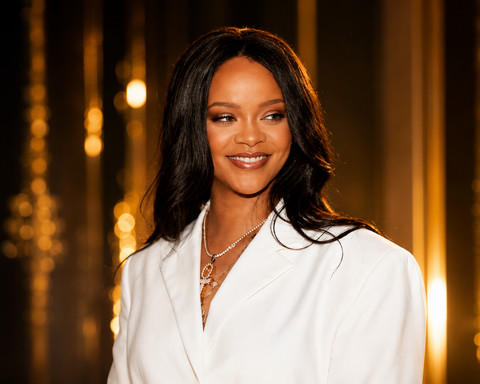
I have been thinking about Toke Makinwa’s daughter reveal, and strangely, the thing that stayed with me was not the photograph.
It was the decision behind the photograph.
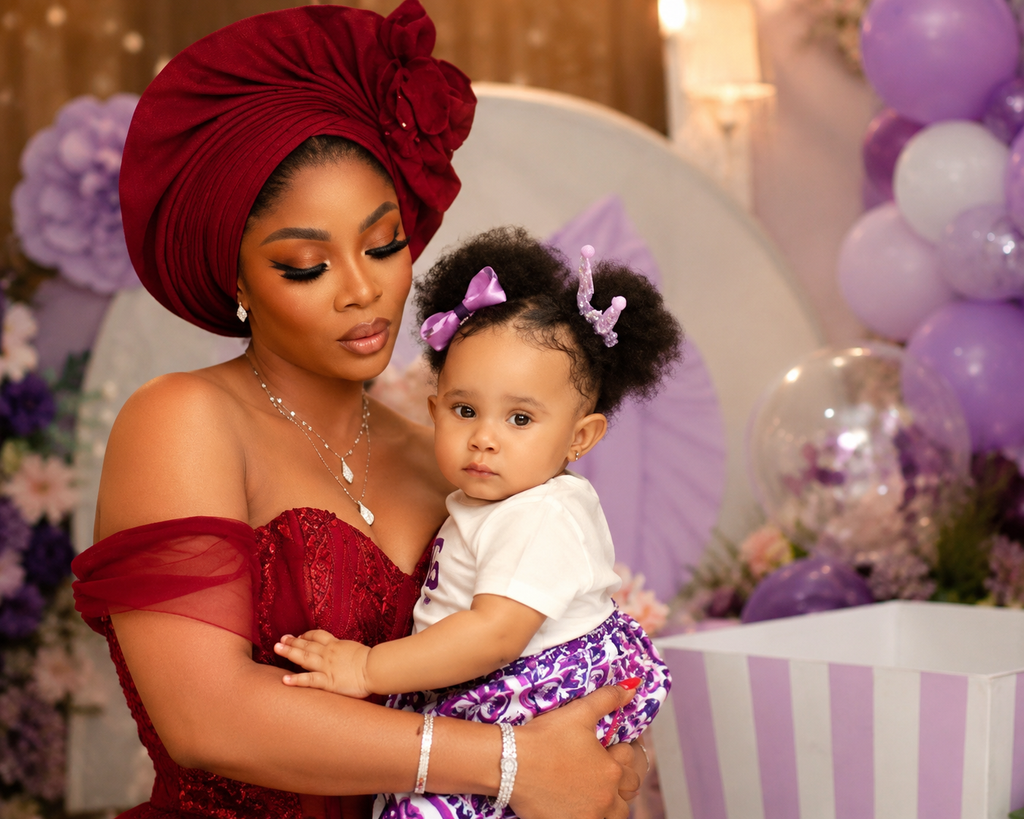
On Friday, August 7, 2026, Toke Makinwa finally revealed the face of her daughter, Yakira Eliana, as the little girl celebrated her first birthday. After keeping her daughter’s face away from the public eye for an entire year, Toke shared beautiful photographs of Yakira alongside an emotional birthday message describing her as her “answered prayer,” her greatest love and her greatest blessing.
And yes, I understand why the photographs immediately attracted attention. Toke Makinwa is one of Nigeria’s most recognisable media personalities, and anything involving her personal life is almost guaranteed to generate conversation.
But as I looked beyond the birthday photographs, I found myself asking a completely different question: Why do we sometimes believe that people owe us access to every part of their lives simply because they are visible online?
That question is becoming increasingly important because social media has completely changed our understanding of privacy.
We now live in a world where sharing has become almost automatic. Someone gets engaged and posts it. Someone buys a new car and posts it. Someone travels and posts it. Someone starts a business and announces it. Someone has a baby and, almost immediately, there is an expectation that photographs should follow.
And when someone decides not to share something, people start asking questions.
Why are you hiding?
Why haven't you shown the baby?
Why haven't you posted your partner?
Why are you keeping that part of your life private?
But perhaps the answer can simply be: because I choose to.
That is one of the biggest things I took away from Toke Makinwa's decision concerning her daughter.
Toke welcomed Yakira in August 2025 and announced her arrival as a miracle and an answered prayer. Since then, she has shared moments from her motherhood journey, but she deliberately kept her daughter's face away from the public.
That decision itself eventually became a subject of public discussion.
Earlier this year, a social media user criticised Toke for showing parts of her daughter while keeping her face hidden, calling the approach “performative privacy.” Toke responded by defending her decision and making it clear that the choice concerning her child was hers to make.
I found that exchange interesting because it exposed something we don't always like to admit about social media: sometimes, we confuse access with entitlement.
Because someone is famous, we begin to feel entitled to their private life.
Because someone shares one photograph, we assume they should share another.
Because someone gives us a glimpse, we expect the entire picture.
But a glimpse is not an invitation to take over someone's boundaries.
That is why Toke finally revealing Yakira's face on her first birthday feels significant to me. She chose the moment. She chose the occasion. She decided when she was ready to introduce that part of her life to the public.
And I think there is something powerful about that.
It reminds me that privacy does not necessarily mean secrecy.
Sometimes privacy simply means being intentional about what you allow into the public space.
There are things we can share with the world, things we can share with close friends, things we can keep within our families and things that simply don't need to become content.
This is particularly important for anyone trying to build a personal brand online because we are constantly being told that authenticity requires complete openness.
I don't believe that.
You can be authentic without being completely exposed.
You can tell your story without telling every detail.
You can build a following without making your family the product.
You can show your personality without showing every private moment.
And you can build a successful online business without turning your entire life into content.
In fact, I think knowing what not to share can sometimes be just as important as knowing what to post.
And that brings me to the part of this story that really made me think about the way many of us approach the internet.
There is a difference between building an audience and building an asset.
An audience can give you attention, but an asset gives you something you can continue to own and develop.
Think about how easily we consume content today.
We can spend three hours scrolling through TikTok, Instagram, YouTube or Facebook, laughing at other people's videos, listening to trending sounds and following celebrity conversations. Then we put our phones down and realise we have spent hours consuming without creating anything.
But what if we started looking at our smartphones differently?
What if the same phone we use to watch Toke Makinwa's birthday photographs could also become the tool we use to build something for ourselves?
That is where I believe the bigger lesson begins.
The digital world has created opportunities for ordinary people to learn skills, create products, build audiences and develop income streams without necessarily needing a physical office or a huge amount of capital to begin.
You can learn content creation.
You can explore affiliate marketing.
You can offer freelance services.
You can create digital products.
You can build a niche website.
You can start a YouTube channel.
You can learn graphic design.
You can experiment with artificial intelligence.
And, increasingly, you can even experiment with music creation from your smartphone.
That last one interests me because music is one of those creative industries many people admire from a distance but rarely imagine themselves participating in.
We listen to other successful artists and think about the finished songs. We hear the beats, the melodies and the polished production, but we don't always think about how technology is making creative experimentation more accessible to beginners.
Someone sitting at home with a smartphone today can begin learning how songs are structured, experiment with lyrics, explore beats and create musical ideas without first having to rent an expensive studio.
That is where tools such as Auxi Sherpa's Music Creation service become interesting.
For someone who has always wanted to write songs, make beats or experiment with creating music for social media, AI-powered music tools can provide a starting point. Instead of simply listening to whatever music is trending, you can begin asking yourself whether you can create something that other people might want to listen to, share or use.
Of course, I would not tell anyone that using an AI music tool automatically means they are going to become the next Davido.
It doesn't work that way.
Technology can help you create, but it cannot replace creativity, originality, persistence, marketing or an understanding of your audience.
What technology can do is lower the barrier to entry.
You can have an idea for a song and begin experimenting.
You can create a beat and test it.
You can make a short musical clip and use it as part of your social-media content.
You can experiment with different sounds and discover what people respond to.
And if you are consistent, those experiments could eventually become part of a larger creative business.
That is why I don't want us to look at Toke Makinwa's story only as celebrity news.
There is a lesson here about building anything valuable.
Sometimes you need to protect something while it is still growing.
Think about a business idea that is still in your head.
Think about a digital product you haven't finished.
Think about the YouTube channel you have been planning.
Think about the song you have been writing.
Think about the online service you want to offer.
Not everything needs to be announced before it is ready.
I have seen people announce businesses they haven't built, courses they haven't created and projects they haven't started. They receive congratulations, likes and comments, and then the excitement disappears.
Meanwhile, the actual work has not been done.
That is why I have become increasingly convinced that there is power in quietly building.
You don't need to tell everyone what you are working on while it is still fragile.
You don't need to announce every idea before you know whether it works.
You don't need to seek public approval for every decision.
Sometimes you need to learn quietly, experiment quietly, make mistakes quietly and improve quietly.
Then, when you are ready, you can introduce the finished product to the world.
That is essentially what Toke's decision reminded me of.
For an entire year, she allowed her daughter to grow away from the public demand to see everything. Then, when Yakira turned one, she decided it was time.
Whether somebody agrees with that decision or not, I think the principle is worth considering.
You should be able to decide what parts of your life become public.
And this matters even more when you are trying to build a personal brand.
Because once something enters the public space, you don't completely control what happens to it.
People can screenshot it.
People can share it.
People can misunderstand it.
People can criticise it.
People can attach their own interpretation to it.
That is why I believe every aspiring content creator and online entrepreneur should develop a personal rule for what they are willing to make public.
Before posting something, ask yourself: Is this helping me build the brand I want? Am I comfortable with this being online for years? Does this serve my audience? And if this post goes viral tomorrow, will I still be comfortable with it?
Those questions can save you from a lot of unnecessary problems.
But I also don't want the lesson to become an excuse for hiding completely.
Privacy and visibility can coexist.
You can have boundaries and still build a powerful online presence.
You can keep your family private while talking openly about your expertise.
You can protect your relationships while creating educational content.
You can avoid sharing your home while building a successful YouTube channel.
You can keep certain parts of your life offline while creating an audience around your skills.
The internet does not need every part of you.
It needs the part that serves the purpose you are trying to build.
And perhaps this is where many aspiring entrepreneurs need to change their mindset.
Instead of asking, “What can I post today that will get attention?” Perhaps we should sometimes ask, “What can I create today that will still be valuable tomorrow?”
That small change in thinking can make a huge difference.
A viral post can disappear in 24 hours.
A useful article can continue attracting readers.
A good digital product can continue generating sales.
A helpful YouTube video can continue bringing viewers.
A skill can help you earn from different clients.
A strong portfolio can open doors.
A well-built personal brand can create opportunities you never expected.
And a piece of music you create today could eventually become a sound that people use in their own videos.
That is why I believe the smartphone in your hand should not only be viewed as a device for entertainment.
It can be a classroom.
It can be a recording studio.
It can be a publishing platform.
It can be a marketing tool.
It can be a design studio.
It can be a business office.
And, if you use it intentionally, it can become the beginning of something that earns you money.
You don't need to become famous before you start.
You don't need a million followers.
You don't need the most expensive phone.
You don't need to know everything.
You simply need to start learning and creating consistently.
And perhaps that is the unexpected lesson I am taking away from Toke Makinwa finally revealing Yakira's face.
The story may have started with a celebrity mother introducing her daughter to the world on her first birthday, but it made me think about something much bigger: the importance of deciding what deserves our attention, what deserves our privacy and what deserves our effort.
Toke protected one part of her life while continuing to build her public career.
We can do something similar with our dreams.
We can protect an idea while developing it.
We can protect our family while building our brand.
We can protect our peace while remaining visible.
We can protect our unfinished work from unnecessary opinions until it is ready.
And when the time comes, we can confidently show people what we have created.
For me, that is what makes this story more than another celebrity headline.
It reminds me that visibility should be intentional.
It reminds me that boundaries are not necessarily barriers.
And it reminds me that while the internet can be a place where we constantly watch other people live their lives, it can also be the place where we begin building a life of our own.
So, if you have been spending most of your time consuming other people's content, perhaps today is a good day to change the ratio.
Spend a little less time scrolling.
Spend a little more time learning.
Create something.
Write something.
Record something.
Design something.
Sell something.
Build something.
If music interests you, experiment with songwriting and beat creation. If writing is your strength, explore blogging or digital publishing. If you are good at explaining things, consider content creation. If you understand products and audiences, learn affiliate marketing. If you have a professional skill, explore freelancing.
Your first creation may not go viral.
Your first product may not sell.
Your first song may not become a trend.
Your first video may get ten views.
That is okay.
The goal at the beginning is not perfection.
The goal is to become a creator.
Because once you stop being only a consumer and start creating, you begin to see your smartphone, your time and even your ideas differently.
And that is the part of Toke Makinwa's story I will remember long after the birthday photographs stop trending.
Protect what matters. Choose your boundaries. Build at your own pace. And when you have something valuable to share, let the world see it because you decided it was time, not because the world demanded it.
If you have an article, opinion piece, personal story or news story you'd like published on Global News Arena. or you're ready to begin your journey toward building a profitable digital business from your smartphone, I'd love to hear from you.
Send me an email
Read more at Global News Arena