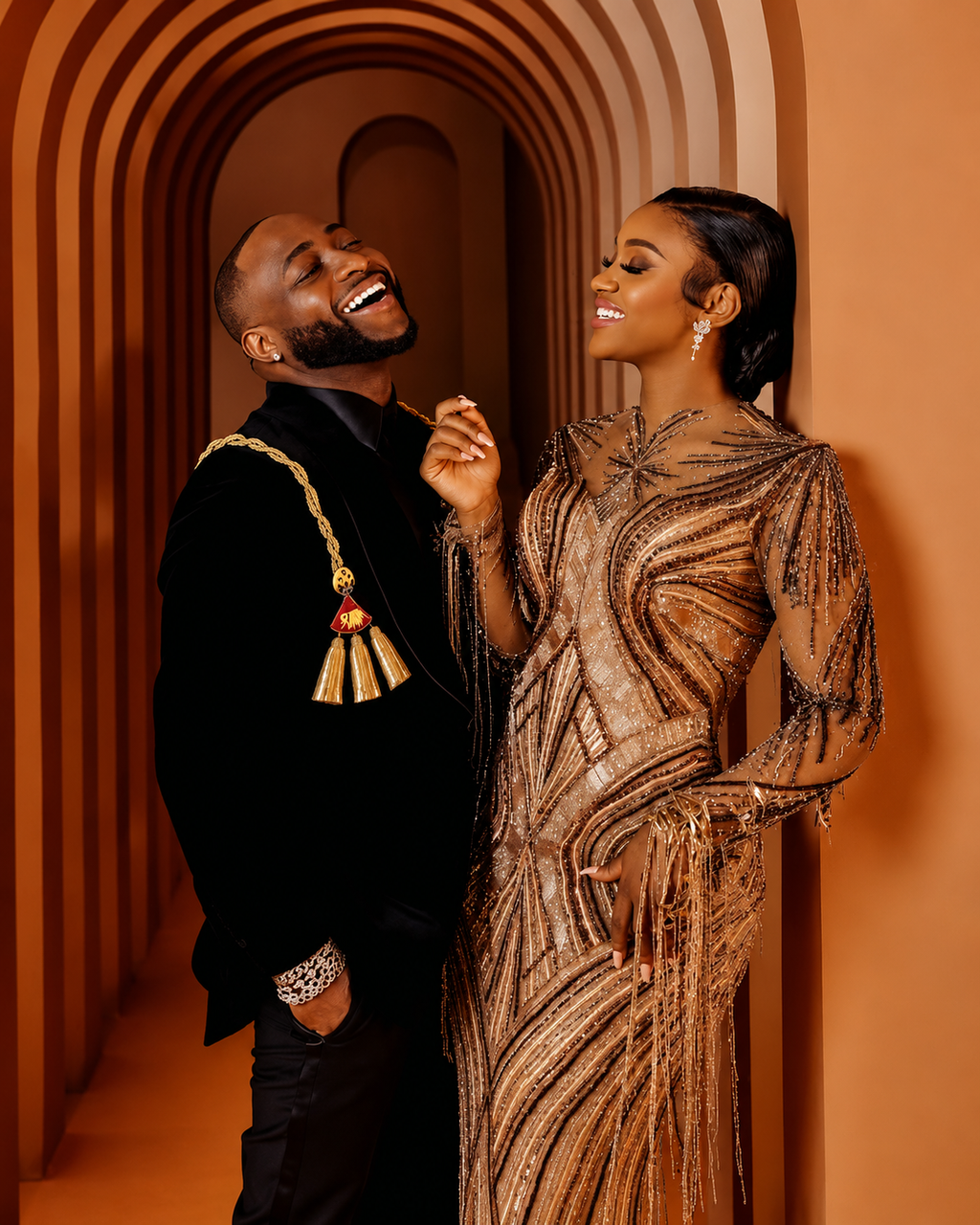
There is something I find fascinating about watching someone else turn an idea into something millions of people can experience. You listen to a song, watch a video, admire a business or discover a creator online, and it can look almost effortless from the outside. What we don't always see is everything that happened before the finished product reached us.
That is one of the reasons Davido's ORIADE made me think beyond the music.
Of course, there is the excitement that comes with a new Davido project. There are the songs, the collaborations, the conversations, the anticipation and the fact that he is continuing to create after more than a decade in the music industry. But when I look at ORIADE, I see something else that I believe is relevant to almost anyone trying to build a better life today.
I see what can happen when creativity is not treated as something you occasionally do, but as something you deliberately develop.
And honestly, I think that distinction matters more than we realise.
Because how many times have we had an idea and done absolutely nothing with it?
We tell ourselves that we want to start a YouTube channel. We think about writing a book. We imagine creating music. We consider starting a blog. We think about selling something online. We have an idea for a digital product. We know we have a skill that somebody might pay for.
Then we postpone it.
We tell ourselves that we need better equipment, more money, more followers, more knowledge or the perfect opportunity.
Before we know it, months have passed and the idea is still sitting exactly where we left it: inside our heads.
That is why I keep coming back to the creative lesson behind ORIADE. Davido's latest project is not the product of one random burst of inspiration. It is another chapter in a much longer creative journey.
And that is important because successful people can sometimes make success look like an event when it is really a process.
We see the album.
We see the audience.
We see the collaborations.
We see the recognition.
We see the finished product.
But behind every finished product are countless smaller decisions, experiments, lessons and attempts that most people never see.
That is something I think about whenever I consider building anything online.
Your first video may not be good.
Your first article may not attract thousands of readers.
Your first digital product may not sell.
Your first attempt at freelancing may be ignored.
Your first song may sound nothing like what you imagined.
But none of that necessarily means you have failed.
Sometimes it simply means you have started.
And this is where I think many people make a mistake. We compare our beginning to somebody else's established career and then use the comparison as an excuse not to begin.
We look at someone like Davido, who has spent years building a career, and then look at our own unfinished idea and conclude that we are nowhere close.
But I don't think the lesson is that you should become Davido.
The lesson is that you should become more committed to developing whatever your own creative ability happens to be.
That could be music.
It could be writing.
It could be photography.
It could be graphic design.
It could be video editing.
It could be teaching.
It could be storytelling.
It could even be something you have not discovered yet.
And once you begin thinking about creativity that way, another question naturally follows: what can this creativity become?
That question is much more interesting to me than simply asking, “How can I make money online?”
There are thousands of conversations about making money online, but I believe the better starting point is value.
What can you create that somebody wants?
What can you teach that somebody needs to learn?
What problem can you solve?
What can you make easier?
What can you help someone achieve?
What can you create that makes someone stop scrolling for a moment?
Once you begin asking those questions, you start seeing opportunities that were probably around you all along.
A writer can turn knowledge into an ebook.
A designer can create templates.
A teacher can create educational resources.
A video editor can offer freelance services.
A content creator can build an audience around a specific subject.
Someone who understands a particular skill can create a digital course or guide.
A musician can create songs, beats and music-related content.
And someone with a smartphone can begin experimenting with many of these ideas without first building an expensive physical business.
That is one of the biggest changes I think technology has brought to entrepreneurship.
Your phone is no longer simply a device for consuming other people's creativity.
It can also become a creation studio.
You can write on it.
Record on it.
Edit on it.
Design on it.
Research on it.
Publish from it.
Communicate with customers through it.
Build an audience through it.
And increasingly, you can use it to experiment with creative work that once required specialised equipment.
Music is a good example.
If listening to Davido's ORIADE makes you think, “I wish I could create something like this,” I don't think the conversation has to end with admiration.
You can start learning.
You can experiment with songwriting.
You can explore beats.
You can test different sounds.
You can create short musical ideas.
You can even experiment with digital music-creation services such as the Music Creation service on Auxi Sherpa.
And I want to make an important distinction here because I don't think the tool is the story.
The tool is simply an opportunity to start.
The real story is what you do with your creativity once you have access to the tools.
Because having an app does not automatically create a business.
Having an AI tool does not automatically create an audience.
Having a smartphone does not automatically generate income.
You still need an idea.
You still need practice.
You still need originality.
You still need to understand people.
You still need consistency.
And, most importantly, you need to create something that gives people a reason to care.
That is where I think creativity and online business begin to meet naturally.
Imagine someone who loves making music but has no professional studio.
Instead of waiting until they can afford one, they begin experimenting from their phone.
They create a beat.
Then another.
They write a hook.
They record the process.
They share a short clip.
Maybe the first one gets 50 views.
Maybe the next gets 100.
Maybe one eventually gets thousands.
But something interesting starts happening.
They are no longer simply making music.
They are documenting their creative journey.
And that journey itself becomes content.
That content can attract people who are interested in music.
Those people can become an audience.
And once there is an audience, new possibilities begin to appear.
Maybe the creator eventually offers music-related services.
Maybe they create digital resources.
Maybe they teach beginners.
Maybe they build a community.
Maybe they recommend tools they genuinely use through legitimate affiliate marketing.
Maybe they collaborate with other creators.
Maybe they develop a personal brand around their creative process.
The point is not that every person who creates music will suddenly build a successful business.
The point is that creation gives you something to build around.
That principle extends far beyond music.
Someone who enjoys graphic design could start sharing simple design tutorials and eventually sell templates.
Someone who enjoys writing could publish useful articles and later create an ebook.
Someone who is good at editing videos could create content demonstrating their skills and attract freelance clients.
Someone who knows how to use productivity or AI tools could teach other people how to use them and eventually create digital resources around that knowledge.
The business can grow from the skill.
And the skill can grow from simply starting.
This is why I don't think people should underestimate the power of beginning with what they already have.
There is always a temptation to believe that entrepreneurship begins when you have enough money.
Sometimes it begins much earlier.
It begins when you identify something you can create or learn and decide to take it seriously.
Your smartphone can be enough to begin testing an idea.
Your internet connection can be enough to start learning.
Your existing knowledge can be enough to help one person.
And that first person matters because businesses are ultimately built by creating value for real people.
Of course, I would never tell anyone that starting an online business is effortless.
It isn't.
There is a lot of noise online suggesting that you can make money overnight if you simply find the right app, AI tool or secret strategy.
I don't believe that.
The more sustainable approach is much less exciting but much more realistic.
Learn a skill.
Create something useful.
Put it in front of people.
Listen to their response.
Improve it.
Keep creating.
Then find a legitimate way to monetise the value you are producing.
That is not a shortcut.
But it is a path.
And sometimes having a path is more valuable than having another shortcut.
This is also why I think ORIADE is an interesting reminder for anyone who wants to build something online.
You do not need to know exactly where your creative journey will end before you begin it.
Davido could not have known every chapter his career would eventually contain when he started.
In the same way, you may not know whether your first creative experiment will eventually become a business.
You don't have to.
You only need to know what you are willing to try today.
Maybe you start with a song.
Maybe you start with a blog post.
Maybe you start with a video.
Maybe you create a simple digital product.
Maybe you offer your first freelance service.
Maybe you start documenting something you are learning.
The important thing is that you create something that did not exist before.
Because that is where the shift happens.
You move from consumer to creator.
And once you become comfortable creating, another shift can happen.
You begin to see your creativity as an asset.
Your knowledge becomes an asset.
Your skills become an asset.
Your content becomes an asset.
Your audience becomes an asset.
And eventually, those assets can form the foundation of an online business.
I think that is a much healthier way to look at the creator economy.
Not everyone needs to chase viral fame.
Not everyone needs millions of followers.
Not everyone needs to become an influencer.
You can build something smaller and still make it meaningful.
You might build an online side hustle that gives you additional income.
You might create digital products that solve a specific problem.
You might freelance from your phone.
You might build a niche content platform.
You might use affiliate marketing to recommend products and services that genuinely help your audience.
You might create music and build a community around your creative journey.
You might combine several of these things over time.
Your version of success does not have to look like Davido's.
In fact, it probably shouldn't.
The purpose of looking at successful people is not to copy their lives. It is to identify principles that can be adapted to our own circumstances.
And the principle I take from Davido's creative journey is simple: keep developing what you have.
Don't let the fact that someone else is further ahead convince you that you shouldn't start.
Don't let the absence of expensive equipment convince you that you cannot experiment.
Don't let a small audience convince you that your work has no value.
And don't let your first unsuccessful attempt convince you that you are incapable of succeeding.
Your first version is allowed to be a learning experience.
Your second version can be better.
Your tenth version can be better still.
That is how creative people grow.
And that is also how businesses grow.
So, when I listen to ORIADE, I don't only hear another Davido project.
I hear a reminder about what happens when someone continues creating long enough for the work to evolve.
And perhaps that is the question I would rather leave with you.
Not, “How can I become the next Davido?”
But, “What is the thing I have been carrying in my head that I should finally start creating?”
Maybe it is a song.
Maybe it is a business.
Maybe it is a digital product.
Maybe it is a YouTube channel.
Maybe it is a service.
Maybe it is simply a skill you have been meaning to learn.
Whatever it is, start small.
Use the tools available to you.
Learn as you go.
Share what you create.
Pay attention to what people respond to.
Then improve.
Because your creativity may not immediately become a business, but it can become the beginning of one.
And in a world where our phones are increasingly capable of helping us create, publish, learn and sell, I think the bigger risk is no longer that we don't have enough tools.
The bigger risk is that we have all the tools and still never begin.
Davido's ORIADE reminded me of something I believe is worth remembering: don't just consume somebody else's creativity. Give your own creativity somewhere to go.
If you have an article, opinion piece, personal story or news story you'd like published on Global New Arena, or you're ready to begin your journey toward building a profitable digital business from your phone, I'd love to
Continue Reading: Davido’s Wife Chioma Celebrates Adeleke Family Achievement — The Bigger Lesson I Took From Bunmi’s MBA Success and Davido’s New Music Era
hear from you. Send me an email.
Read more at Global News Arena