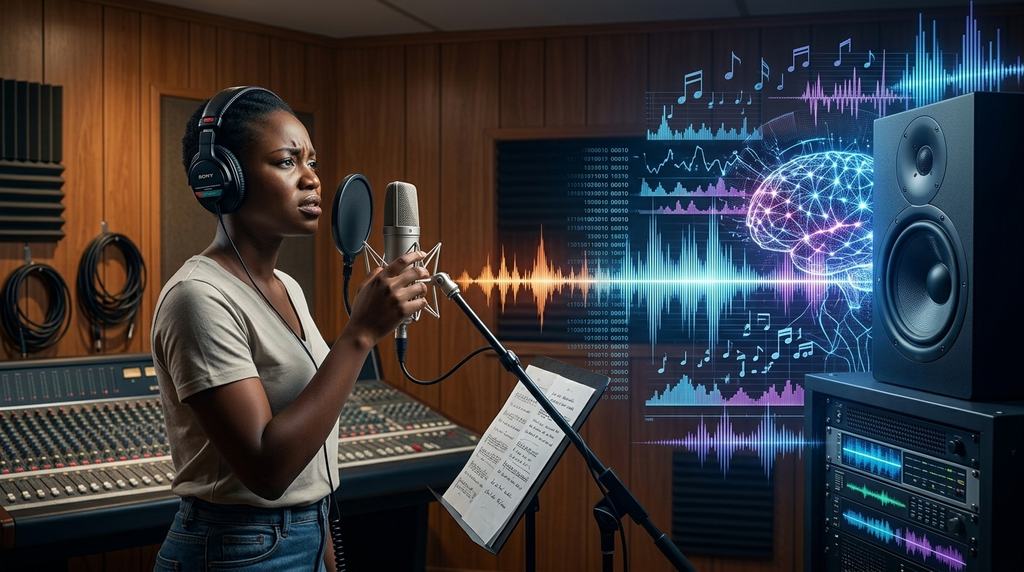
There was a time when hearing that a song was made with AI would have been enough to make people stop and stare.
Now, you might not even be able to tell the difference.
AI generated and AI assisted music has become common enough that the entire music industry is scrambling to work out what should actually qualify as real.
And this isn't a conversation going on behind the scenes anymore.
It's lawsuits.
New laws.
Grammy rule changes.
Over 200 major artists signing an open letter.
Universal Music Group, Sony Music Entertainment, and Warner Music Group, the three biggest labels in the world, have filed landmark lawsuits against AI music generators like Suno and Udio.
The core accusation is that these companies scraped massive catalogues of copyrighted music without permission or payment, then used that stolen data to train their AI models.
The labels are demanding maximum statutory damages, which could reach up to $150,000 per infringed song.
Multiply that across an entire catalogue, and the numbers start reaching into the billions.
This isn't a small dispute.
It's one of the biggest legal fights the music industry has ever taken on.
Cloning a voice is now a legal battlefield too.
Here's where it gets genuinely unsettling.
AI can now clone a specific artist's voice convincingly enough to fool listeners entirely.
The clearest example of this was "Heart on My Sleeve," a viral track that used AI to perfectly mimic Drake and The Weeknd's voices.
It got pulled from every streaming service after Universal Music Group filed copyright complaints.
That moment pushed lawmakers to actually act.
Tennessee passed the ELVIS Act, the Ensuring Likeness Voice and Image Security Act, the first US law specifically protecting musicians from unauthorised AI voice cloning.
On a national level, lawmakers are now pushing the No FAKES Act, aiming to give creators exclusive legal control over their voice and visual likeness against AI replication.
Streaming platforms are getting dragged into the fight too.
Spotify has repeatedly purged tens of thousands of AI generated tracks after catching companies using bots to fake streams and steal royalty payouts.
Rather than let AI companies scrape music freely, YouTube and Universal Music Group partnered to build the YouTube AI Music Incubator, a system meant to ensure that if an AI tool uses an artist's style or voice, it happens legally, with the artist actually getting paid.
The Grammys drew a hard line too.
The Recording Academy updated its official rulebook, stating plainly, "Only human creators are eligible to be submitted for, nominated for, or win a Grammy Award."
There's a narrow exception.
A song using some AI elements can still be nominated, but only if there's meaningful, substantial human authorship behind it.
An AI generated voice cannot win a performance award.
An AI written lyric cannot win a songwriting award.
Over 200 artists signed the same letter.
The Artist Rights Alliance published an open letter signed by more than 200 major artists, including Billie Eilish, Nicki Minaj, Stevie Wonder, and Katy Perry, calling on tech companies to stop using AI to devalue human music.
The letter warned that unregulated AI could exploit human voices, steal professional opportunities from songwriters, and damage the entire music ecosystem.
That's a large chunk of the industry's biggest names agreeing on the same thing at once.
So what does the industry actually want?
Here's the part that gets lost in the noise.
The music industry isn't trying to ban AI outright.
Plenty of artists already use it for things like audio mixing or sound design.
What the industry is actually fighting for comes down to three things.
Consent: Companies must ask permission before using an artist's music to train AI.
Compensation: Artists and labels must be paid if AI uses their work.
Credit: Humans remain the primary face, voice, and owner of the music.
The same argument is going to show up everywhere.
What happens when AI can write an article, design an advert, make a video, create a voice, build a presentation.
At some point, "AI can do it" stops being the interesting part.
The interesting part becomes, should it, and if it does, how much human involvement should still matter.
That's the same question explored in AI Can Create Almost Anything Now, So What Makes Good Content Different.
The human advantage may become more valuable.
If AI makes creating something easier, the ability to create it is no longer enough to make you stand out.
Your taste matters.
Your perspective matters.
Your story matters.
That's probably why the music industry's fight is about making sure a human artist using a powerful tool never gets confused with a machine producing an entirely synthetic product competing for the same recognition, and the same royalty cheque.
Frequently Asked Questions
Is all AI generated music being banned?
No. The industry isn't trying to ban AI outright, artists already use it for things like mixing and sound design. The fight is over consent, compensation, and credit when AI uses an artist's actual voice or work.
Can an AI generated song win a Grammy?
No. The Recording Academy requires meaningful human authorship for eligibility. An AI generated voice cannot win a performance award, and an AI written lyric cannot win a songwriting award.
What was the "Heart on My Sleeve" controversy?
It was a viral AI generated track that cloned Drake and The Weeknd's voices convincingly enough to be mistaken for real. It was pulled from streaming platforms after Universal Music Group filed copyright complaints.
What is the ELVIS Act?
The Ensuring Likeness Voice and Image Security Act, passed in Tennessee, is the first US law specifically protecting musicians from unauthorised AI voice cloning.
Why are major labels suing AI companies like Suno and Udio?
They allege these companies used copyrighted music without permission or payment to train their AI models, with potential damages reaching up to $150,000 per infringed song.
If you have an article, opinion piece, event or news story you would like published or you are ready to begin building a profitable online content writing business from your phone or laptop, Global News Arena would love to hear from you.
Send an email to advertise@globalnewsarena.com