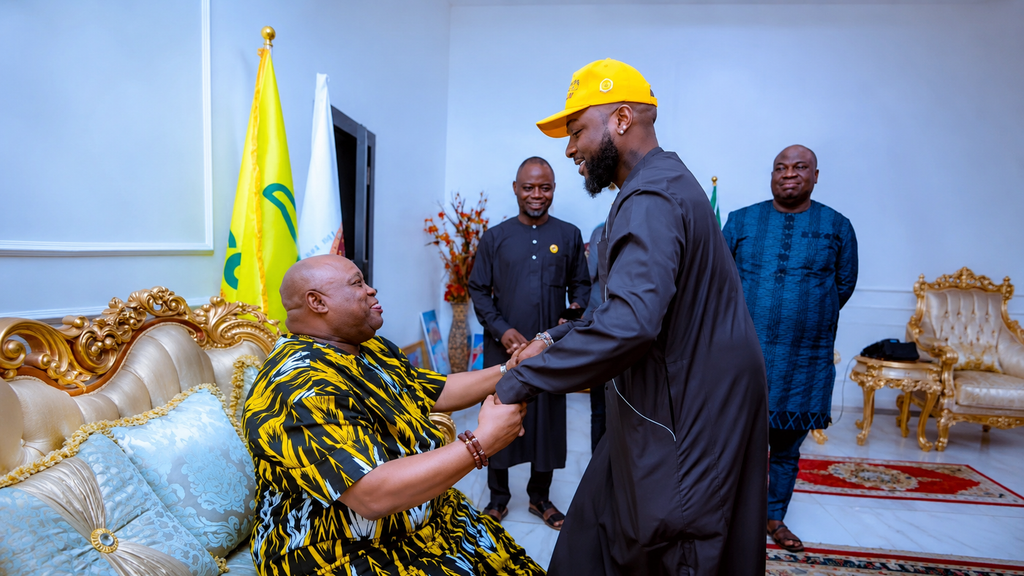
I knew Davido was going to react to Ademola Adeleke’s Osun victory. What I did not expect was how much meaning could be packed into just a few words.
“We did it, Uncle.”
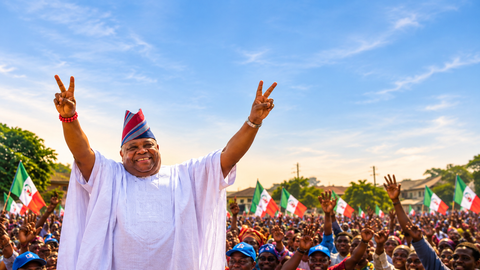
That was the brief message Davido shared on X after his uncle, Ademola Adeleke, was declared the winner of the August 15, 2026 Osun State governorship election.
At first glance, it looked like an ordinary family celebration. A nephew celebrating his uncle after a major political victory. But the more I thought about it, the more I realised that there was something much bigger sitting behind those four simple words.
Because this was not just another election result, and Davido is certainly not just another person posting on social media.
Ademola Adeleke has now secured another term as governor of Osun State after defeating his closest challenger, the All Progressives Congress candidate Bola Oyebamiji. According to reports, Adeleke polled 511,067 votes against Oyebamiji’s 444,815, giving him a margin of 66,252 votes. He also won in 19 of the state’s 30 local government areas.
So when the result was finally declared, Davido celebrated.
And honestly, I think the simplicity of his reaction is what made it so powerful.
He did not need to write a long political speech. He did not need to explain the entire election to Nigerians. He did not need to spend several paragraphs defending his uncle.
He simply said, “We did it, Uncle.”
Sometimes, the shortest statements are the ones that travel the furthest.
That is particularly true when the person making the statement already has an audience that is willing to listen.
Davido has spent years building that audience through music, entertainment, performances, collaborations and his very public personality. Today, when he says something, Nigerians don't only see a musician speaking. They see a major African celebrity with millions of people watching what he does and says.
That is why his reaction to Adeleke’s victory became a story of its own.
And this is where I think the story becomes more interesting than the headline.
Davido's reaction was personal because Ademola Adeleke is his uncle, but it was also public because the Adeleke family has become one of the most recognisable names at the intersection of Nigerian politics, business and entertainment.
For many Nigerians, the name Adeleke immediately brings several things to mind.
There is Governor Ademola Adeleke.
There is businessman Adedeji Adeleke.
There is Davido, whose real name is David Adeleke.
There is also the family's long history of public life and influence.
That combination makes almost anything involving the family capable of attracting attention.
But while many people will focus on the politics, the family connection or the celebrity reaction, I find myself thinking about something else: influence.
What does it really mean to have a voice that people listen to?
And perhaps more importantly, how does an ordinary person build that kind of influence in the first place?
Davido did not become influential because he woke up one morning and decided he wanted millions of people to listen to him.
He built something.
He created music.
He performed.
He remained visible.
He connected with people.
He developed a recognisable identity.
He built a personal brand.
Over time, the audience came.
And once the audience came, his voice became valuable.
That is something I think many of us overlook when we see celebrities making a simple post that suddenly becomes headline news.
We see the post.
We don't always see the years behind it.
We see the millions of followers.
We don't always see the countless songs, performances, interviews, controversies, successes, failures and conversations that helped create that audience.
That is why I don't look at Davido's “We did it, Uncle” message merely as a celebrity reaction.
I see it as another reminder of what happens when a person spends years building a platform.
And that lesson is not reserved for musicians.
In fact, this is where I believe ordinary Nigerians should pay attention.
You may not be a singer.
You may not have a famous family.
You may not know politicians.
You may not have money to rent an expensive office.
You may not even own a laptop right now.
But you probably have something that can be more powerful than you realise.
You have a smartphone.
And in today's digital economy, a smartphone can be much more than a device for watching other people's lives.
It can become the beginning of your own.
That thought is particularly important to me because I have noticed how many people spend hours every day scrolling through Facebook, TikTok, Instagram, YouTube and other platforms without asking themselves one simple question: “What am I building?”
We consume.
We comment.
We argue.
We laugh.
We watch other people become famous.
We watch other people make money.
We watch other people build businesses.
Then we put our phones down and complain that nothing is changing in our own lives.
But what if we changed the question?
What if instead of asking only, “What can I watch today?” we started asking, “What can I create today?”
That small change in mindset can make a huge difference.
And I'm not suggesting that everybody needs to become an influencer.
Far from it.
Someone can use a smartphone to become a writer.
Someone else can create educational videos.
Another person can teach people how to cook.
Someone can build a travel information page.
Another person can create content about fashion, beauty, technology, parenting, business, education or entertainment.
Someone who understands a particular skill can turn that knowledge into a digital product.
A person who knows how to write can offer content-writing services.
Someone who understands social media can manage pages for small businesses.
Another person can explore legitimate affiliate marketing by creating useful content around products and services they genuinely understand.
The possibilities are there.
But there is one thing all these opportunities have in common.
You have to build trust.
That is where Davido's story becomes relevant again.
People didn't suddenly start paying attention to him because of one post.
They already knew who he was.
They already had a reason to care about what he said.
The same principle applies online, even if you are starting with only 100 followers.
You don't need millions of people.
You need people who trust you.
You need people who find your content useful.
You need people who look at your name and immediately know what you represent.
That is what a personal brand really is.
It is not simply having a nice photograph and a fancy biography.
It is what people remember when they see your name.
If I see your page, do I know what you can help me with?
If I read your article, do I learn something?
If I watch your video, do I gain something?
If you recommend something, do I trust that recommendation?
Those questions matter much more than simply counting followers.
And this is also why I think Davido's reaction to the Osun election deserves to be viewed beyond entertainment gossip.
The message itself was about his uncle's victory, but the attention it received was also a demonstration of how powerful an established audience can become.
One person's post can become another person's headline.
One person's opinion can start a conversation.
One person's platform can open doors.
That is an asset.
And you can build your own version of that asset, even if you start very small.
Of course, there is another side to the Osun story that should not be ignored.
An election victory is not simply about celebrating numbers.
It comes with responsibility.
Adeleke has now been given another mandate by voters, and the celebration will eventually give way to the harder work of governing.
INEC declared him the winner after the results from the state's 30 local government areas were collated. His victory over Oyebamiji was significant, but the numbers also show that the election was competitive rather than a walkover.
That means the real judgment of the administration will not come from the excitement of election night.
It will come from what happens during the next term.
Will people see improvements in their communities?
Will infrastructure improve?
Will employment opportunities expand?
Will education and healthcare receive meaningful attention?
Will the state become more attractive for businesses and young people?
Those are the questions that will matter long after the social media celebrations have disappeared from people's timelines.
And perhaps that is another lesson worth taking from this entire episode.
Victory is only one part of the journey.
What you do after the victory is what determines whether the victory actually means something.
The same thing applies to building an online business.
Getting your first follower is not the goal.
Getting your first viral video is not the goal.
Getting your first article published is not the goal.
Making your first ₦10,000 online is certainly exciting, but even that is not the final destination.
The real goal is to build something that can continue creating value.
That is why I would rather encourage someone to build a useful digital skill than chase every viral trend they see online.
Learn how to write.
Learn how to create content.
Learn how to edit videos.
Learn how to use artificial intelligence responsibly.
Learn how to market a product.
Learn how to build a simple website.
Learn how to communicate effectively.
Then put those skills to work.
The beautiful thing is that you can begin from where you are.
You don't have to wait until you have a perfect laptop.
You don't have to wait until you have a sophisticated camera.
You don't have to wait until you have a large office.
You don't even have to wait until you have thousands of followers.
Start with your smartphone.
Start with what you know.
Start by solving one small problem for one person.
Then do it again.
And again.
Eventually, people begin to recognise you for something.
That recognition becomes trust.
Trust creates an audience.
An audience creates opportunities.
And opportunities, when handled properly, can become income.
That is the part of Davido's story that I find most useful for someone who is not interested in politics or entertainment at all.
You can build influence without becoming famous.
You can build an audience without becoming a celebrity.
You can make money online without pretending to be a millionaire.
You can create something valuable without having a wealthy family behind you.
What you need is patience, consistency, a useful skill and the willingness to keep showing up.
Of course, social media can make everything look instant.
We see someone go viral and assume they became successful overnight.
We see someone announce a new business and assume the business appeared overnight.
We see someone with hundreds of thousands of followers and forget that there was a time when almost nobody was watching.
That is why I think we should stop comparing our beginning to somebody else's middle.
Davido's platform is the result of years of work.
Your platform may be only a few weeks old.
That's okay.
What matters is whether you are building.
And perhaps the biggest question this Osun election story leaves me with is not whether Davido's message was political, emotional or simply a family celebration.
The question is: what are we doing with the platforms we already have?
Because everyone is building something online, whether they realise it or not.
Some people are building an audience.
Some are building a reputation.
Some are building a business.
Some are building a career.
Unfortunately, some are also building nothing but a history of arguments in comment sections.
I would rather see Nigerians use these powerful digital tools to create opportunities for themselves.
If you have knowledge, share it.
If you have a skill, teach it.
If you can write, write.
If you can make videos, make them.
If you know how to solve a problem, show someone how to solve it.
Don't underestimate the small beginning.
A blog post can become a portfolio.
A TikTok video can introduce someone to your business.
A Facebook page can become a community.
A YouTube channel can become a media brand.
A digital guide can become a product.
A writing skill can become a freelance career.
And a smartphone that is currently being used mainly for scrolling can become the tool that helps you build something that pays you.
That, to me, is the deeper story behind Davido's reaction.
He wrote only a few words, but those words travelled because they came from someone who had already spent years building a voice that people recognise.
So yes, Davido celebrated his uncle.
Yes, Ademola Adeleke has secured another term as governor of Osun State.
Yes, the political implications of the result will continue to generate conversations as Nigeria moves closer to the 2027 political season.
But beyond all of that, I think there is a lesson that is much more personal.
Build your own name.
Build your own skill.
Build your own audience.
Build your own platform.
Build something useful.
Because one day, you may not need to chase people for attention.
They may come looking for you because of what you have built.
And when that happens, the most valuable thing you have may not be the number of followers displayed on your screen.
It may be the trust behind those followers.
That is the kind of influence worth building.
That is the kind of digital asset worth owning.
And if you are sitting with nothing more than a smartphone today, don't look at it only as a device for consuming other people's success. Look at it as a tool that can help you begin creating your own.
You may not know where the journey will take you.
But you will never know until you start.
If you have an article, opinion piece, event or news story you would like published on Global News Arena, or you are ready to begin your journey toward building a profitable online content-writing business from your phone or laptop, Global News Arena would love to hear from you. Send your article, story or publication enquiry to advertise@globalnewsarena.com