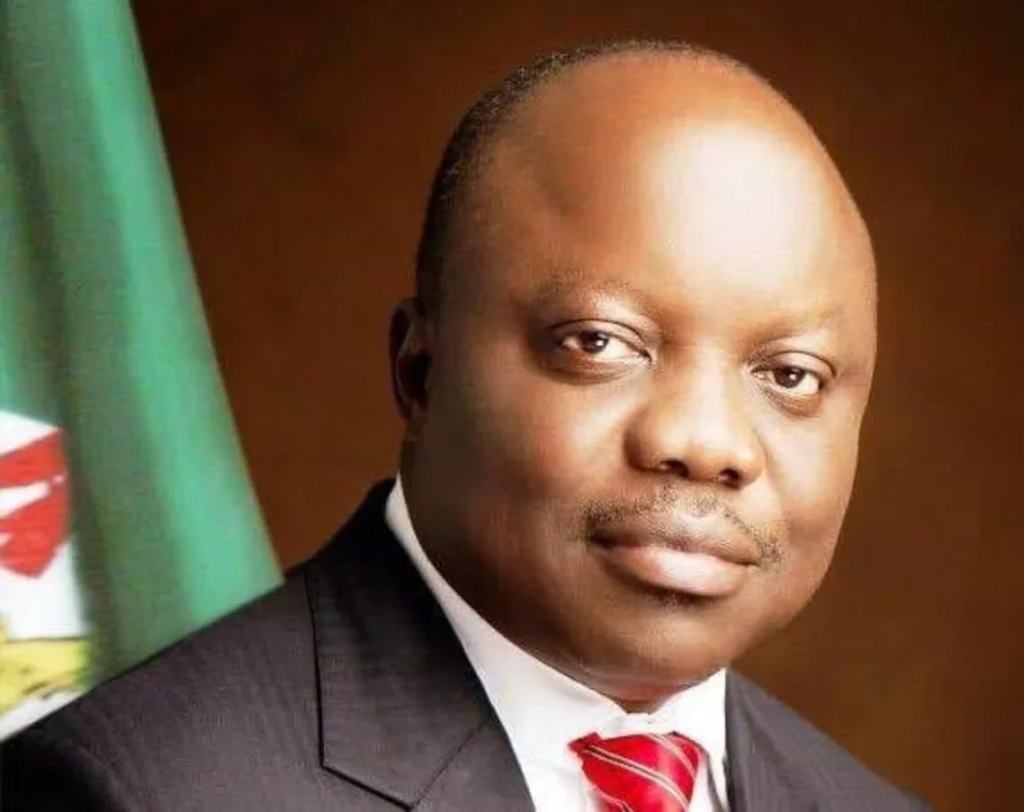
Dr. Emmanuel Eweta Uduaghan is a Nigerian medical doctor and politician best known for serving as Governor of Delta State from 2007 to 2015. Before entering politics, he built a career in medicine, working in hospitals and establishing a private medical practice. His journey later took him into public administration, where he held important positions in the Delta State Government before becoming governor.
His years in public service were associated with healthcare development, infrastructure, education, peace and security, and efforts to diversify Delta State’s economy beyond crude oil. His personal life, educational background and transition from medicine to politics are also important parts of his story.
Early Life, Parents and Family Background
Emmanuel Eweta Uduaghan was born on October 22, 1954, in Abigborodo, in Warri North Local Government Area of present-day Delta State, Nigeria. He is of Itsekiri origin. His parents were Chief Edmund D. Uduaghan and Mrs Cecilia Uduaghan.
Growing up in a family with roots in the Niger Delta, Uduaghan received his early education in Delta State. His background and upbringing formed the foundation of a journey that would eventually take him into the medical profession and public service.
His life also reflected the diverse cultural and political environment of Delta State, a region made up of communities with different languages, traditions and economic interests. These communities would later become part of the population he served as governor.
Educational Background and Medical Training
Uduaghan began his formal education at Baptist Primary School in Mosogar, where he studied from 1961 to 1966. He proceeded to Federal Government College, Warri, for his secondary education between 1968 and 1974.
After completing secondary school, he gained admission to the University of Benin, where he studied medicine from 1975 to 1980. He graduated with a Bachelor of Medicine and Bachelor of Surgery degree, commonly known as MBBS.
He subsequently obtained a diploma in anaesthesia, developing specialist knowledge that supported his work in the medical field. His education prepared him for a profession that required technical knowledge, careful decision-making and the responsibility of caring for patients.
After completing his medical studies, Uduaghan undertook the National Youth Service Corps programme in Kwara State. His early professional experience helped him build the foundation for a career that began in clinical practice before expanding into government.
His Career as a Medical Doctor
Uduaghan began working professionally in 1983 as a medical officer at the Delta Steel Company in Aladja, Delta State. He later worked at several medical facilities, including Westend Hospital in Warri, Benoni Hospitals in Benin City and Shell Hospital in Ogunu.
During his medical career, he worked as a consultant anaesthesiologist. Anaesthesia is an important area of medicine that helps patients undergo surgical procedures safely through the management of pain and other bodily responses.
In 1994, he established a private medical practice. This experience exposed him to the practical demands of healthcare delivery, including patient care, medical administration and the need for reliable health services.
Beyond his hospital work, Uduaghan participated in professional and leadership organisations, including the Nigerian Medical Association and Junior Chamber International, popularly known as Jaycees. These activities provided opportunities for professional engagement and leadership development.
His years in medicine became an important part of his public identity. When he later moved into government, his medical background influenced his connection to healthcare policy and the administration of health services.
How Emmanuel Uduaghan Entered Politics
Uduaghan moved into public administration in 1999, when James Ibori became Governor of Delta State. On August 6 of that year, he was appointed Commissioner for Health, a position he held until 2003.
As Commissioner for Health, he became involved in the state government’s responsibility for healthcare services, medical personnel and related infrastructure. The position marked a transition from treating individual patients to participating in decisions affecting healthcare delivery across the state.
His experience in the medical profession provided a background for his work in the health ministry. However, managing a public healthcare system also required coordination, budgeting, administration and decisions involving the needs of different communities.
In June 2003, Uduaghan was appointed Secretary to the Delta State Government. He served in that position until 2007, helping coordinate government activities and administrative responsibilities.
These appointments gave him experience in both sector-specific administration and the wider operations of state government. They also placed him in a prominent position within Delta State politics before his emergence as governor.
Becoming Governor of Delta State
Uduaghan became Governor of Delta State on May 29, 2007, under the platform of the Peoples Democratic Party. He succeeded James Ibori, whose administration had ended earlier that year.
His emergence as governor followed a disputed electoral process. The original election was challenged, and the Court of Appeal later annulled the result in November 2010, leading to a rerun election in January 2011.
Uduaghan subsequently contested the April 2011 governorship election and won a second term, defeating Great Ogboru of the Democratic People’s Party. He remained in office until May 29, 2015, completing eight years as governor.
His administration operated in a state with substantial oil and gas resources but also faced challenges involving infrastructure, employment, public services, security and economic development.
During his tenure, his government pursued projects and programmes in healthcare, education, road development, transportation and other areas of public administration. His record in office has remained part of discussions about governance and development in Delta State.
The Delta Beyond Oil Vision
One of the major initiatives associated with Uduaghan’s administration was the Delta Beyond Oil vision. The idea was to encourage economic development beyond crude oil and reduce the state’s dependence on revenue from the petroleum industry.
Oil revenue has played a major role in Nigeria’s public finances, particularly in oil-producing states such as Delta. However, dependence on a single major source of income can expose a state to changes in global oil prices, production levels and government revenue.
The Delta Beyond Oil vision placed attention on other economic activities, including agriculture, tourism, small and medium-sized enterprises and investment. The broader objective was to encourage more sectors to contribute to the state’s economy and create opportunities for residents.
Economic diversification requires sustained investment, infrastructure, skills development and support for businesses. Although the overall impact of the initiative can be assessed from different perspectives, Delta Beyond Oil became one of the recognisable policy themes of Uduaghan’s administration.
Healthcare Achievements and Public Health Programmes
Healthcare remained an important area of Uduaghan’s public service because of his background as a medical doctor. His administration pursued programmes aimed at improving access to medical services, including maternal and child healthcare initiatives.
Some of the programmes focused on pregnant women and children under five, groups that often require regular medical attention and support. Improving access to healthcare for mothers and young children can help families receive essential services and reduce barriers to treatment.
His government also supported the development of the Delta State University Teaching Hospital in Oghara. Teaching hospitals play an important role in specialist medical treatment, the training of healthcare professionals and the development of clinical services.
Healthcare development involves more than constructing facilities. It also requires trained personnel, medical equipment, funding, reliable services and proper maintenance. The health programmes associated with Uduaghan’s administration formed part of wider efforts to strengthen public healthcare in Delta State.
Infrastructure Development and Education
Infrastructure was another important area of Uduaghan’s governorship. His administration pursued road projects and transport-related development intended to improve movement between communities and support economic activity.
Projects associated with his years in office included development connected to Asaba International Airport and work at Osubi Airport. Airports and road networks can support trade, travel, investment and connections between communities, although their long-term value depends on effective management and maintenance.
Education was also part of the administration’s development agenda. Government initiatives included school rehabilitation, classroom construction, bursaries and scholarship programmes intended to support students and improve learning facilities.
Access to quality education can expand opportunities for young people and help prepare them for employment and further study. Similarly, reliable infrastructure can make it easier for people to access schools, hospitals, markets and other public services.
The results of these initiatives can be assessed through their implementation and lasting benefits to residents. Nevertheless, infrastructure and human development remained significant themes throughout Uduaghan’s time as governor.
Peace and Security in the Niger Delta
During Uduaghan’s administration, security was a major concern across the Niger Delta. The region had experienced militancy, disputes involving oil-producing communities and disruptions to oil-related activities.
These challenges affected communities, businesses, government revenue and the wider economy. They also highlighted the importance of addressing local grievances and improving the relationship between communities, public authorities and the petroleum industry.
Uduaghan’s government pursued engagement with communities and groups in the creeks as part of broader efforts to address insecurity and promote peace. His administration treated peace and security as important conditions for economic development and the delivery of public services.
The challenges facing the Niger Delta were complex and could not be resolved by one state government alone. They involved economic, environmental, political and social concerns that required cooperation among different stakeholders.
Peace and security consequently formed one of the key priorities of Uduaghan’s years in office, alongside healthcare, infrastructure and human development.
His Wife, Roli Uduaghan, and Their Children
Emmanuel Uduaghan is married to Roli Nere Uduaghan. The couple met while he was working at the Delta Steel Company and married on February 20, 1988.
Roli is the daughter of retired Brigadier-General Sunny E. Tuoyo, a former military administrator of Ondo State. Their marriage and family life have formed part of the public interest surrounding Uduaghan’s career in medicine and politics.
The couple have two daughters, Orode Meyiwa Uduaghan and Toritseju Uduaghan, popularly known as Toju.
Orode has been involved in business and public service in Delta State. In an interview published by Punch in 2017, she spoke about her relationship with her father and described family memories from her childhood. Her reflections offered a personal perspective on life in a household where one parent had demanding professional and public responsibilities.
Although Uduaghan spent years in government, his identity extended beyond politics. He was also a husband and father whose family life developed alongside his medical career and public responsibilities.
Political Life After Governorship
Uduaghan’s involvement in politics continued after he left office in 2015. In 2019, he contested the Delta South Senatorial District seat in the National Assembly election but lost to James Manager of the Peoples Democratic Party.
His political affiliations changed over the years. He left the PDP for the All Progressives Congress in 2018, returned to the PDP in 2020 and announced his retirement from active politics in 2022. He later rejoined the APC in May 2025.
These changes reflected the shifting alliances that have characterised Nigerian party politics, where politicians sometimes move between parties as political relationships and priorities change.
His post-governorship years also kept him involved in discussions about political representation, governance and the development of Delta State. His experience as a former commissioner, secretary to the state government and governor gave him a long history within the state’s political system.
Why He Was Called the Talk and Do Governor
Uduaghan was sometimes known by the nickname “Talk and Do Governor.” The name was associated with his public image and the emphasis his administration placed on projects and programmes.
His governorship focused on several areas, including healthcare, infrastructure, education, peace and security, and economic diversification. These priorities reflected the responsibilities of a state government managing public resources while responding to the needs of communities across different parts of Delta State.
Assessing the record of any administration requires looking beyond slogans or individual projects. It involves considering what was delivered, how public resources were used, whether services improved and whether projects continued to benefit residents over time.
Uduaghan’s time in office remains part of Delta State’s political history. His supporters have highlighted his development programmes, while the broader assessment of his administration forms part of the continuing public discussion about leadership and governance in the state.
Emmanuel Uduaghan’s Place in Delta State History
Emmanuel Uduaghan’s career followed a path from medicine to public administration and elected leadership. His experience as a medical doctor came before his appointments as Commissioner for Health and Secretary to the Delta State Government, followed by two terms as governor.
His administration placed emphasis on healthcare, infrastructure, education, peace and security, and efforts to develop economic activities beyond oil. These areas remain important to the long-term development of Delta State and the wellbeing of its residents.
His career also illustrates the range of responsibilities involved in public service. Professional experience can provide useful knowledge, but governing a state requires decisions about resources, institutions, infrastructure and the needs of a diverse population.
Uduaghan’s biography is therefore not only the story of a medical doctor who entered politics. It is also an account of a public figure whose career became closely connected to the development, challenges and political history of Delta State.
Are you interested in learning how to write professionally and earning money as a writer and content creator? Contact Auxi Sherpa today to start your writing journey immediately.
Editorial note: The writer of this article does not claim to know Dr. Emmanuel Eweta Uduaghan personally. The information regarding his background and career, as published on Global News Arena, is based entirely on independent internet research.
If you have an article, opinion piece, event or news story you would like published, Global News Arena would love to hear from you.
Send a message to Global News Arena contact to get in touch.