Google AI Chip Variants Target Specialised Computing Needs
READ: Instagram AI age checks Expanded for Teen Accounts Worldwide
Google is expanding its artificial intelligence hardware business with two new versions of its Tensor Processing Units, known as TPUs, as competition intensifies in the market for chips used to train and run AI systems.
Read: Do you need a professional writer in 72 hours? Contact Auxi Chat
The announcement was reported by Reuters on November 9, 2026. The new processors, called the 8tx and 8i Max, are designed for different computing requirements as Google seeks to attract more enterprise customers through its cloud business.
READ: Meta AI Spaces Help People Plan Their Days and Manage Tasks
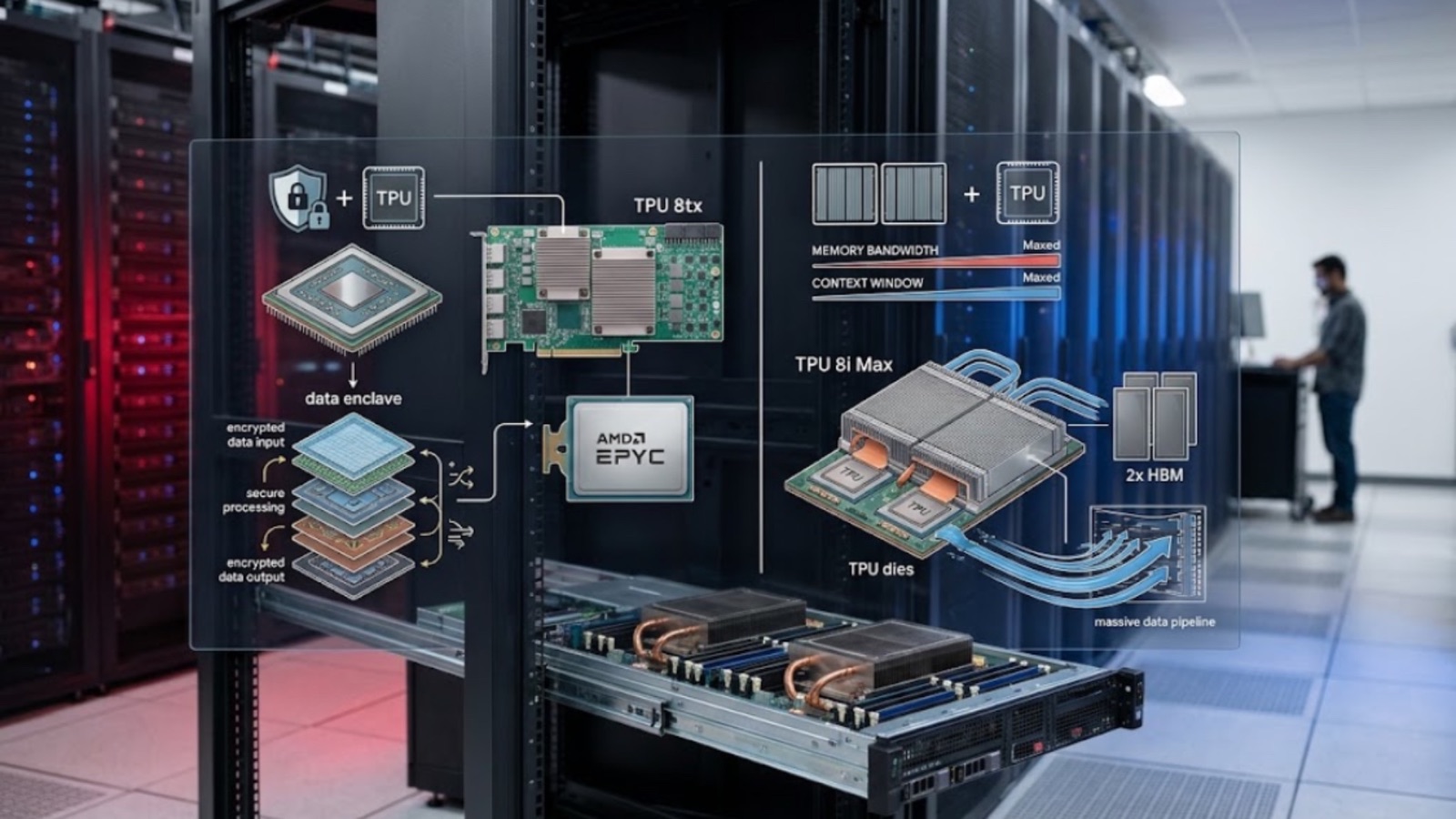
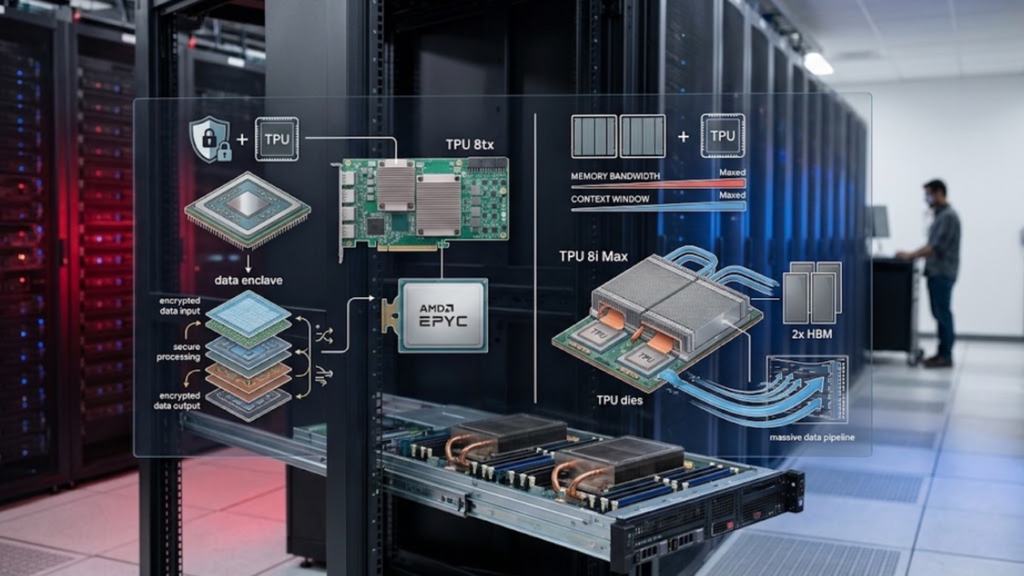
The 8tx is aimed at government agencies and companies operating in regulated industries where sensitive information must be protected while being processed. Google said the design uses hardware-level encryption and combines its chip technology with processors from AMD. The company also said it can deliver up to twice the speed of the previous version without a significant performance trade-off.
The 8i Max is designed for AI workloads that need to process large amounts of information at once. According to the company, it combines two chips in one package to provide additional memory and computing capacity.
Read: Need a professional website in 72 hours? Contact Auxi Chat
Potential applications include coding assistants, mathematical reasoning and drug discovery, where systems may need to handle complex tasks or substantial amounts of data.
Google’s move reflects a wider effort by technology companies to develop more of the computing infrastructure behind their AI products rather than relying exclusively on external suppliers.
Google AI Chip Variants Intensify Competition in the AI Market
Nvidia has become a central supplier to the AI industry, but major cloud providers are investing in their own processors to tailor performance to specific workloads and potentially reduce dependence on outside hardware.
Google’s TPUs have traditionally supported internal services such as Search, YouTube and Gemini. The company has increasingly made its chips available through Google Cloud, seeking to win businesses that need computing resources for AI development and deployment.
The strategy could give customers more options when selecting hardware for different workloads. Some organisations may prioritise security and controlled data processing, while others may need greater memory capacity or speed for complex AI tasks.
READ: Instagram Offers New Incentives to Attract Instagram long-form video creators
Reuters also reported that Google Cloud revenue reached $30.71 billion in the September quarter, more than doubling, with TPU sales making a meaningful contribution to the results, according to Alphabet.
However, the introduction of new chip variants does not automatically mean that Google will displace Nvidia. Enterprise customers consider factors beyond raw processing speed, including software compatibility, availability, reliability, price and how easily chips integrate with existing systems.
The longer-term impact will depend on how effectively Google can deliver these processors at scale and persuade customers to use them for real-world applications. The announcement nevertheless underscores the importance of specialised hardware as AI demand continues to reshape the technology industry.
The writer of this article does not claim to know the individuals named personally. The information regarding their backgrounds as published on Global News Arena is based on independent online research.
If you have an article, opinion piece, event or news story you would like published, Global News Arena would love to hear from you.