Microsoft Data Centre Protest Erupts in Amsterdam
READ: Meta AI Spaces Help People Plan Their Days and Manage Tasks
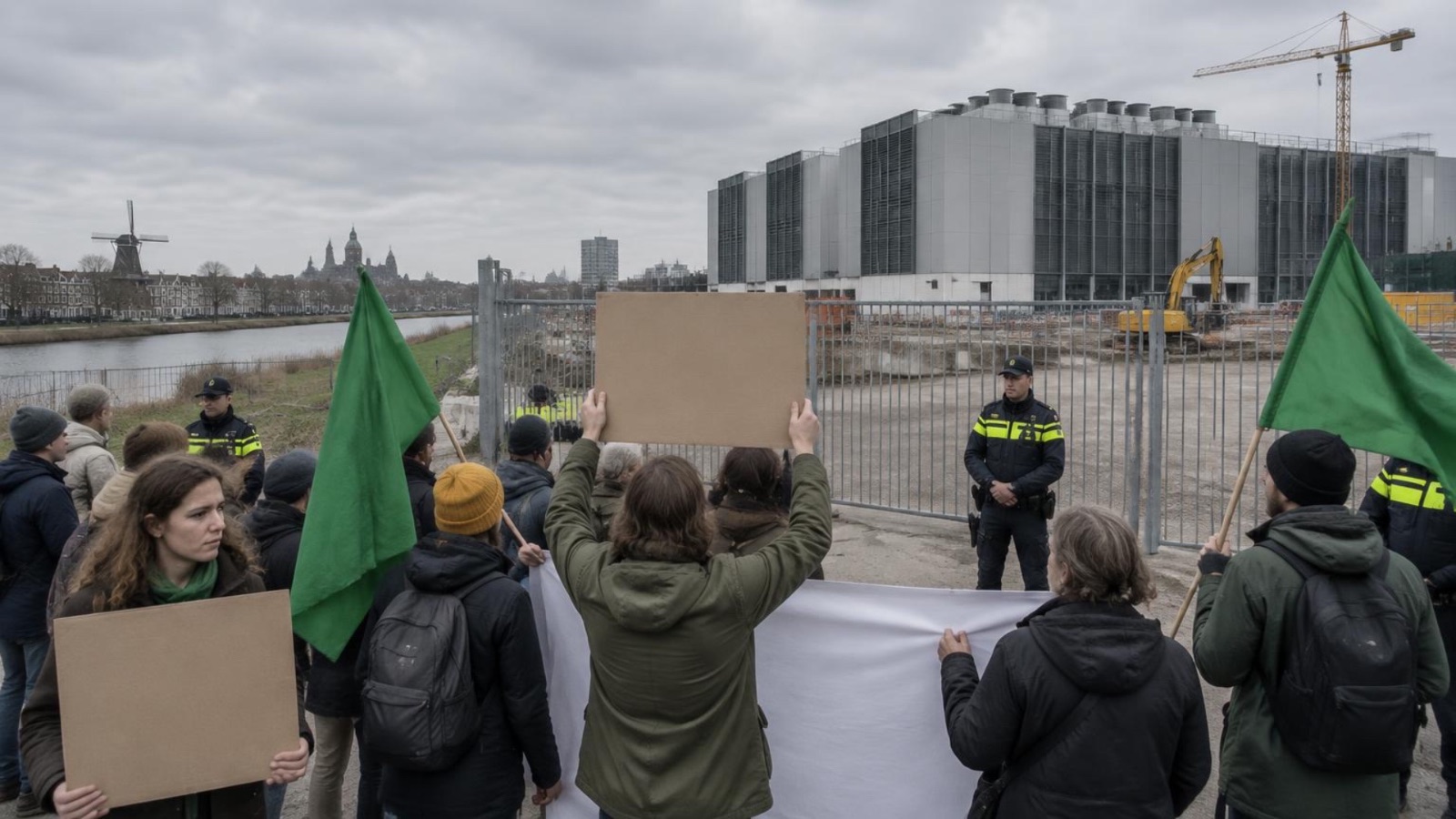
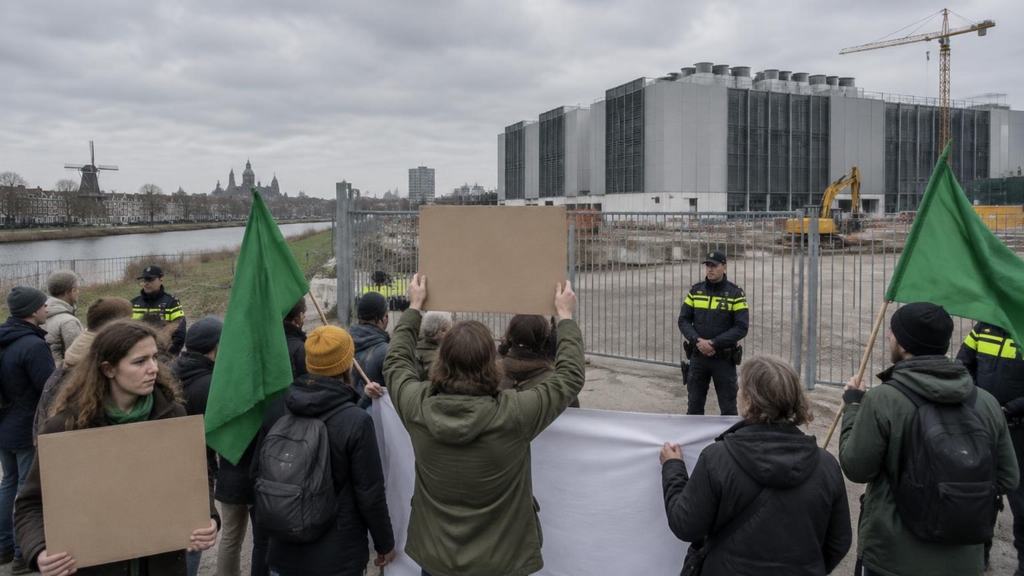
A Microsoft data centre protest erupted in Amsterdam on Friday, November 6, 2026, after activists entered a construction site in the Dutch capital’s Sloterdijk district, demanding that the project be stopped.
Read: Do you need a professional writer in 72 hours? Contact Auxi Chat
The demonstration brought together campaigners concerned about the rapid expansion of data centres, the environmental demands of artificial intelligence and the growing influence of major technology companies. Some protesters climbed construction cranes, displayed banners and set off flares as police intervened at the site.
READ: Amazon Isn't Just Growing. It's Rewriting the Rules You're Competing Under.
The facility is being developed by Pure Data Centres and is intended to be leased to Microsoft. The project has become a focus of opposition from groups that argue large-scale data centres can place significant pressure on electricity supplies, water resources and local communities.
The Amsterdam protest also reflected concerns about Microsoft's technology contracts and the company's alleged connections to military and surveillance activities. Pro-Palestinian activists joined the action, bringing human rights concerns into a demonstration that also focused on environmental and technology policy.
Read: Need a professional website in 72 hours? Contact Auxi Chat
The incident comes as opposition to data centre development grows across Europe, where governments and technology companies are investing heavily in infrastructure needed to support cloud computing and artificial intelligence.
Why Did Protesters Target Microsoft’s Data Centre?
The Microsoft data centre protest was driven by several overlapping concerns, including energy consumption, water use, artificial intelligence and the influence of large technology companies.
Environmental campaigners argue that the rapid construction of data centres is taking place faster than governments and communities can adequately assess the consequences. These facilities require substantial electricity to operate their servers and cooling systems, while their water needs can create additional pressure in areas where resources are limited.
Critics also question whether communities receive sufficient information and meaningful opportunities to influence decisions about large infrastructure projects in their neighbourhoods.
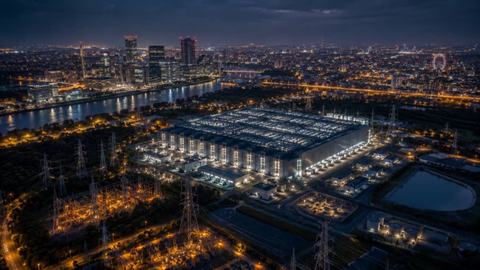
The Amsterdam development has attracted particular scrutiny because of its expected scale and energy requirements. According to Dutch media reports, the planned campus will have a capacity of approximately 78 megawatts and is being developed with an investment of around €1 billion.
Campaigners have argued that the facility could consume electricity on a scale comparable to the needs of Amsterdam households. That comparison has been central to the public debate, although estimates about consumption depend on the assumptions and measurements being used.
For the protesters, the dispute is not simply about one construction project. They say it raises wider questions about who benefits from the expansion of artificial intelligence and who bears the environmental and social costs.
Protesters Enter Construction Site as Police Intervene
The demonstration took place in Amsterdam’s Sloterdijk district, where construction is underway on the facility intended for Microsoft.
Activists associated with the Dutch group Geef Tegengas entered the site, with some climbing over or through the perimeter fence. Others climbed cranes and construction structures, while banners and other protest materials were displayed around the development.
Environmental campaigners and pro-Palestinian demonstrators also took part in actions around the site. The different groups brought distinct concerns, including climate impact, the use of technology in military operations and the role of major technology companies in society.
Police intervened as the occupation unfolded. Reports from Dutch and international media described confrontations between officers and demonstrators, with some protesters being removed from the site and arrests reported.
The precise number of participants varied between reports. Some accounts described more than 100 activists entering the construction area, while organisers claimed that several hundred people had taken part in the wider action.
The protest disrupted activity at the site, with reports indicating that construction work was halted for the day.
The confrontation highlighted the increasingly direct tactics used by some campaigners who believe ordinary demonstrations and public consultations have not done enough to slow the expansion of large data centre developments.
How Artificial Intelligence Is Driving Data Centre Expansion
Artificial intelligence has become a major factor behind the growing demand for data centre infrastructure.
AI systems rely on powerful computer processors and large quantities of data to train models, respond to requests and perform complex tasks. The infrastructure supporting these services requires substantial computing capacity, creating demand for new facilities and expansions of existing ones.
Cloud computing also depends on data centres. Businesses use them to store information, run applications and deliver digital services, while governments and individuals rely on cloud-based platforms for everyday activities.
Technology companies argue that this infrastructure is essential to innovation, economic growth and the development of new digital services. Data centres can also support jobs in construction, engineering, maintenance and technology operations.
However, critics argue that the commercial benefits should not overshadow the environmental costs. They want developers to provide clearer information about energy consumption, water requirements, emissions and the impact on surrounding communities before projects receive approval.
The Amsterdam dispute reflects a growing tension between governments seeking to attract technology investment and residents and campaigners demanding stronger environmental safeguards.
The central question is how quickly the infrastructure should expand, who should pay for the additional resources it requires and how its benefits should be distributed.
Electricity and Water Use Fuel Opposition
Electricity consumption is one of the most prominent concerns raised by opponents of large data centres.
Facilities supporting cloud computing and artificial intelligence need reliable power to keep servers running continuously. They also require cooling systems to prevent equipment from overheating. As more data centres are built, their demand can add pressure to electricity networks, particularly in areas already facing capacity constraints.
Water use is another concern, although the amount consumed varies according to the facility's cooling technology, climate and operating practices.
Campaigners in Amsterdam argue that the project’s resource requirements deserve greater public scrutiny. They want authorities to consider whether the infrastructure could compete with households, local businesses and other essential services for electricity and water.
The issue has become particularly contentious in Europe, where governments are balancing climate targets and energy affordability against the desire to attract investment in AI and cloud computing.
Developers, meanwhile, face pressure to demonstrate that new facilities can operate efficiently and responsibly. Measures such as improved cooling systems, renewable electricity procurement and transparent reporting may help reduce some environmental impacts, but campaigners argue that stronger planning rules are also necessary.
The Amsterdam protest has therefore become part of a broader debate about whether current approval processes adequately account for the long-term consequences of data centre construction.
Protesters Raise Concerns About Microsoft’s Technology Contracts
The demonstration was not limited to environmental concerns. Some activists also criticised Microsoft's business relationships and the use of its technology by military and government organisations.
Pro-Palestinian protesters joined the action and displayed messages linking the data centre project to their opposition to Microsoft's alleged connections with Israeli military operations. Other campaigners have raised concerns about technology used for surveillance and immigration enforcement.
These issues have become part of a wider debate about the responsibilities of technology companies whose products can be used across civilian, government and military settings.
Microsoft has previously faced scrutiny over the use of its cloud services and other technologies by public institutions. The company has said it takes its responsibilities seriously, while critics have demanded greater transparency and stronger safeguards concerning the use of technology in conflict and surveillance.
The presence of pro-Palestinian activists at the Amsterdam protest broadened the demonstration beyond electricity consumption and environmental planning. For these campaigners, the data centre represents not only a physical infrastructure project but also part of a wider system of digital power.
The different concerns converged at the construction site, although the participating groups did not necessarily share identical objectives or demands.
Microsoft Responds to the Amsterdam Demonstration
Microsoft acknowledged the demonstration and said it respected the right of people to express their views peacefully.
The company also made clear that it did not support unlawful actions or conduct that could endanger public safety.
That response reflects the distinction companies often draw between peaceful public opposition and entering restricted construction areas. Protesters may have the right to demonstrate, but climbing cranes or entering a site without permission can create safety risks and lead to police intervention.
Pure Data Centres, the developer behind the Amsterdam project, has also said it is committed to engaging with local stakeholders.
The statements came as activists demanded that construction be halted and governments reconsider the approval of large-scale data centre projects.
The dispute presents a challenge for both the developer and Microsoft. Beyond completing the facility, they face questions about how to address public concerns over environmental impact, community consultation and the broader consequences of AI infrastructure.
Whether engagement can reduce opposition will depend partly on the information made available to the public and the extent to which campaigners believe their concerns are being addressed.
Amsterdam Protest Forms Part of Wider European Backlash
The Microsoft data centre protest took place as campaign groups prepared demonstrations in several European countries on November 6 and 7.
READ: Analysis: Data Centres Have Become a Utility Planning Problem
The wider Stop Dirty Data Centres campaign has called for a pause on large-scale developments while governments assess their environmental, economic and social effects. Organisers have said that campaign activities were planned across multiple countries, including the Netherlands, the United Kingdom, France, Italy, Poland and other European states.
The campaign brings together environmental organisations, community groups and digital rights advocates concerned about the pace of data centre construction.
In Germany, activists demonstrated against data centre expansion, while campaigners in Poland and Italy have also raised objections to new developments. The specific concerns vary by location, but recurring themes include electricity demand, water consumption, climate targets and limited public consultation.
The movement does not represent a single position on every aspect of digital technology. Some groups focus on environmental impacts, while others are concerned about AI, labour, surveillance or the concentration of corporate power.
Their shared demand is for stronger oversight before additional large facilities are approved.
The Amsterdam occupation was among the more confrontational actions in the campaign, drawing attention to the intensity of opposition that can develop when local concerns intersect with wider political debates.
What the Protest Means for the Future of AI Infrastructure
The demonstration raises difficult questions for policymakers and the technology industry as investment in artificial intelligence continues to grow.
Data centres are essential to many modern digital services, and demand for computing capacity is expected to remain strong. Governments also view digital infrastructure as a strategic asset that can attract investment and support economic competitiveness.
However, rapid expansion can create conflicts over land, electricity, water and the needs of local communities. When residents feel excluded from decisions, opposition may become more organised and more difficult for developers to resolve.
For policymakers, the challenge is to establish clear rules governing environmental assessments, resource use, grid capacity and public consultation. Transparent planning could help communities understand a project's expected costs and benefits before construction begins.
For technology companies, the Amsterdam protest is a reminder that investment decisions increasingly face scrutiny beyond financial returns and technical performance.
Developers may need to demonstrate not only that a facility can operate efficiently, but also that its resource requirements are compatible with local priorities and environmental commitments.
The protest does not by itself establish whether the Amsterdam project will be cancelled or delayed beyond the reported disruption. Its longer-term effect will depend on decisions by the developer, Microsoft, local authorities and the wider political response to data centre expansion.
Conclusion: Microsoft Data Centre Protest Highlights Growing Tensions
The Microsoft data centre protest in Amsterdam has brought together concerns about artificial intelligence, electricity demand, water use, environmental oversight and the influence of major technology companies.
Activists entered the construction site in Sloterdijk on November 6, with some climbing cranes as police intervened. The facility, being developed by Pure Data Centres for Microsoft, has become a focal point for campaigners who want governments to reconsider how large data centre projects are approved.
Microsoft has said it respects peaceful protest but does not condone unlawful or unsafe actions. The wider dispute, however, reflects questions that extend well beyond one company or one construction site.
As AI infrastructure expands, governments and technology firms will face growing pressure to show how new projects can meet digital demand without placing unreasonable burdens on communities and the environment.
The Amsterdam demonstration is another sign that the future of AI will be shaped not only by technological progress, but also by public debate over resources, accountability and corporate responsibility.
The writer of this article does not claim to know the individuals named personally. The information about their backgrounds, as published on Global News Arena, is based on independent online research.
Are you interested in learning how to write professionally and earning money as a writer and content creator? Contact Auxi Chat today to start your writing journey immediately.
If you have an article, opinion piece, event or news story you would like published, Global News Arena would love to hear from you.