Genesis AI’s Funding Signals Growing Confidence in Industrial Robotics
READ: Vestas Chief Calls for Tougher EU Rules on Chinese Wind Software
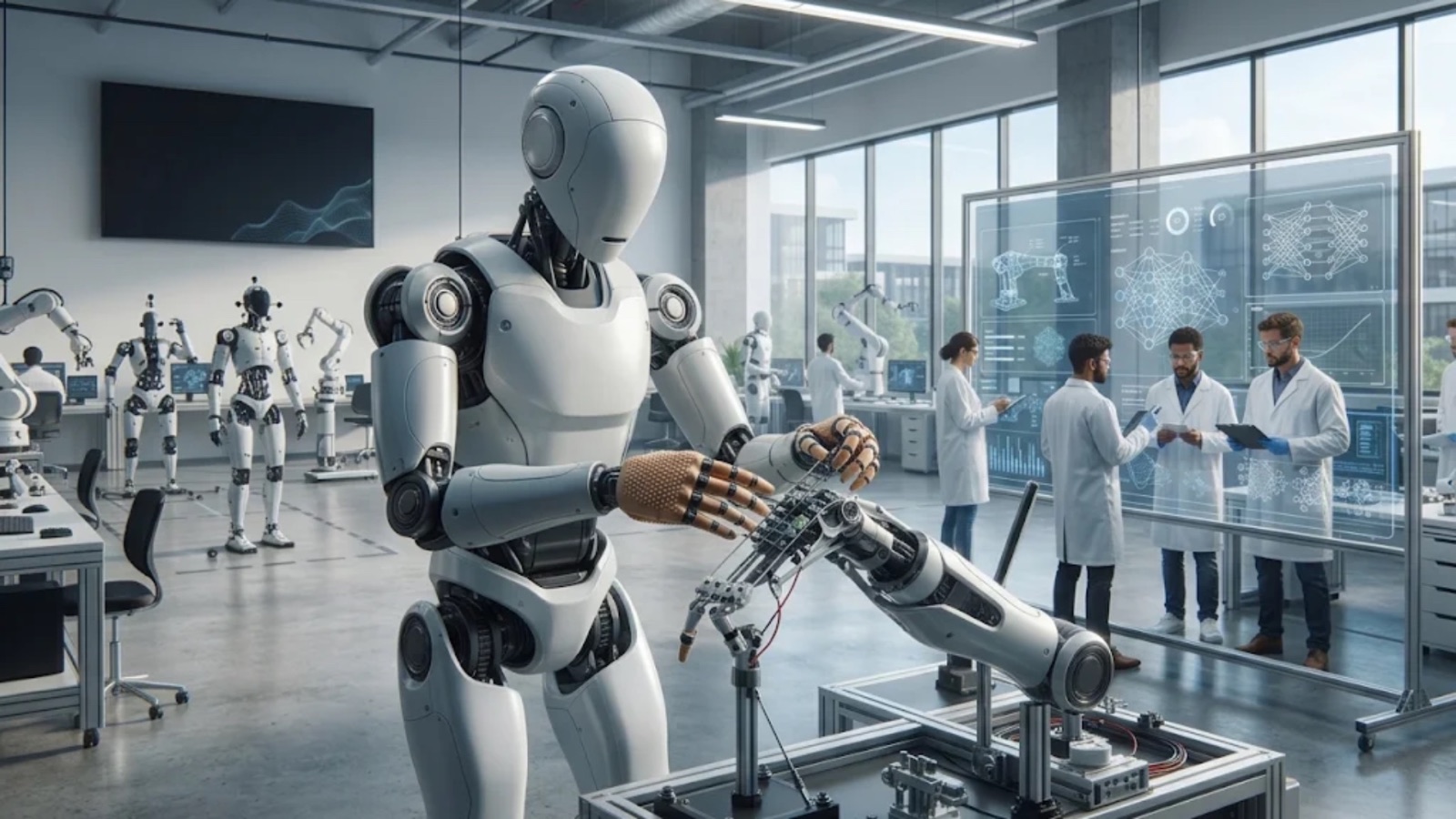
The race to build robots that can do more than repeat simple movements has attracted another major investment. French robotics startup Genesis AI has raised $500 million in a funding round that values the company at $3.5 billion, showing how strongly investors are betting on artificial intelligence moving beyond computer screens and into the physical world.
Read: Do you need a professional writer in 72 hours? Contact Auxi Chat
Announced on November 17, 2026, the Series A funding round is one of the largest recent investments in Europe’s robotics sector. The money will help Genesis AI expand production of its Eno robot, improve how its machines learn physical tasks and prepare for wider use in workplaces.
READ: JPMorgan Names Bregje de Best as Next Chief Financial Officer
The investment also brings together several influential names in technology and finance. Premji Invest, Khosla Ventures and Eclipse co-led the round, while participants included Nvidia, AMD Ventures, Bpifrance, Samsung Next, Ericsson and other institutional investors. Individual backers included former Google chief executive Eric Schmidt and French technology entrepreneur Xavier Niel.
For Genesis AI, the challenge now is to turn investor confidence into robots that businesses can use reliably, repeatedly and at a practical cost.
Read: Need a professional website in 72 hours? Contact Auxi Chat
Genesis AI Raises $500 Million to Expand Its Eno Robot
The funding will support the development and deployment of Eno, Genesis AI’s general-purpose robot designed to perform physical tasks in industrial environments.
Unlike traditional factory machines built for one specific job, general-purpose robots are intended to handle a wider range of activities. This could make them useful in manufacturing plants, warehouses and laboratories, where workers often need to move objects, sort materials, package products and complete several connected tasks.
Eno has a distinctive design. Instead of copying the appearance of a human being, it uses a wheeled base and a folding body that can extend to roughly human working height. Its design allows it to fit into a compact space when it is not operating.
The company has placed particular emphasis on developing robotic hands that can handle objects with greater precision. Picking up a box is one thing; turning it, positioning it correctly, folding packaging or handling a small component requires a much higher level of control.
Genesis AI intends to use the new capital to increase production, expand its data collection and training systems, improve the robot’s ability to manipulate objects and recruit more artificial intelligence researchers, robotics specialists and engineers.
The company has already begun testing Eno with a small number of customers. It is also working with South Korean technology company LG CNS on manufacturing and logistics applications.
Why Investors Are Betting on Artificial Intelligence and Robotics
The investment reflects a broader shift in artificial intelligence. Much of the public conversation about AI has focused on chatbots, image generators and software that can write or analyse information. Robotics companies are trying to apply similar advances to machines that interact directly with the physical world.
That shift presents a significant business opportunity, but it also creates difficult engineering problems. A robot must understand its surroundings, control its movements, respond to unexpected situations and complete tasks safely. A machine that performs well during a demonstration may still struggle when faced with different objects, crowded workspaces or long periods of daily use.
Genesis AI is developing its software, hardware and training systems together rather than relying entirely on separate suppliers. The company believes this integrated approach can help it improve its robots more quickly and make the different parts of the system work better together.
Its technology includes GENE, an artificial intelligence model designed for robotic tasks, and Genesis World, a simulation platform for training and testing robot behaviour in virtual environments.
The company also uses sensor-equipped gloves and other data collection methods to capture how people carry out physical tasks. Such information can help train robots to perform movements that are difficult to describe through written instructions alone.
However, collecting enough useful data and translating it into dependable real-world performance remain major challenges for the industry.
Genesis AI Faces the Test of Real-World Deployment
The $3.5 billion valuation places Genesis AI among the closely watched companies competing to develop more capable industrial robots. But a large funding round does not automatically guarantee commercial success.
Robotics businesses must overcome high manufacturing costs, equipment maintenance, supply-chain constraints and the difficulty of making machines work consistently outside controlled testing environments.
For customers, the key question is not simply whether a robot can complete a task once. Businesses need machines that can repeat the task accurately, work alongside people where appropriate and deliver enough value to justify their cost.
Genesis AI is initially concentrating on industrial settings, including manufacturing, logistics and laboratories. The company expects a broader customer rollout in 2027, according to its chief executive, Zhou Xian. It plans to consider additional areas, including hospitality and healthcare, as its technology develops.
The company’s initial focus on the United States also reflects the importance of building relationships with customers and manufacturing partners before expanding into other markets.
What Genesis AI’s $500 Million Funding Means for the Robotics Industry
Genesis AI’s latest funding round highlights the growing interest in machines that can perform a wider range of physical tasks. If the company succeeds, its technology could help businesses automate repetitive work and support employees with activities that require careful handling of objects.
READ: Obajana Cement Plant Cost Rose to $1 Billion, Dangote Says
The potential benefits are considerable, but so are the questions. Companies will need to establish whether general-purpose robots can operate safely, remain reliable over time and deliver measurable productivity gains. Workers and employers will also have to consider how automation changes job responsibilities and the skills businesses require.
For investors, the opportunity lies in turning robotics research into products that customers are willing to pay for at scale. For Genesis AI, the next stage will be measured less by the size of its fundraising round and more by how well Eno performs in real workplaces.
The company has secured the capital and attracted influential backers. Its next challenge is to demonstrate that its robots can move from promising demonstrations to dependable tools for everyday business.
The writer of this article does not claim to know the individuals named personally. The information about their backgrounds, as published on Global News Arena, is based on independent online research.
Are you interested in learning how to write professionally and earning money as a writer and content creator? Contact Auxi Chat today to start your writing journey immediately.
If you have an article, opinion piece, event or news story you would like published, Global News Arena would love to hear from you.
Are you interested in learning how to write professionally and earn money as a writer and content creator? Contact us today to start your writing journey immediately.
Need a professional website in 72 hours? Contact us
Do you need a professional writer in 72 hours? Contact us
If you have an article, guest story, event or news tip you would like published, Global News Arena would love to hear from you.