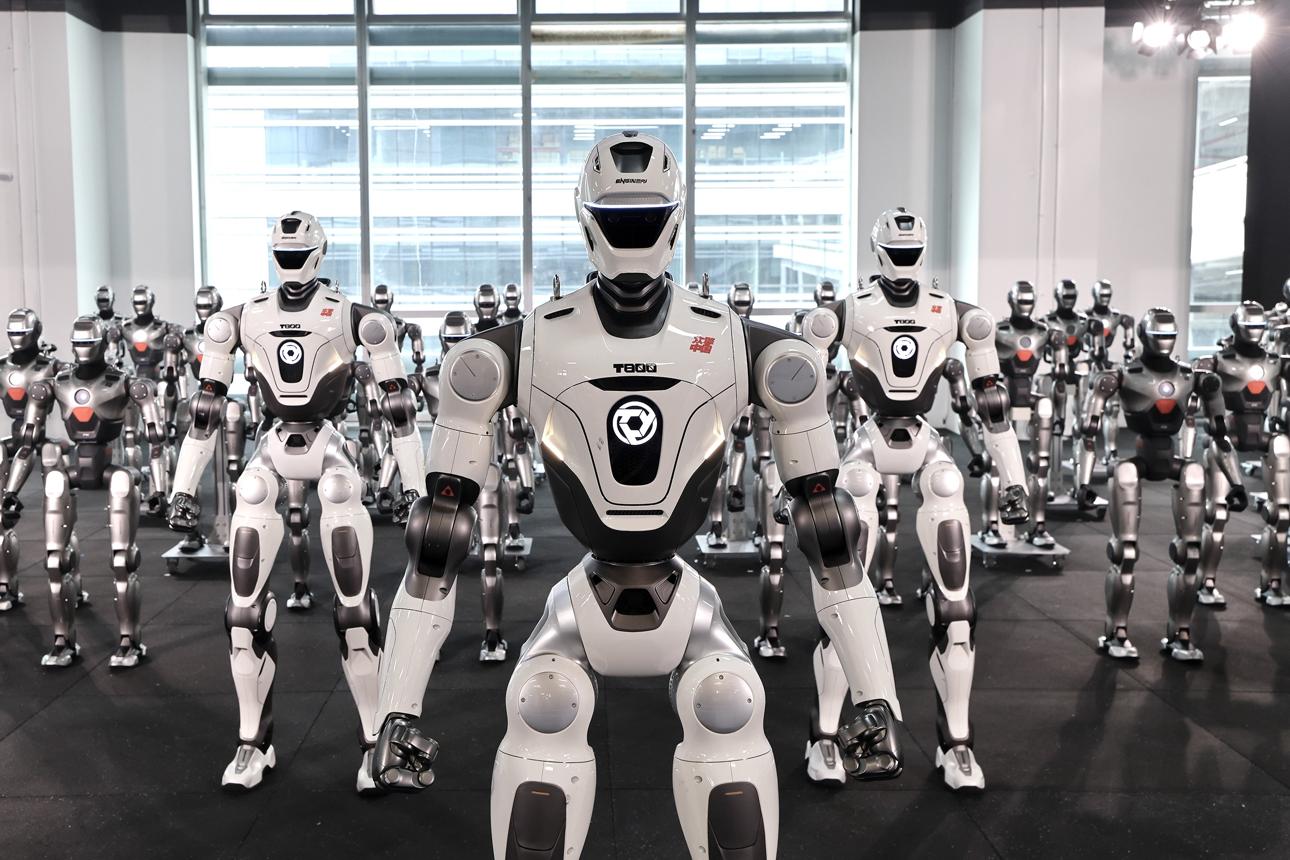
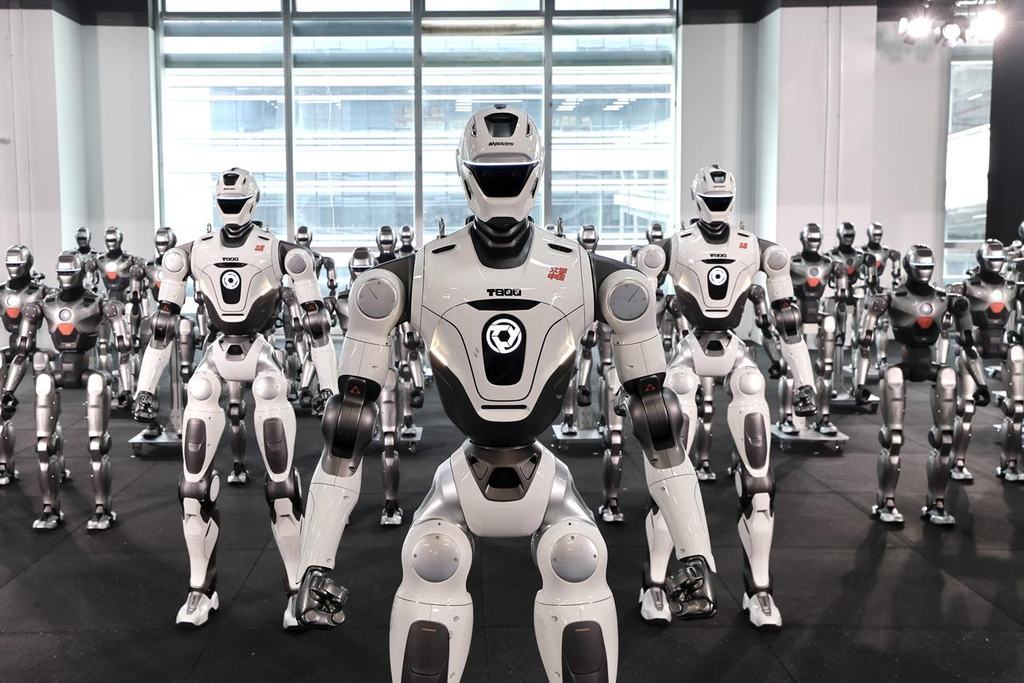
China has set a new milestone in robotics after 151 humanoid robots performed a synchronised dance routine in Shenzhen, breaking a Guinness World Record during activities linked to the 2026 Asia-Pacific Economic Cooperation (APEC) summit.
READ: Xi Welcomes Trump in Shenzhen Ahead of Key APEC Talks
The performance took place on Tuesday, November 17, in Shenzhen, Guangdong Province. An official Guinness World Records adjudicator confirmed that 151 robots completed the routine, exceeding the target of 110 machines.
Read: Do you need a professional writer in 72 hours? Contact Auxi Chat
The demonstration was led by EngineAI's full-sized T800 humanoid robots. It offered a public display of how multiple machines can be coordinated to perform movements together.
READ: Trump Announces US-Philippines Trade Deal, Manila Urges Caution
The achievement has drawn attention to China's growing robotics industry and its efforts to develop machines for entertainment, commercial services and industrial applications.
151 Humanoid Robots Break Guinness World Record in Shenzhen
Read: Need a professional website in 72 hours? Contact Auxi Chat
The record-setting performance brought together 151 robots in a coordinated dance display in Shenzhen's Longgang District.
According to reports, the machines moved in formation and performed a series of synchronised actions before an official Guinness representative confirmed the record.
The event was part of activities surrounding the 33rd APEC Economic Leaders' Meeting, which is taking place in Shenzhen on November 18 and 19.
The city has been using the international gathering to showcase its technology companies, manufacturing facilities and developments in artificial intelligence and robotics.
The performance also attracted public attention because of the number of machines involved. Coordinating a large group of humanoid robots requires their movements to remain consistent while they follow the same routine.
EngineAI used the occasion to demonstrate the capabilities of its full-sized T800 model. Reports identified 20 T800 units among the robots displayed at the event.
What Is the EngineAI T800 Humanoid Robot?
The T800 is a full-sized humanoid robot developed by Chinese robotics company EngineAI, which is based in Shenzhen.
The machine stands approximately 1.73 metres tall and weighs around 75 kilograms, according to information reported about the model.
Its design allows it to perform different physical movements, including walking, turning and more demanding demonstrations. The company has presented the robot as a platform intended for several potential applications.
These include entertainment, exhibitions, commercial services, industrial manufacturing, scientific research and education.
EngineAI has also invested in manufacturing capacity. In May 2026, the company announced the opening of its intelligent manufacturing base in Shenzhen alongside the rollout of its first batch of T800 robots.
The company said the facility was designed to support large-scale production and could produce a new robot approximately every 15 minutes.
However, manufacturing capacity and performance demonstrations do not automatically mean that robots are ready to perform every task reliably in everyday workplaces.
China Continues to Expand Its Humanoid Robotics Industry
The new record comes as China increases investment in humanoid robots and other advanced technologies.
Several Chinese companies are developing machines designed to perform physical tasks, interact with people and support businesses.
The country has also used public demonstrations, technology exhibitions and robotics competitions to showcase progress in the industry.
Shenzhen has become an important centre for this development. The city is home to technology manufacturers and companies working in artificial intelligence, electronics, automation and robotics.
The APEC summit has provided another opportunity to present these developments to international visitors.
Robots have featured in other activities connected to the meeting, including demonstrations of machines serving drinks and supporting visitors at event locations.
These displays are intended to show how robotics could become part of commercial and public services.
How the New Record Compares With the Previous Achievement
The Shenzhen performance follows another humanoid robot dance record set in China in October.
On October 24, 110 humanoid robots developed by AGIBOT performed a synchronised routine in Jinan, Shandong Province.
The machines, identified as Expedition A3 models, completed a coordinated performance that included formation changes and group movements.
That achievement was recognised as a Guinness World Records title for the most humanoid robots dancing simultaneously.
The Shenzhen performance increased the reported total to 151 robots, surpassing the earlier figure by 41 machines.
The two events also involved different robotics companies and robot models, showing how competition is developing across China's humanoid robotics sector.
Can Humanoid Robots Move Beyond Public Performances?
Although synchronised dancing is an impressive demonstration, it does not prove that humanoid robots can independently handle complicated jobs in factories, homes or other unpredictable environments.
A dance routine takes place under controlled conditions. Robots follow planned movements, and their performance can be organised around a specific environment.
Real-world work presents more difficult challenges. Machines may need to recognise unfamiliar objects, respond to unexpected changes, maintain balance and complete tasks without constant human assistance.
A Reuters investigation published in August 2026 examined some of these limitations in China's humanoid robotics industry. It reported continuing difficulties involving reliability, dexterity and the ability of robots to adapt to unfamiliar situations.
This means that the next important stage for manufacturers will be demonstrating that their machines can deliver practical results beyond exhibitions and public performances.
Businesses will also need to consider the cost of purchasing and maintaining robots, as well as whether the machines can perform tasks more efficiently than existing equipment or human workers.
What the Guinness Record Means for China's Robotics Industry
The latest achievement provides another example of China's ability to organise large-scale robotics demonstrations.
It also highlights the importance of software, communication systems and motion control in coordinating multiple machines.
For robotics manufacturers, producing a single machine that can walk or dance is only part of the challenge. Coordinating many machines to perform the same movements requires consistency across the entire group.
However, the long-term success of the industry will depend on practical applications, reliability and commercial demand.
The 151-robot performance has delivered a new Guinness milestone, but the wider test will be whether these machines can move from public demonstrations into useful everyday work.
China's latest achievement therefore represents both a technology showcase and another step in the growing competition to develop commercially useful humanoid robots.
Are you interested in learning how to write professionally and earn money as a writer and content creator? Contact us today to start your writing journey immediately.
Need a professional website in 72 hours? Contact us
Do you need a professional writer in 72 hours? Contact us
If you have an article, guest story, event or news tip you would like published, Global News Arena would love to hear from you.