Manchester United's winless run has reached nine matches across all competitions, according to an undated results summary. The same account places the English club 16th in the Premier League, with seven points from nine league games.
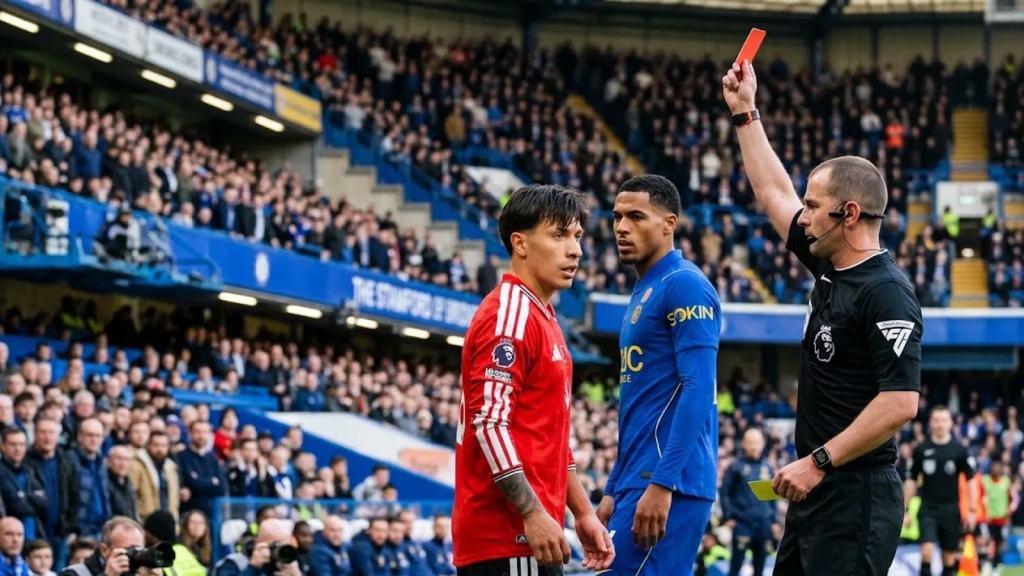
FULL-TIME: Goals from Morgan Rogers and Cole Palmer seal a 2-0 win at Stamford Bridge for Chelsea against Manchester United.
Those figures describe a significant run of poor results. However, the summary gives no season, fixture dates or match breakdown, so it cannot establish United's position in the current standings.
It also describes the sequence as United's first nine-match winless run across all competitions since 1988. That historical comparison remains unverified from the information available and should be treated as a reported claim.
The central distinction matters: nine league games and nine games across all competitions are different measures. Without a fixture list, readers cannot assume that both figures cover the same period.
Manchester United's winless run: What the figures show
The supplied figures state that Manchester United have only seven points in nine Premier League games. Under the league's scoring system, teams receive three points for a win, one for a draw and none for a defeat.
Seven points from nine fixtures represents an average of approximately 0.78 points per game. United would have collected seven of the 27 points available across that league sequence.
The total alone does not reveal the results behind it. Seven points could come from two wins and one draw, one win and four draws, or seven draws. Each combination leaves a different number of defeats across nine matches.
That is why the all-competitions statistic needs separate treatment. The summary says United won none of their last nine matches, but it does not identify how many were league fixtures.
Domestic cup and European matches, when applicable, count towards an all-competitions sequence. They do not contribute points to the Premier League table.
If both nine-game figures referred to exactly the same fixtures, seven points without a victory would mean seven draws and two defeats. The information provided does not establish that overlap.
What 16th place means, and what it does not
The Premier League contains 20 clubs, with the bottom three relegated at the end of a season. A team in 16th sits outside those relegation positions, although its points advantage over the bottom three may be narrow or substantial.
No such gap is supplied here. The positions and points totals of surrounding clubs are also missing, preventing a reliable assessment of United's immediate exposure.
A low placing is concerning, but it is not a forecast. Its significance depends on the stage of the season, remaining fixtures and the distance separating teams.
The summary attaches the notation “+1 game” to United's position. It does not explain the comparison. That may indicate an additional match played relative to another team, but the reference point is unconfirmed.
It should not be interpreted as a game in hand. A game in hand means a team has played fewer fixtures than a particular rival, giving it an additional match still to play.
If United had played one more match than nearby teams, those opponents would have an opportunity to add points before reaching the same number of fixtures. That remains a conditional explanation, not an established feature of this table.
For readers assessing the standings, matches played and points gaps matter alongside rank. Sixteenth place alone cannot show how quickly a team might climb or fall.
The 1988 comparison needs a defined record
The claim that this is United's first such sequence since 1988 gives the reported drought historical weight. It suggests a stretch without victory that would be unusual even across several decades.
But establishing that claim requires more than a headline figure. A complete check would need the nine relevant results and historical records covering the intervening period.
The competition scope also needs to remain consistent. A comparison involving all competitive fixtures cannot be verified by checking league results alone.
For cup matches decided by penalty shootouts, a statistical source may distinguish the match result from the shootout outcome. Any historical comparison should make its counting method clear where that distinction applies.
There is also an important difference between a winless run and a losing streak. Nine matches without victory can contain draws as well as defeats. The summary does not establish that United lost nine consecutive games.
United's long history of domestic and European success helps explain the attention such a sequence attracts. Reputation, however, cannot substitute for checking the underlying record or identifying the season involved.
Results show pressure, but not its cause
A nine-match wait for victory would naturally focus attention on results and the team's response. It does not, by itself, explain why those results occurred.
The available information contains no scores, goals totals, opponents, home and away split, injury details or disciplinary record. It therefore cannot support a firm diagnosis of tactical, attacking or defensive problems.
Nor does it identify a manager or squad for the period. Attaching the figures to particular individuals without a date would risk attributing responsibility to the wrong people.
No response from Manchester United, its manager or its players accompanies the summary. There are also no attributed comments from supporters or club officials explaining the sequence.
That absence should not be described as silence or a refusal to comment. There is no evidence here that anyone sought a response.
The distinction protects readers from a familiar reporting problem: turning a poor statistical run into unsupported claims about dressing-room divisions, confidence or managerial decisions. None of those explanations is established by these notes.
What to watch before drawing wider conclusions
The immediate question is which matches and table date the figures describe. A dated fixture list would show whether the league return and the winless sequence overlap, and would identify the result that extended the drought.
A full table would then clarify the meaning of 16th place. It would establish United's points gap above the relegation positions and explain whether the additional-game notation affects comparisons with nearby clubs.
Future results would answer a different question: whether the team is recovering. One victory would end a winless sequence, but it would not erase the points already dropped.
A cup win could also end an all-competitions drought without improving the league total. Conversely, a league victory would add three points while breaking the broader run, assuming the reported sequence remained active.
For now, the summary's message is limited but serious: nine matches without a win, seven points from nine league fixtures and a reported position of 16th. Establishing the date and underlying results is essential before treating those numbers as a current assessment or a confirmed historical milestone.
The writer of this article does not claim to know the individuals named personally. The information about their backgrounds, as published on Global News Arena, is based on independent online research.
Are you interested in learning how to write professionally and earning money as a writer and content creator? Contact Auxi Chat today to start your writing journey immediately.
If you have an article, opinion piece, event or news story you would like published, Global News Arena would love to hear from you.