Naoero Parliament Opposition Disappears After Historic Political Shift
READ: Nigeria Public Finance Needs a Better Test Than New Buildings
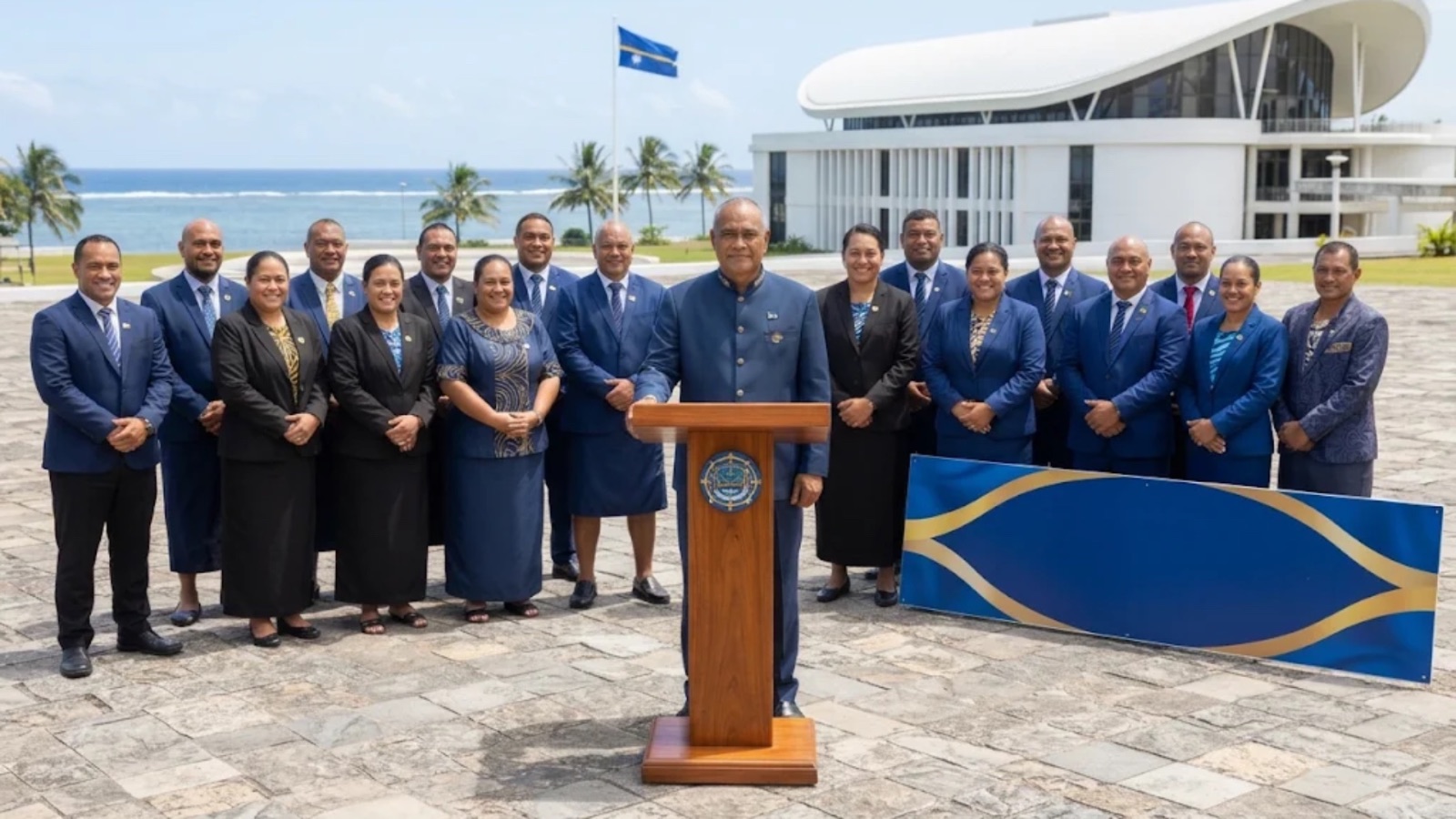
Naoero, formerly known as Nauru, has been left without a formal parliamentary opposition after all 19 members of its parliament joined President David Adeang’s government in a development announced on November 11, 2026.
Read: Do you need a professional writer in 72 hours? Contact Auxi Chat
The announcement, reported by Islands Business on November 19, marks an unprecedented political arrangement in the country's history since gaining independence in 1968.
READ: Peter Obi Convoy Attacked in Calabar After Palace Visit: Full Video.
President Adeang described the development as a moment of unity, stability and shared purpose, saying the lawmakers had come together to support the country's future.
The political shift followed the appointment of two lawmakers, Pyon Deiye and Jason Bingham Agir, as deputy ministers in the administration.
Read: Need a professional website in 72 hours? Contact Auxi Chat
Their appointments brought all members of the 19-seat parliament into the government camp, ending the country's formal opposition arrangement.
Naoero is one of the world's smallest independent nations, with a population of approximately 12,000 people. Despite its small size, the development has attracted international attention because of the questions it raises about parliamentary accountability and democratic oversight.
How Naoero's 19 MPs Joined President Adeang's Government
The country's political system differs from that of many larger democracies because it does not operate through a formal political party structure.
Members of parliament generally contest elections as independent candidates across eight multi-member constituencies.
Although lawmakers do not belong to conventional political parties, they can form government and opposition groups within parliament.
In the previous two parliaments, elected in 2019 and 2022, six lawmakers served in opposition.
However, the latest appointments changed that arrangement, bringing every member of the current parliament into support of President Adeang's administration.
Deputy Minister Pyon Deiye was assigned responsibilities covering the Naoero Police Force, Justice and Border Control.
Jason Bingham Agir was given oversight responsibilities for Eigigu Holdings Corporation and the Ministry for Sport.
The government described the appointments as part of a broader effort to strengthen its parliamentary support and cabinet.
President Adeang said the lawmakers represented different constituencies and brought different experiences, but shared responsibility for the country's development.
He also called on the parliament to work together in protecting national resources, strengthening essential services and building a sustainable future.
Concerns Grow Over Political Accountability Without an Opposition
Despite the government's description of the development as a historic moment of unity, the absence of opposition lawmakers has raised questions about how government decisions will be scrutinised.
In parliamentary democracies, opposition members traditionally examine government policies, challenge proposed legislation and question ministers about public spending and national decisions.
Without a formal opposition, critics and political observers may be concerned about whether sufficient independent scrutiny will remain within Naoero's parliament.
President Adeang has argued that the absence of an opposition does not mean the end of political debate.
He said there would still be different opinions and robust discussions within what he described as a healthy democracy.
However, the president did not identify who would take on the traditional scrutiny role previously performed by opposition lawmakers.
The development is particularly unusual because the country has a single-chamber parliament, meaning there is no second legislative chamber to provide another layer of parliamentary review.
The extent to which individual lawmakers will challenge government decisions despite supporting the administration remains an important question.
Naoero's Political Future and the 2029 Election
READ: Senate Seeks Justice Over 37 Artisans' Deaths in NSCDC Custody
The political realignment comes as Naoero continues to attract international attention over its national identity and strategic position in the Pacific.
Earlier in 2026, the country adopted Naoero as its official name, replacing Nauru. President Adeang later presented the traditional name to international leaders at the United Nations General Assembly in September.
The country has also become increasingly significant in regional geopolitical discussions involving China and Australia.
In 2024, Naoero restored diplomatic relations with China after ending its recognition of Taiwan. It subsequently entered into a security agreement with Australia that gives Canberra a veto over certain security arrangements involving Beijing.
These developments have increased international interest in the country's political direction and foreign relations.
President Adeang, who became head of government in 2023, was re-elected unopposed in October 2025 during the formation of the country's 25th Parliament.
With all 19 lawmakers now supporting his administration, the government is expected to operate without a formal parliamentary opposition until the next general election, scheduled for 2029.
For now, the central question surrounding Naoero's political future is whether the new arrangement will deliver the unity promised by the government while preserving the independent scrutiny necessary for democratic accountability.
Are you interested in learning how to write professionally and earn money as a writer and content creator? Contact us today to start your writing journey immediately.
Need a professional website in 72 hours? Contact us
Do you need a professional writer in 72 hours? Contact us
If you have an article, guest story, event or news tip you would like published, Global News Arena would love to hear from you.