A friend once told me she wanted to start a print on demand shop.
Then immediately talked herself out of it.
"I'd need to figure out printing, storage, shipping, I don't even know where to start with all that."
I understood the hesitation completely.
The name itself sounds like it belongs to an actual factory operation, something involving machines, warehouses, and a supply chain you'd need to navigate.
None of that reflects how it actually works anymore.
Why Print on Demand Sounds Scarier Than It Is
Print on demand has this reputation for being complicated, like you need to understand manufacturing, inventory, and shipping logistics before you can even start.
None of that is actually true anymore.
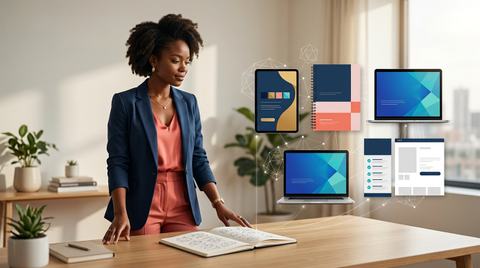
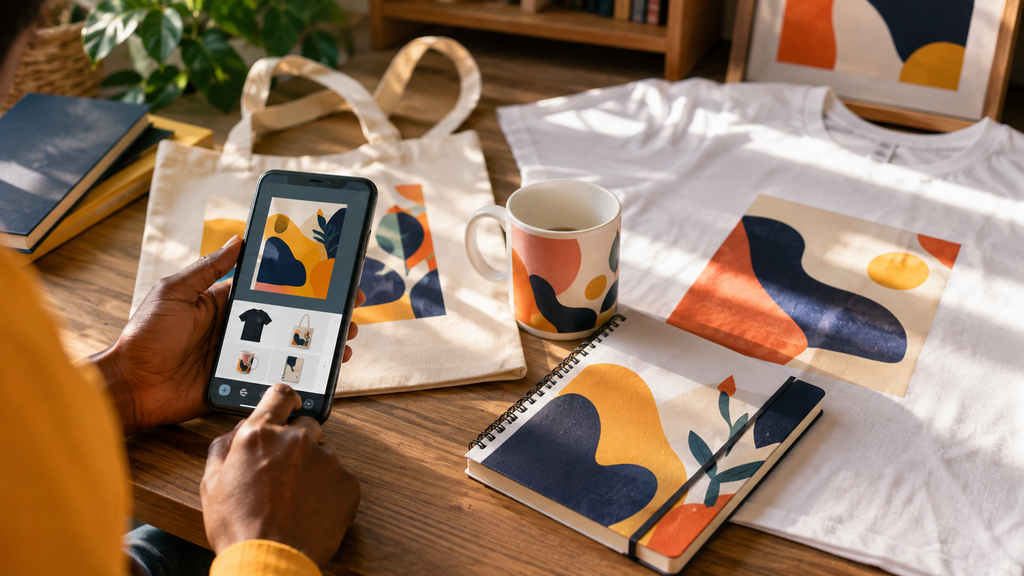
Modern print on demand is closer to designing something on Canva, uploading it to a platform, and letting someone else handle printing, packaging, and shipping entirely.
The word "manufacturing" makes people picture themselves in a warehouse somewhere.
In reality, most successful print on demand sellers have never touched a single physical product they sell.
Everything happens through a screen, and a separate company handles the entire physical side of the business on your behalf.
How Print on Demand Actually Works
Here's the process broken all the way down, because I think a lot of the fear comes from not actually knowing the steps.
You design something, say, a t-shirt graphic, a mug design, a phone case pattern, a tote bag print, whatever fits your idea.
You upload that design to a print on demand platform, there are several beginner friendly ones that connect directly to your online store.
Someone browses your store, likes your design, and buys the product.
The platform prints it, packages it, and ships it directly to that customer, all without you ever touching the physical item.
You never touch inventory.
You never handle shipping.
You never front money for products you're hoping will sell, sitting in a storage unit somewhere collecting dust if they don't move.
Your only real job in this entire process is the design itself, and making sure the right people actually see it.
That's genuinely it.
No warehouse, no upfront stock purchase, no risk of getting stuck with unsold stock in your bedroom.
What Kind of Designs Actually Sell
This is where a lot of beginners psych themselves out unnecessarily.
Not knowing that you don't necessarily need to be a professional designer.
Simple, specific designs targeted at a specific audience usually outperform generic, "trying to appeal to everyone" designs, and that's actually good news for beginners, because specific is easier to create than universally appealing.
A phrase that resonates deeply with a specific community, nurses, dog owners, a particular hobby group, plant moms, gym regulars, tends to genuinely outperform a vague, broadly appealing graphic that's trying to speak to absolutely everyone and ends up speaking to no one in particular.
Text based designs, a clever phrase or a relatable pun, are often easier to create than complex illustrations, and here's the part that surprises people, they can perform just as well, sometimes even better, than intricate artwork that took hours to design.
Think about how many shirts you've seen with just a funny line of text on them.
That's the entire design, and someone made real money from it.
Free tools like Canva have templates specifically built for this kind of product design, mockup templates, sizing guides already worked out, so you're genuinely not starting from a completely blank page, staring at your screen wondering where to even begin.
And if Canva is already sitting on your phone or laptop and you've barely done anything with it, this might be the excuse to finally open it. I also put together How to Make Money With Canva: Turn Your Design Skills Into an Online Business if you want to see how those same design skills can become something you actually sell online.
Where the Actual Effort Goes
The design part, honestly, is the easier half of this whole thing.
The harder, more important part is figuring out who actually wants your specific design and making sure those exact people actually see it.
A brilliant design nobody sees doesn't sell, no matter how clever or well made it is.
That usually means posting where your target audience already hangs out, actively participating in spaces where that specific community exists, running small targeted ads once you have some budget to test with, or slowly building a small following around a specific niche before launching related products directly to those already interested.
This is genuinely the part beginners underestimate the most.
They spend all their energy perfecting a design and don’t think about who's actually going to buy it and where those people spend their time online.
If marketing and finding your specific audience feels like the genuinely intimidating part, and honestly, for most beginners, it is, Auxi Sherpa's Lead Generation and Growth Marketing Services can help figure out where your ideal customers actually are, instead of you guessing blindly and hoping the right people happen to stumble onto your store on their own.
Setting Realistic Expectations
Print on demand isn't a get rich quick setup, and I want to be honest about that instead of overselling it the way a lot of "side hustle" content does.
Most successful shops build slowly, testing different designs, seeing what actually resonates with real buyers, adjusting based on what sells and what flops.
Your first design might not sell at all.
Your fifth might do okay.
Your tenth might genuinely surprise you.
That's a completely normal trajectory, not a sign you're doing something wrong.
But here's the part that matters most for anyone hesitating to even try.
The barrier to actually starting is genuinely as low as opening Canva and picking a platform to connect it to.
No loan required.
No warehouse required.
No risky upfront investment sitting in boxes you're hoping will eventually sell.
Just a design, a platform, and the willingness to actually put something out there and see what happens.
Frequently Asked Questions
Do I need money upfront to start a print on demand business?
No. Print on demand platforms only print and ship products after a customer buys, so there's no upfront inventory cost or risk of unsold stock.
Do I need design experience to create products that sell?
No. Simple, specific designs, including text based ones, often perform just as well as complex illustrations, and free tools like Canva have templates built specifically for this.
How do I find customers for my print on demand store?
Focus on a specific niche or community rather than trying to appeal to everyone. Posting where that audience already exists, or using targeted marketing tools, helps far more than broad, generic promotion.
If you have an article, opinion piece, event or news story you would like published or you are ready to begin building a profitable online content writing business from your phone or laptop, Global News Arena would love to hear from you.
Send an email to advertise@globalnewsarena.com