Whenever voiceover work comes up, most people immediately rule themselves out.
"I don't have that kind of voice."
You know the one they mean, deep, smooth, the kind of voice that sounds like it belongs on a movie trailer, announcing something dramatic in slow motion.
I used to assume the exact same thing, that voiceover work belonged to a very specific type of person, and my ordinary, slightly nasal, completely unremarkable speaking voice had no business anywhere near a microphone.
Here's the thing though, that specific voice type is actually a tiny slice of what voiceover work actually needs.
What Voiceover Work Actually Involves
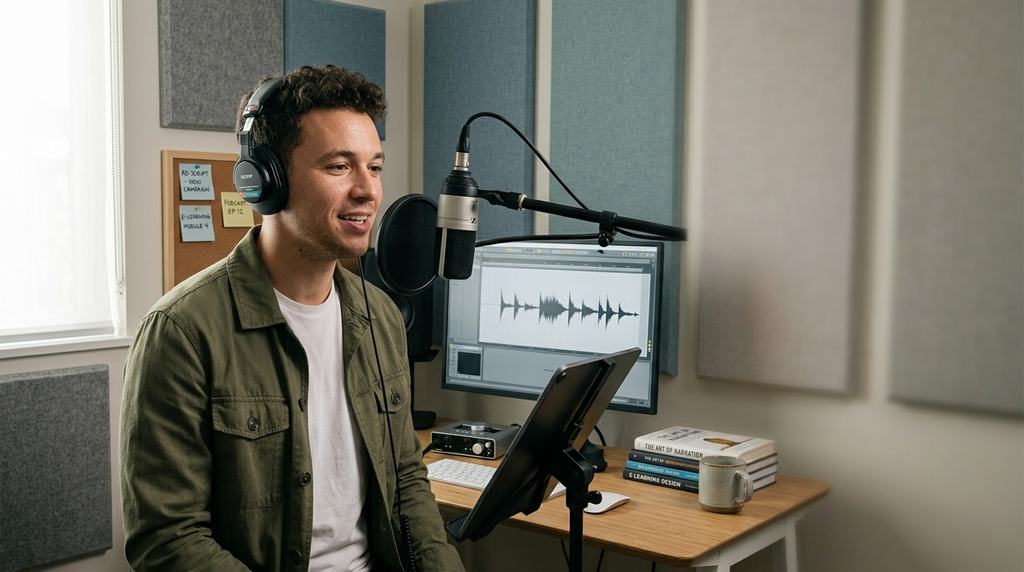
Explainer videos need normal, clear, conversational voices, not dramatic announcer energy.
Audiobooks need someone who can read consistently and engagingly for hours, not necessarily someone with a "radio voice."
YouTube video narration, the kind we talked about in You Don't Need a Camera Face to Make Money on Youtube, just needs clarity and decent pacing, nothing theatrical required.
E-learning courses need voices that sound approachable and easy to follow, often the opposite of overly polished and formal, since nobody wants to feel like they're being lectured at by a robot.
Even brands doing ads sometimes specifically want a more relatable, everyday sounding voice over a deep announcer one, because it genuinely feels more trustworthy and less like a sales pitch shouting at you.
Think about the last ad you actually trusted.
Chances are it didn't sound like a movie trailer.
It probably sounded like a normal person talking to you, which is exactly the point.
What Actually Matters More Than Your Voice Type
Clear pronunciation.
Consistent pacing, not rushing through sentences, not dragging them out either.
The ability to read the same line multiple times without sounding robotic or bored by the fifth take, because trust me, you will need to redo lines more than once.
Basic understanding of tone, knowing when a script needs energy versus when it needs to sound calm and steady.
None of that requires a specific vocal register.
It requires practice, and honestly, most people's natural speaking voice is genuinely fine once they learn to read a script naturally instead of stiffly, the way we all sound a little robotic the first time we try reading something out loud instead of just talking normally.
That stiffness fades with repetition, the same way any new skill smooths out the more you do it.
How to Actually Start
Practice reading scripts out loud, you can find free sample scripts online specifically made for voiceover practice, no need to write your own from scratch while you're still figuring things out.
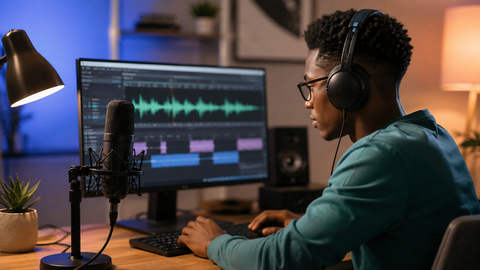
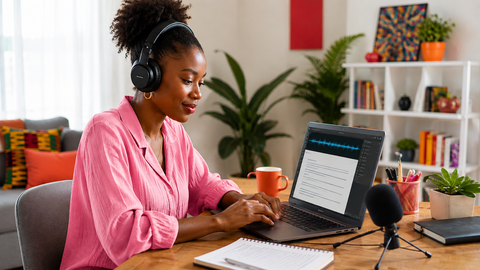
Record yourself using just your phone, nothing fancy needed, and actually listen back critically.
Most beginners are genuinely surprised at how different their voice sounds recorded versus how they hear themselves normally, that weird moment of "Wait, is that actually what I sound like?" is completely normal and everyone goes through it.
Notice where you naturally rush or mumble, and practice slowing those specific spots down deliberately.
Once you're comfortable, record two or three short samples covering different tones, one calm and explanatory, one more energetic, one warm and conversational, to actually show range instead of just one flat delivery style.
This becomes your starter portfolio, proof that you can adjust tone depending on what a client actually needs, which matters more than having one impressive sounding voice.
Finding Your First Voiceover Gig
Small businesses and content creators often need voiceover work and genuinely have no idea where to find someone affordable and reliable.
That gap is your opening.
If you're building content yourself, like the faceless YouTube approach we talked about earlier, your own voiceover practice doubles as content you're already creating anyway, meaning you're building a portfolio and an actual channel at the same time without extra effort.
For finding actual paid voiceover opportunities beyond your own content, Auxi Sherpa's Earning Opportunities and Business Directory sections can help connect you with businesses and creators who need this kind of support regularly, instead of leaving you to guess where to even start looking.
Your voice doesn't need to sound like a movie trailer.
It needs to sound clear, natural, and consistent, which is a much lower bar than most people assume before they even try, myself included when I first ruled myself out of this entirely.
Frequently Asked Questions
Do I need a deep or unique voice to do voiceover work?
No. Most voiceover work, explainer videos, e-learning, narration, needs clear, natural, conversational voices, not a specific deep or dramatic voice type.
What equipment do I need to start voiceover work?
Just your phone to start. A quiet room and a basic recording app are enough for beginners to practice and create sample recordings.
How do I find my first voiceover client?
Start by creating sample recordings showing your range, then look for small businesses and content creators needing this support through platforms like Auxi Sherpa's Business Directory.
If you have an article, opinion piece, event or news story you would like published or you are ready to begin building a profitable online content writing business from your phone or laptop, Global News Arena would love to hear from you.
Send an email to advertise@globalnewsarena.com