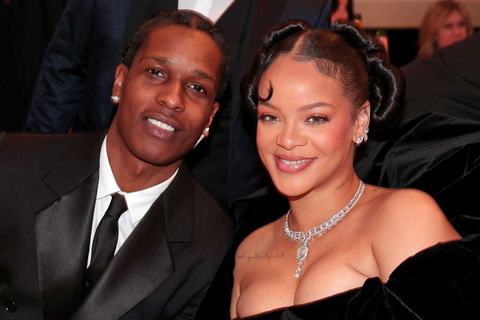
So somebody actually sat down, looked at Peter and Paul Okoye's family situation, and
thought, "you know what this needs?
“A boxing match.”
“And ₦500 million."
Talent manager Soso Soberekon publicly offered Peter Okoye ₦500 million to "settle his
differences" with his twin brother Paul in an official boxing ring.
A boxing match.
Between twin brothers.
For half a billion naira.
My first reaction was just to laugh out loud while looking at my phone like "wetin be this, God
abeg!"
Because apparently we've reached a point where literally anything can become content.
A disagreement, a breakup, a family issue, doesn't matter, if the people involved are famous
enough, somebody somewhere is already calculating how many views it could pull.
That's the part of this story that actually interests me more than the money does.
P-Square isn't new to public drama.
For years, Peter and Paul built one of Nigeria's biggest music acts together, gave us songs
that basically soundtracked an entire generation, toured together, built a whole brand
together.
Then, like a lot of families, things got messy.
Except their "messy" happened in front of millions of people.
They first broke up publicly in 2017 over disagreements around music and business.
They reconciled in 2021, gave fans hope.
Then another fallout hit in 2024, and here we are again.
So when someone offers ₦500 million for these two to box it out, this isn't some random
celebrity spat from yesterday's Twitter.
This is years of real, complicated family tension, and somehow, it's now an entertainment
proposal.
Some people will say it's just business.
Celebrity boxing isn't even a new idea, people have figured out that rivalry plus money plus
an audience equals views, and social media has made finding that audience easier than
ever.
But there's a bigger question underneath all this.
When does spotting an opportunity turn into exploiting somebody's pain?
Not an easy question, and I'm not saying everyone commenting on a celebrity's problems is
exploiting them.
People are naturally curious, entertainment runs on stories, that's normal.
The interesting part is what happens when someone looks at another person's difficult
situation and decides there's money to be made from making it bigger.
That's where it gets complicated, because the internet changed the economics of attention
completely.
Before social media, turning a controversy into a big entertainment product needed access,
television, radio, a production company, editors, advertisers.
Now you just need a phone, an audience, and a good enough hook to stop someone's
thumb mid scroll.
Someone sees a celebrity argument in the morning, has a TikTok about it by lunch.
Then a podcast episode.
A meme.
A reaction video.
A Twitter thread.
A YouTube livestream.
Somebody sells something to everyone watching.
All of it, within hours.
Social media has made all of us a little more entrepreneurial about other people's lives, honestly.
What's trending, what can I post, what can I sell, what can I say that makes someone stop scrolling.
Those aren't bad questions on their own, if you're building something online you should be asking versions of them.
The problem is when the question quietly becomes, whose pain can I turn into an opportunity.
Think about what actually goes viral these days.
A celebrity gets divorced, suddenly everyone has an opinion.
Someone loses a loved one, strangers start dissecting the details.
A family falls apart, and people pick sides like it's a football match.
Sometimes the people at the centre haven't even processed what happened yet, and the internet's already monetising it.
And honestly, that says something about all of us too.
Businesses only make money from attention because we hand it to them.
We can't blame creators for everything while clicking on every single thing they post.
If a family argument gets ten million views, the audience is part of the reason it got that valuable.
Social media has changed the value of attention.
People are no longer simply watching what celebrities post, businesses, brands and
individuals are constantly looking for ways to turn that attention into something useful.
I explored a different side of this in my piece on building a personal brand because
attention can be valuable, but what people remember about you after they have your
attention matters just as much.
That's actually why this story is relevant even if you're not a celebrity, not organising your
own ₦500 million boxing match, none of that.
Attention has become a form of currency.
If people are paying attention to you, you've built something valuable.
But what you do with that attention decides what kind of business you're actually building.
You could sell with it.
Teach with it.
Build community with it.
Or you could keep chasing the next controversy because controversy gets clicks, and let's
be honest, it works too, that's the uncomfortable part.
Outrage gets shared.
Arguments get comments.
People are curious about things they know they probably shouldn't be curious about.
If you're only measuring success by views, it's tempting to keep leaning into that.
But views aren't trust.
And attention isn't automatically a business.
Say you're building a personal brand as a writer, and you discover that dragging celebrities
gets you 200,000 views.
So you do it again.
And again.
Eventually you have an audience, Congratulations.
But what do they actually know you for?
If you later want to sell writing services or a course, you might find the people who came for
the drama aren't interested in what you're actually selling.
You built an audience.
Just maybe the wrong one.
So the smarter question is "what kind of attention am I actually building?"
If people follow a business writer because she breaks down complex ideas simply, that
attention is useful.
If they follow a designer because he consistently helps them improve their brand, that's useful too.
Popular content is fine, but there needs to be a reason people remember you past the scroll.
This is where something like Auxi Sherpa gets genuinely interesting, not for getting someone
to notice you once, but for staying connected with the people who actually cared the first time.
Email automation, customer follow ups, the boring infrastructure that turns a one time click into an actual relationship.
That shifts the question from "how do I make people look at me" to "what happens after they do."
Someone finds your article today.
Follows tomorrow.
Joins your list next week.
Reads something else next month.
Eventually becomes a customer.
That's a far more interesting outcome than one viral post that fades by Thursday.
You don't have to become boring to avoid the outrage trap.
Be funny, have opinions, talk about celebrities, join the conversations already happening.
Just remember, every single thing you publish is quietly teaching people what kind of business you are.
That matters, because people buy from people they trust, hire people they trust, recommend people they trust.
And trust is hard to build if your whole online identity is built on dragging people for clicks.
You might get the click.
You might not get the relationship.
And relationships are usually where the actual money lives.
That's what makes the P-Square situation so interesting to sit with.
The proposed match is clearly designed as a spectacle, the money makes it louder, the fact
that it's two brothers with years of public history makes it hit different.
People aren't just watching two entertainers box.
They're watching two brothers who've been close, distant, reunited, and distant again, in full public view.
There's a real difference between saying "people are interested in this, let's talk about what it
says about family and fame" and saying "people are interested in this family's pain, how
much can we make off it."
They can look the same from the outside.
They're not the same thing at all.
There's also something very Nigerian about all this, honestly.
Give us a problem, someone's already thinking of a solution.
Give us a trend, someone's already found a way to monetise it.
Give us a celebrity wahala, a skit is already in production.
That instinct is genuinely impressive, we're constantly finding opportunity in everything.
Maybe the next level of that hustle is learning that not every opportunity deserves to be taken.
You can be creative without being cruel.
Commercially minded without turning everyone into a transaction.
Use trends without needing controversy to survive.
Build an audience without someone else being the punchline every single time.
Whatever you think about Peter and Paul, their relationship belongs to them.
Millions have watched their career, formed opinions, picked sides, but at the end of it, they're still brothers.
Maybe that's exactly why a ₦500 million offer to have them "settle their differences" in a ring
feels funny and slightly off at the same time.
It takes something deeply personal and turns it into spectacle.
Which is what social media does best, take the ordinary, painful parts of being human and
make them public, then make the public attention valuable, then figure out how to profit from
that value.
Nothing wrong with building a business around attention, there's real opportunity for people
who know how to create useful content and build genuine relationships with an audience.
But it's worth deciding early what you will and will not turn into content, because eventually,
people learn your boundaries from what you publish.
You don't have to comment on every controversy.
You don't have to sell something off every trend.
You just have to be useful enough, interesting enough, or trustworthy enough that people
actually come back.
That's a much sturdier business model than chasing the next family drama for clicks.
If you have an article, opinion piece, event or news story you would like published or you are ready to begin your journey toward building a profitable online content writing business from your phone or laptop, Global News Arena would love to hear from you. Send an email to advertise@globalnewsarena.com