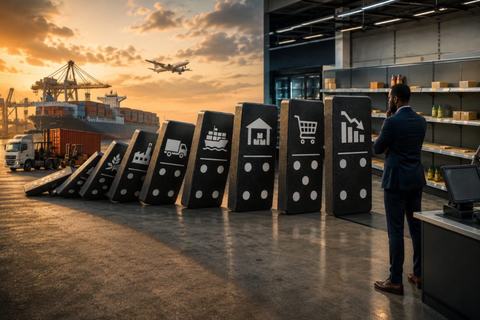
Supply chain problems rarely begin inside the business. A change in trade policy, a shortage of raw materials, higher shipping costs or a disruption in another country can eventually become a problem for a company thousands of kilometers away.
The mistake is assuming that because something has not affected the business yet, it will not affect it later.
A company may have used the same supplier for years without interruption.
But if that supplier suddenly becomes more expensive or cannot deliver, the business still needs another option.
Businesses should therefore understand their dependencies.
Which suppliers are critical?
Which products cannot easily be replaced?
How long could the company operate if a key shipment was delayed?
What happens if the cost of importing a major product increases significantly?
These questions do not require a business to predict the future.
They require the business to understand its exposure.
Once the risks are visible, management can decide which ones require alternative suppliers, additional stock, new pricing strategies or closer monitoring.
Customer communication also becomes important during disruptions.
If an order is delayed, customers need information.
If prices change, they need an explanation.
If a product becomes unavailable, they need alternatives.
Businesses that communicate quickly can manage expectations better than those that allow customers to discover problems themselves.
Market information should also be reviewed regularly.
A business does not need to monitor every international development, but it should pay attention to changes that directly affect its suppliers, customers, costs or industry.
Auxi Sherpa supports businesses with Deep Research for market and competitive information, while its AI automation tools can help organise customer enquiries and follow ups when operational pressure increases.
Supply chain resilience is ultimately about having options.
A business with one supplier, one route, one major customer or one source of information may be efficient when everything works perfectly, but it becomes vulnerable when conditions change.
Building alternatives may cost more initially, but it can give the business more room to respond when uncertainty arrives.
If you have an article, opinion piece, event or news story you would like published, Global News Arena would love to hear from you.
Send an email to advertise@globalnewsarena.com.