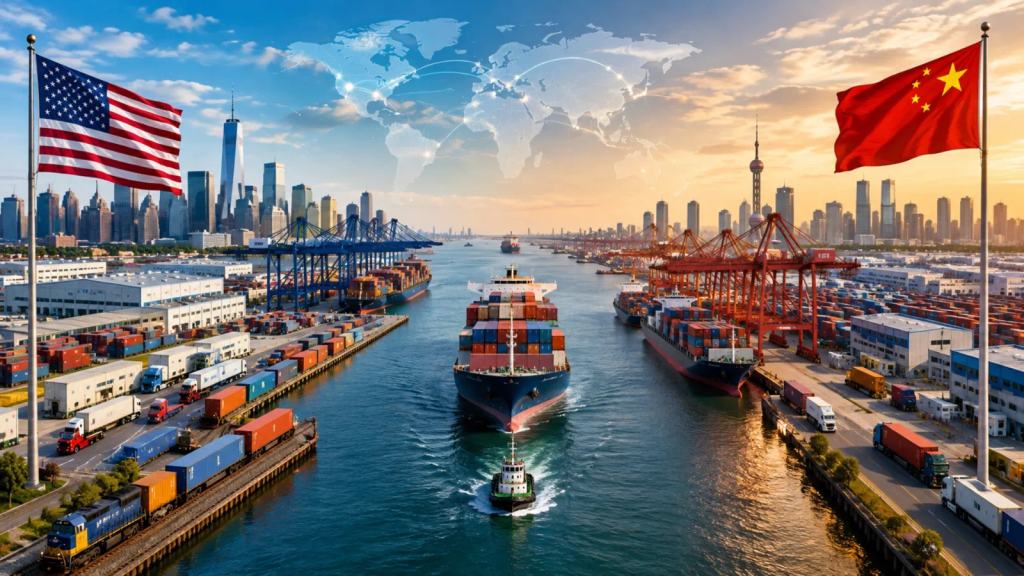
The United States and China have extended their trade truce for another two months, moving the current expiration date to January 10, 2027.
The two countries also agreed on discussions involving tariff reductions on $30 billion of goods and created mechanisms for continued economic and trade discussions.
For global companies, the development provides additional time to plan, but it does not remove uncertainty.
Businesses involved in international trade have to make decisions about suppliers, inventory, pricing and expansion while policies can still change.
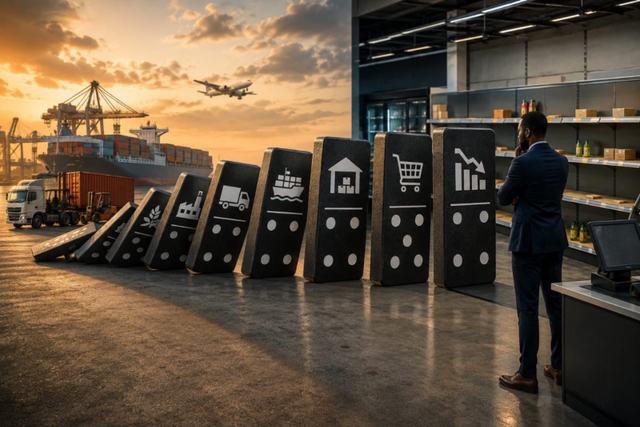
A company that depends heavily on one international supplier can be particularly exposed.
If tariffs change, the cost of importing the product can rise. If shipping conditions change, delivery times can increase.
If a new restriction affects a particular product, a company may suddenly have to find another supplier.
This is why businesses should not build their entire strategy around one assumption about the future. Instead, they should understand which parts of their operation are most vulnerable to changes in the market. A business importing products from one country, for example, should know how quickly it could switch suppliers if conditions changed.
The same thinking applies to pricing.
When costs are uncertain, businesses need to understand how much room exists between their current selling price and their operating cost.
Without that information, a sudden increase in supplier or transportation costs can leave the company selling at a margin that is too small to sustain the business.
Businesses should also distinguish between information and assumptions.
News about tariffs, trade agreements and international negotiations can change quickly.
Making a major business decision based on one headline without understanding how it affects the company’s specific suppliers, products and customers can create unnecessary risk.
Research and monitoring can make this easier. Auxi Sherpa can help businesses organize research, gather business information and support market analysis through its Deep Research capabilities, while its automation tools can help manage customer communication and follow ups.
The US and China will continue to shape a significant part of global trade, but smaller businesses do not need to predict every diplomatic development.
They need to understand their own exposure. The more clearly a business knows where its costs, suppliers and customers are vulnerable, the easier it becomes to prepare for different outcomes.
If you have an article, opinion piece, event or news story you would like published, Global News Arena would love to hear from you.
Send an email to advertise@globalnewsarena.com.