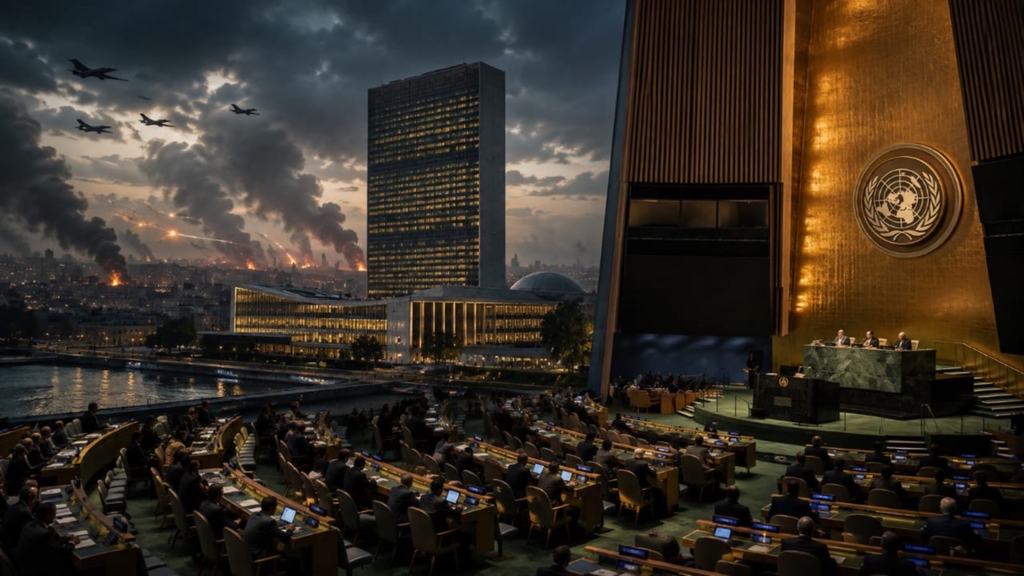
America is at war with Iran. Yet next week, some of Iran’s highest-ranking officials are expected to walk into New York for one of the world’s biggest diplomatic gatherings.
The United States has approved visas for Iran’s core delegation to attend the United Nations General Assembly’s High-Level Week, including Iranian President Masoud Pezeshkian and Foreign Minister Abbas Araghchi, according to the U.S. State Department and multiple reports. The delegation will be smaller than last year’s and subject to travel restrictions and limits on certain purchases while in the United States.
At first glance, it sounds contradictory. How can a country be fighting another country and still send its leaders into that country’s largest city for a diplomatic meeting?
The answer is that the United Nations was designed precisely for moments like this. The UN headquarters is in New York, and the United States, as the host country, has obligations connected to access for official delegations attending UN meetings. That does not mean Washington and Tehran have settled their differences. It means diplomacy can continue even when relations between governments are at their worst.
And that distinction matters.
A visa to attend the UN is not a peace agreement. It is not proof that the war is ending. It does not erase sanctions, military confrontation or the disagreements surrounding Iran’s nuclear programme. It simply creates a physical space where governments that cannot agree on the battlefield or around a negotiating table can still speak to the international community.
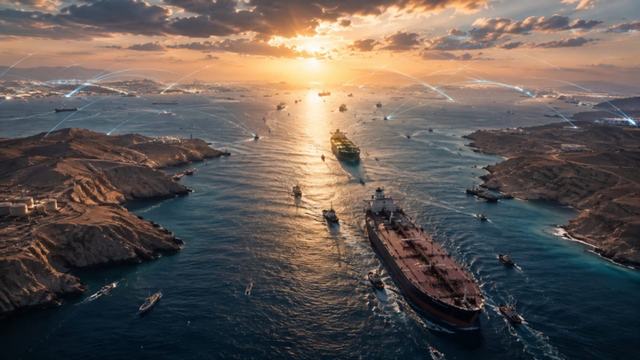
This year’s gathering is arriving at an unusually tense moment. The conflict between the United States and Iran has continued for months, while the disruption around the Strait of Hormuz has added pressure to global energy markets. At the same time, Russia and China vetoed a U.S.-backed Security Council resolution on September 17 that sought to extend independent monitoring of international sanctions on Iran. Washington criticized the veto, while Moscow and Beijing argued against what they described as a politicized approach to the issue.
That makes the UN General Assembly more than another diplomatic event this year. It becomes a place where competing governments can present their version of events directly to the world.
For ordinary people and businesses, however, the lesson goes beyond diplomacy. The longer major powers remain locked in conflict, the harder it becomes for everyone else to operate with certainty. Energy prices can change. Shipping routes can be disrupted. Businesses can face higher operating costs. Customers can become more cautious with their spending. And decisions that once looked safe can suddenly require a second plan.
The mistake is assuming that uncertainty means businesses should simply wait until things become stable again. Global stability is not something a small business owner can control. What a business can control is how clearly it communicates, how visible it remains to customers and how prepared it is to adjust when circumstances change.
That is where practical business support becomes important. Auxi Sherpa helps businesses with services including content writing and social media management, giving brands the support they need to communicate consistently, stay visible and keep engaging their audience while they focus on running the business.
The US-Iran conflict will not be solved by a social media post or a better marketing campaign.
But businesses affected by the consequences of global uncertainty still have to operate. They still have customers to reach, products to explain and relationships to maintain.
The UN meeting offers a simple lesson: communication does not become less important when circumstances become difficult. In many cases, it becomes more important. When governments cannot stop talking even during a war, businesses should understand the value of keeping their own customers informed when the market around them is changing.
The world will be watching what Iran says in New York, what the United States says in response and whether diplomacy can create an opening for a different path.
But for businesses far away from the negotiating rooms, another question matters too: when the world becomes uncertain, is your business prepared to keep communicating?
If you have an article, opinion piece, event or news story you would like published, Global News Arena would love to hear from you.
Send an email to advertise@globalnewsarena.com.