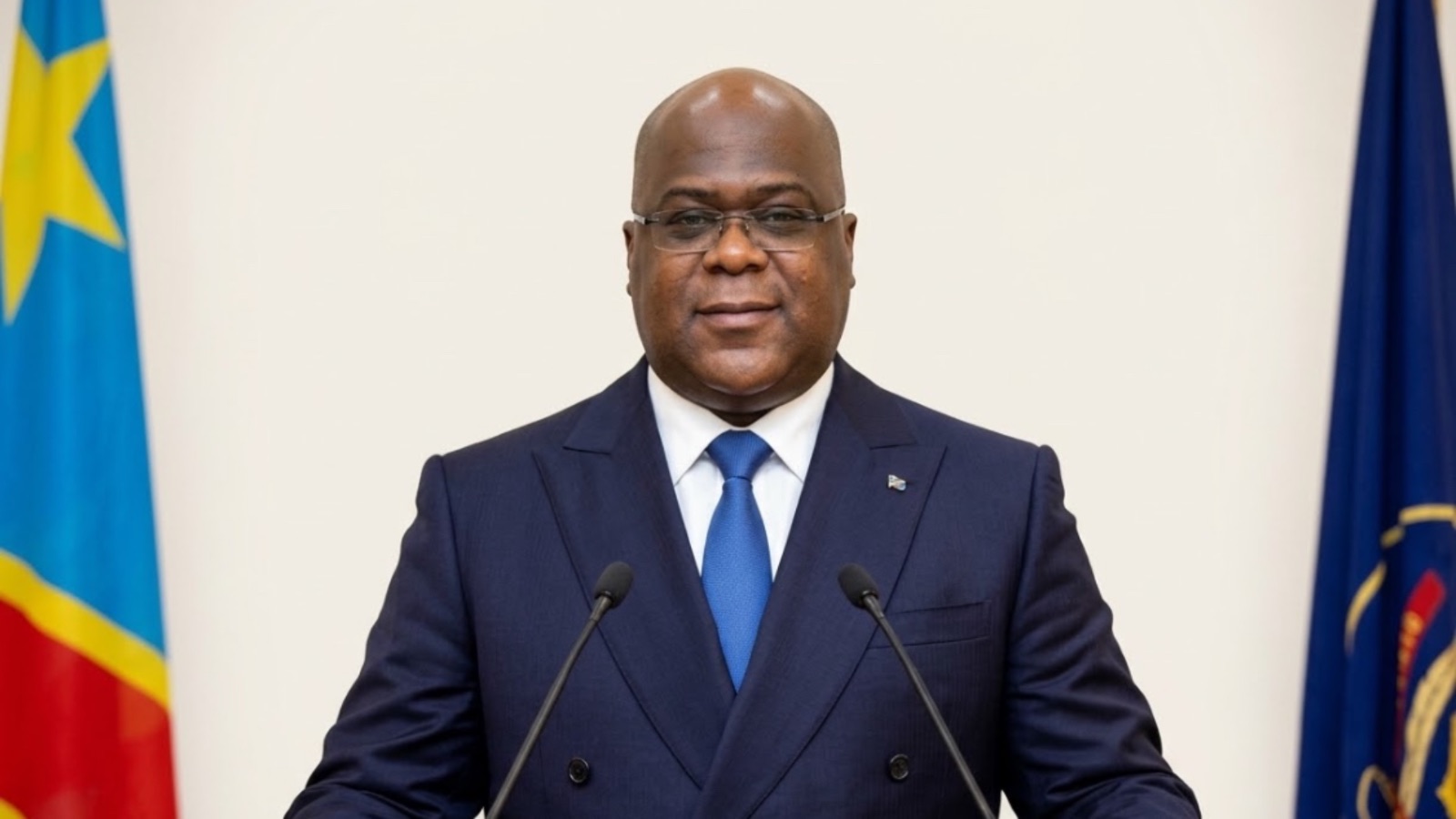
The Félix Tshisekedi Biography tells the story of Félix-Antoine Tshisekedi Tshilombo, a Congolese politician who became president of the Democratic Republic of the Congo (DR Congo) in January 2019. He is the son of Étienne Tshisekedi, a well-known opposition leader who spent many years challenging the political system in his country.
READ: Donald Trump Biography: Business Career and Presidency
Félix Tshisekedi entered public life through the Union for Democracy and Social Progress (UDPS), the political party associated with his father. Over time, he moved from party leadership into national politics and eventually became president. His presidency has focused on issues including security, employment, economic development, public services and the country’s position in regional and international affairs.
Read: Do you need a professional writer in 72 hours? Contact Auxi Chat
Félix Tshisekedi Biography: Early Life and Family Background
READ: Bassey Otu Biography: Cross River State Governor
Félix-Antoine Tshisekedi Tshilombo was born on June 13, 1963, in Kinshasa, the capital of the Democratic Republic of the Congo. His father, Étienne Tshisekedi, was an influential political figure who helped establish and lead the UDPS. His mother was Marthe Kasalu.
Growing up in a family closely connected to politics exposed Félix Tshisekedi to the country’s political struggles from an early age. His father’s opposition activities and disagreements with successive governments formed an important part of the family’s public history.
Read: Need a professional website in 72 hours? Contact Auxi Chat
During the rule of Mobutu Sese Seko, Étienne Tshisekedi and his political supporters challenged the government and called for democratic change. Félix Tshisekedi later spent time in Belgium, where he lived before returning to take a more active role in Congolese politics.
The Félix Tshisekedi Biography therefore begins with a family background shaped by political opposition, public debate and demands for democratic reform. However, his own political career developed through his later responsibilities within the party and his participation in national elections.
Félix Tshisekedi’s Political Career and the UDPS
Félix Tshisekedi became increasingly involved in the Union for Democracy and Social Progress, a party established to promote democratic change in the Democratic Republic of the Congo.
In 2011, he was elected to the National Assembly. However, he refused to take his seat, protesting the electoral process. His parliamentary mandate was subsequently withdrawn in 2013.
Following the death of his father in February 2017, Félix Tshisekedi became one of the leading figures within the opposition movement. In March 2018, he was elected president of the UDPS, strengthening his position within the party.
His political career continued to develop as opposition leaders prepared for the December 2018 presidential election. He formed an alliance with Vital Kamerhe, leader of the Union for the Congolese Nation, through the Cap for Change platform, commonly known by its French abbreviation, CACH.
This alliance helped bring different political supporters together behind his candidacy. His eventual election marked a major transition in the country’s political leadership.
How Félix Tshisekedi Became President of DR Congo
Félix Tshisekedi was declared the winner of the December 2018 presidential election and officially became president on January 24, 2019.
His accession marked the Democratic Republic of the Congo’s first peaceful transfer of presidential power between elected leaders since independence. The election also brought new expectations from citizens who wanted improvements in security, employment, public services and living conditions.
The Félix Tshisekedi Biography includes this historic moment because it established him as one of the country’s most important political figures. His first term required him to manage relationships with political opponents, build governing support and address longstanding national challenges.
In the early years of his presidency, Tshisekedi worked through changing political alliances and government arrangements. In December 2020, he announced the end of his governing alliance with the coalition linked to former president Joseph Kabila and moved to establish a new parliamentary majority.
These developments shaped his administration and influenced how political power was organised within the country.
Félix Tshisekedi’s Second Term as DR Congo President
Félix Tshisekedi won re-election in December 2023 and was sworn in for a second five-year term on January 20, 2024.
During his inauguration, he highlighted priorities including job creation, improved purchasing power, greater security, economic diversification, better access to basic services and more effective public institutions.
His second term has faced significant challenges, particularly insecurity in eastern DR Congo. Armed groups operating in the region have contributed to violence, displacement and humanitarian hardship. The conflict has also affected communities, trade and efforts to restore stability.
The Félix Tshisekedi Biography remains relevant because his presidency is closely connected to these continuing national issues. The results of government policies depend on their implementation, available resources, security conditions and cooperation between national and regional authorities.
His administration also faces expectations to improve economic opportunities and strengthen public institutions in a country with considerable natural resources but uneven access to essential services.
Economic Development and Natural Resources in DR Congo
The Democratic Republic of the Congo has substantial natural resources, including copper, cobalt, gold and other minerals. These resources are important to global industries, particularly those connected to electricity, manufacturing and battery technology.
However, natural wealth does not automatically translate into better living conditions for everyone. The country continues to face challenges involving infrastructure, employment, public services, investment and the distribution of economic opportunities.
As DR Congo president, Tshisekedi has identified economic diversification, employment and improved living standards as important priorities. Economic diversification means developing more areas of the economy rather than depending too heavily on a limited number of industries.
The government also faces the task of encouraging investment while improving public administration and ensuring that the benefits of economic activity reach more communities.
Understanding the country’s economy is an important part of the Félix Tshisekedi Biography, because economic policy is closely linked to public expectations and the wider direction of his administration.
Security and Regional Relations Under Félix Tshisekedi
Security remains one of the most difficult issues facing the Democratic Republic of the Congo. Parts of the eastern region have experienced prolonged conflict involving armed groups, with serious consequences for civilians.
Displacement, disrupted farming, damaged infrastructure and interrupted trade can make daily life difficult for affected communities. Humanitarian organisations and local authorities have also faced pressure to provide assistance to people forced to leave their homes.
Tshisekedi’s government has pursued security measures and diplomatic engagement with regional partners. Relations with neighbouring countries have also become an important part of efforts to address armed conflict and support stability.
These issues are central to Democratic Republic of the Congo politics because insecurity affects national unity, economic activity and public confidence in state institutions.
READ: Bola Ahmed Tinubu Biography: Nigeria’s President and Political Career
The Félix Tshisekedi Biography cannot be separated from this wider context. His administration’s response to security challenges remains an important subject for citizens, policymakers and regional observers.
Félix Tshisekedi and the African Union
Félix Tshisekedi has also taken part in regional and continental diplomacy. In February 2020, he was elected first vice-president of the African Union for that year and subsequently held the African Union’s rotating chairmanship in 2021.
The African Union brings African countries together to discuss shared concerns, including peace and security, economic cooperation, development and regional integration.
Participation in the organisation gives national leaders opportunities to work with other governments on issues that affect more than one country. For DR Congo, regional diplomacy is particularly relevant because security, trade and humanitarian challenges often cross borders.
His role in continental affairs forms another part of the Félix Tshisekedi Biography, showing how his public responsibilities extend beyond domestic government.
Why the Félix Tshisekedi Biography Matters
The Félix Tshisekedi Biography provides background on a political leader whose career reflects major developments in the Democratic Republic of the Congo. His journey includes his family’s political history, leadership of the UDPS, election to the presidency and continued efforts to address national challenges.
His presidency has taken place amid public demands for improved security, more employment, stronger institutions and better living conditions. These issues remain important to understanding the country’s political and economic direction.
For readers interested in African leadership, the DR Congo president’s biography also provides context about elections, political alliances, natural resources and regional cooperation.
Félix Tshisekedi’s place in the country’s history will continue to be shaped by political developments and the outcomes of policies implemented during his time in office. His career remains an important subject for understanding the modern politics of the Democratic Republic of the Congo.
Are you interested in learning how to write professionally and earn money as a writer and content creator? Contact us today to start your writing journey immediately.
Need a professional website in 72 hours? Contact us
Do you need a professional writer in 72 hours? Contact us
If you have an article, guest story, event or news tip you would like published, Global News Arena would love to hear from you.