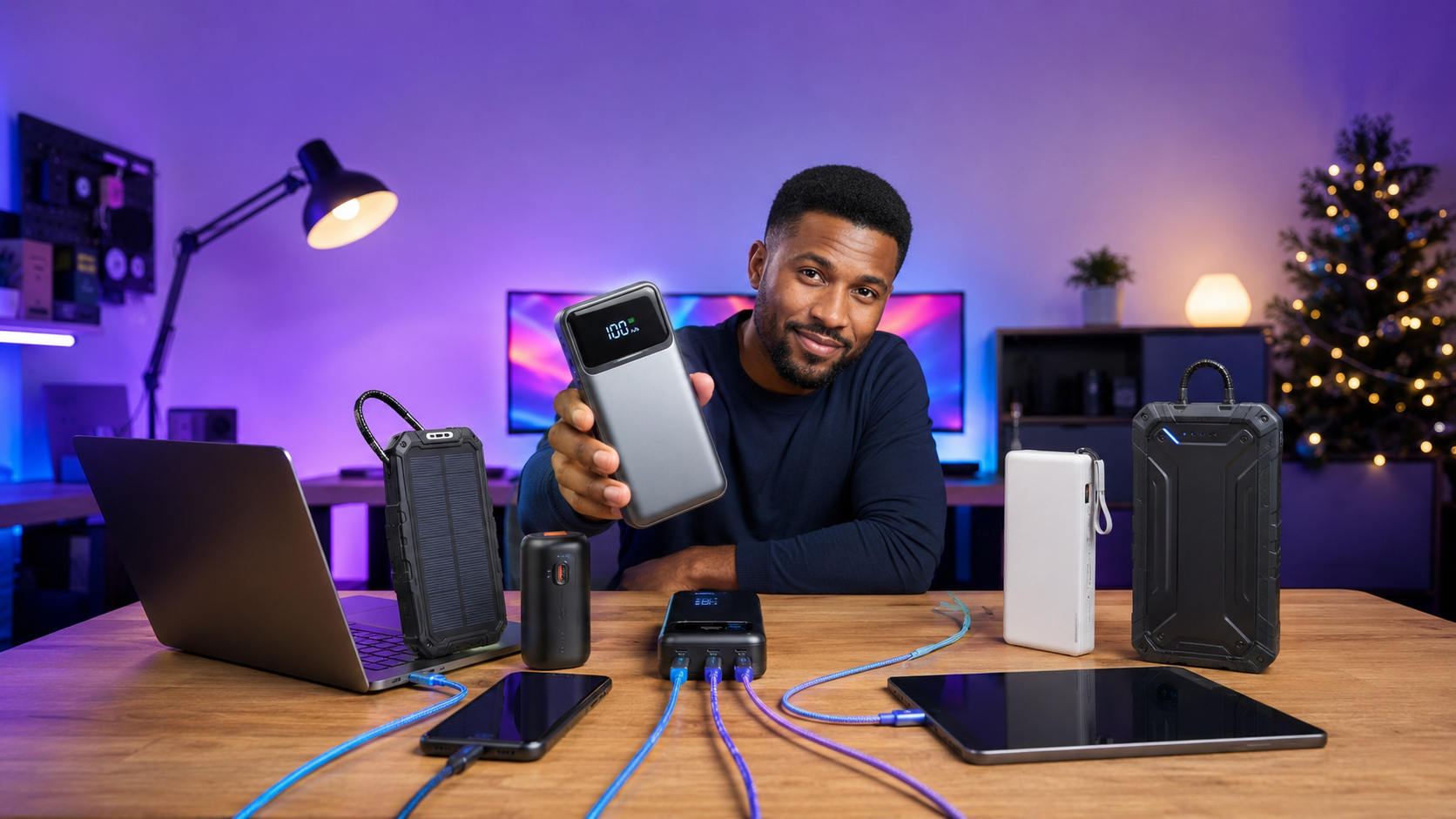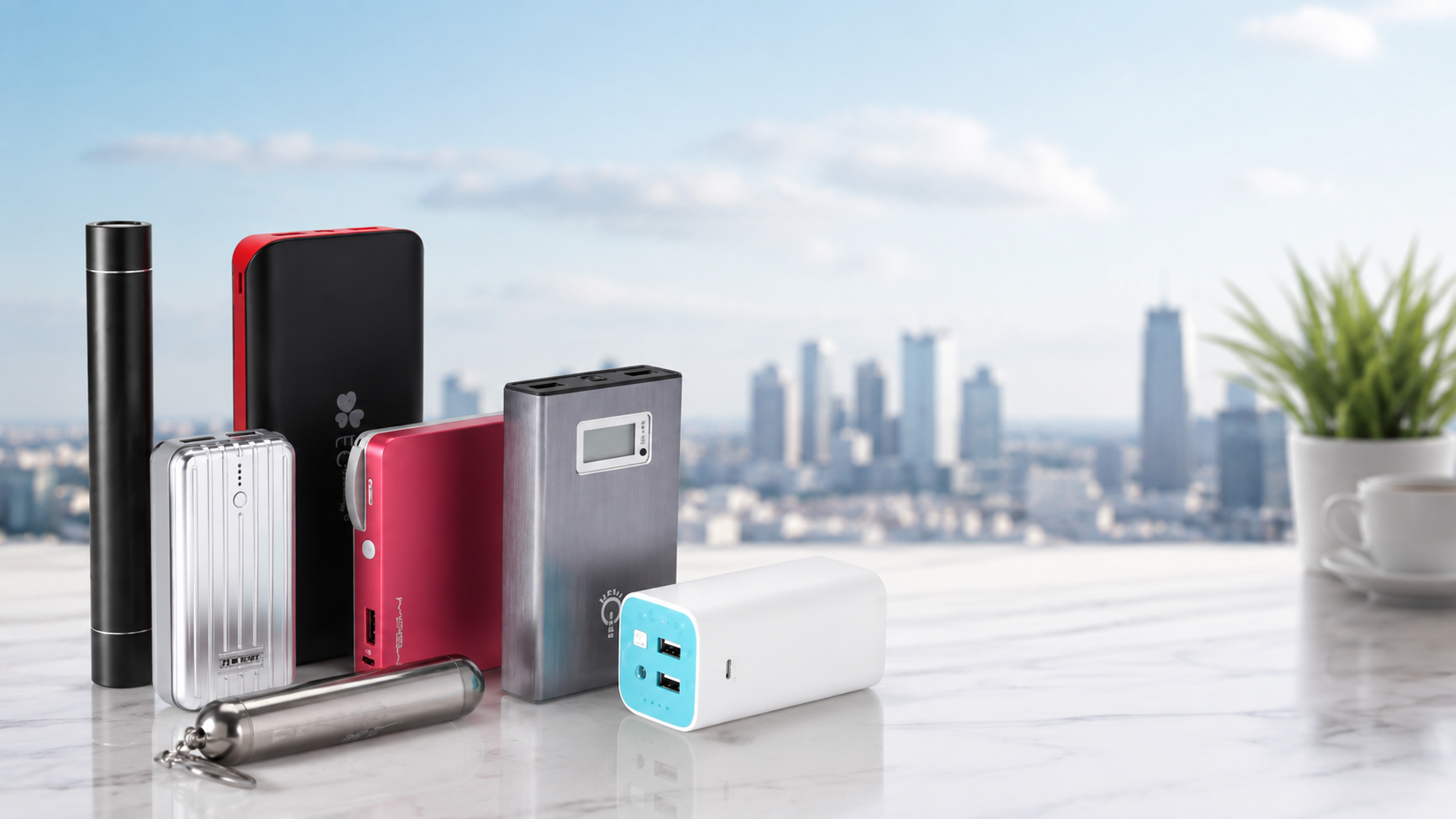
I have come to realise that some of the things we use almost every day are the things we understand the least.
Take the power bank, for example.
For many of us, it is simply that small device we throw into our bags when we know our phone battery may not survive the day. We look at the numbers written on the body or the packaging—10,000mAh, 20,000mAh, 30,000mAh, 22.5W, 65W, 100W—and assume that the biggest number must automatically mean the best deal.
But is it really?
I started thinking about this because choosing a power bank is actually a little more complicated than walking into a shop and asking for the one with the highest mAh. A power bank can have an impressive capacity and still not be the right choice for your phone. It can advertise fast charging and yet fail to charge your particular device at the speed you expected. It can even have multiple ports and enormous numbers printed all over it while being completely unsuitable for the way you actually use your devices.
And that is why I believe understanding what those numbers mean is more important than simply being attracted to them.
The first number most people notice is mAh, which means milliampere-hour. In simple terms, it tells us about the battery's capacity. So, all things being equal, a 20,000mAh power bank has more stored capacity than a 10,000mAh power bank.
That sounds straightforward until you make the mistake of assuming that a 20,000mAh power bank will give a 5,000mAh phone exactly four full charges.
It generally won't.
There are energy losses during voltage conversion and the charging process, which means the usable energy delivered to your phone will be lower than the headline capacity printed on the power bank. That is one reason I would never advise anyone to buy a power bank simply because the mAh figure looks impressive.
Instead, I would first think about how I actually use my phone.
If I mainly need something small that can rescue my phone when the battery gets low during the day, 10,000mAh may be perfectly adequate. But if I spend long hours away from a wall socket, travel frequently, use my phone for navigation, record videos, take photographs, watch a lot of content or use it as part of my work, then a 20,000mAh model may make more sense.
The important thing is that bigger capacity usually comes with more size and weight.
And that is something people sometimes forget.
There is no point buying a huge power bank that is theoretically capable of keeping your devices alive for days if it is so heavy that you leave it at home.
For me, the best power bank is not necessarily the biggest one. It is the one that gives me enough power without becoming a burden.
But capacity is only one part of the story because another number deserves just as much attention: wattage.
This is where I think many people get confused.
While mAh is mainly about how much energy the power bank can store, watts tell us about how much power it can deliver at a particular moment. That matters when we start talking about charging speed.
A 20W power bank, for instance, can potentially charge a compatible device much faster than a 10W power bank. However, there is an important word here: compatible.
Buying a 100W power bank does not automatically mean your smartphone will charge at 100W.
Your phone has its own charging limits and technologies. If your phone only accepts a certain amount of power under the charging conditions being used, the phone will not suddenly become a 100W device simply because the power bank can deliver that much.
That is why I think asking, “What is the most powerful power bank?” is the wrong question.
A better question is, “What devices am I actually trying to charge?”
If it is just a smartphone, you may not need an extremely high-wattage power bank. If you want to charge a tablet or compatible laptop as well, however, wattage becomes much more important.
This brings me to another phrase we see everywhere: fast charging.
I used to think fast charging simply meant finding the largest wattage printed on the box. But charging technology does not work quite that simply.
For fast charging to work as expected, the power bank, your device and sometimes the cable must support compatible charging technologies.
USB Power Delivery, commonly known as USB PD, is one of the important standards used in modern charging. According to the USB Implementers Forum, USB Power Delivery allows compatible devices and chargers to negotiate the amount of power required rather than relying on one fixed power level.
There are also technologies such as Programmable Power Supply, or PPS, which can be part of USB Power Delivery implementations and allow compatible devices to manage charging power more dynamically.
What this means for an ordinary buyer is actually quite simple: don't assume that the biggest wattage figure automatically equals the fastest charging experience.
Check what your phone supports.
If your phone supports USB PD, for example, a power bank with USB-C PD support may be a much more useful purchase than one that simply advertises a large wattage number without clearly explaining its charging standards.
The cable should not be ignored either.
We often spend money on a phone and a power bank and then use whatever old cable we find in the house. But cables have different capabilities, and the cable can become part of the charging equation. So, if you are specifically buying a power bank because you want fast charging, it makes sense to ensure that your cable is capable of supporting the charging setup you are trying to use.
That is also why I am increasingly interested in USB-C when looking at modern charging accessories.
USB-C has become important across smartphones, tablets, laptops and many other devices, while USB Power Delivery can support substantially higher power levels in appropriate implementations. The USB Implementers Forum's current USB PD information describes support for power delivery of up to 240W in suitable implementations.
Of course, that does not mean that I need a 240W power bank to charge my phone.
Most people don't.
It simply demonstrates how much charging technology has evolved and why understanding the technology is more useful than being distracted by a large number on a box.
For an ordinary smartphone user, a power bank in the 15W to 20W range may be sufficient, depending on what the phone supports. Someone whose phone supports faster charging may want to look for a higher-output power bank that is compatible with the phone's charging system.
And if the goal is to charge a laptop, the conversation changes completely.
A power bank designed mainly for smartphones may not provide enough power to charge a laptop effectively, so that is where checking the manufacturer's specifications becomes particularly important.
Another thing I would check is something that many people completely overlook: how quickly the power bank itself can recharge.
Think about it.
You can buy a large 20,000mAh power bank, use it until it is empty and then discover that it takes an incredibly long time to refill. At that point, its enormous capacity may not feel quite as impressive.
So when comparing power banks, I would look at both the output and the input.
Output tells me how quickly the power bank can charge my devices. Input tells me how quickly I can recharge the power bank itself.
That distinction can make a surprising difference to everyday convenience.
Then there are the ports.
Again, I wouldn't automatically assume that more ports mean a better product.
If I only need to charge one phone, one good USB-C port might be enough. If I regularly carry a phone, wireless earbuds, a smartwatch or another device, multiple ports could be useful.
However, I would still check what happens when several devices are connected at the same time. Some power banks divide their available power among connected devices, so a model advertising a particular maximum output does not necessarily mean every connected device will receive that maximum simultaneously.
This is where reading the specifications becomes much more valuable than simply looking at the picture of the product.
And while we are talking about specifications, I think safety deserves more attention than it usually gets.
A power bank contains a lithium battery. That means I would rather spend a little more on a reputable product than gamble on an unknown device simply because it is unbelievably cheap.
A product with unclear specifications, a damaged casing, unusual swelling, excessive heat or suspicious claims is not something I would take lightly.
The Federal Aviation Administration, for example, advises passengers that spare lithium batteries and power banks must be carried in carry-on baggage rather than checked baggage. Its guidance also explains that lithium-ion batteries up to 100Wh are generally allowed, while batteries between 101Wh and 160Wh require airline approval, subject to applicable rules and airline policies.
This is particularly useful information for anyone who travels because mAh is not the only measurement airlines may care about. Watt-hours, or Wh, can also be important.
The FAA explains that you can calculate watt-hours by dividing the battery's mAh rating by 1,000 to get amp-hours and multiplying that figure by the battery voltage.
For example, if a power bank has a nominal battery rating of 20,000mAh at 3.7V, the calculation would be approximately 20,000 divided by 1,000, multiplied by 3.7, giving about 74Wh.
That puts the capacity into a measurement that is easier to compare with airline limits.
Still, because airline rules can change and individual airlines may have additional requirements, I would always check the latest rules of the airline I am travelling with before heading to the airport.
When I put everything together, I realise that choosing a power bank is really about matching specifications to real life.
If I want something lightweight for emergencies, I might choose 10,000mAh.
If I am regularly away from electricity for long periods, I might choose 20,000mAh.
If fast charging is important to me, I would look at wattage, USB-C, USB PD, PPS and compatibility rather than simply looking for the largest mAh number.
If I want to charge a laptop, I would pay much closer attention to the power output.
And if I am travelling, I would consider the watt-hour rating and the current airline rules.
It sounds technical when you put all the terms together, but it really isn't as complicated as it first appears.
The bigger lesson for me, however, goes beyond power banks.
I think we have become too attracted to big numbers.
We see a product with 30,000mAh and immediately assume it must be better. We see someone with one million followers and assume they must be successful. We see someone posting screenshots of money they claim to have made online and immediately assume their business model must be worth copying.
But numbers without context can be misleading.
A 30,000mAh power bank is not necessarily the right power bank for me.
Likewise, someone making money online is not necessarily doing something that I can simply copy and expect the same result.
I need to understand what is behind the number.
What problem is the person solving?
What skill do they have?
Where are their customers coming from?
What platform are they using?
How are they turning attention into income?
And perhaps most importantly, can I learn the underlying skill instead of simply copying the visible result?
That question has become increasingly important to me because our smartphones are now capable of doing far more than making calls and sending messages.
The same smartphone I can use to watch TikTok videos, scroll through Facebook or chat with friends can also become a small digital workplace.
I can use it to research, write, edit, design, communicate with clients, manage social media, create videos, promote products and learn skills that can potentially become sources of income.
Content writing is a good example.
Someone who can research a subject properly, explain it clearly, write in a way that people enjoy reading and understand how to package that content for an online audience can gradually turn that ability into a service.
The starting point doesn't have to be an expensive office or a sophisticated computer setup.
A smartphone, reliable internet connection, useful skill and willingness to learn can be enough to begin exploring the digital economy.
Of course, I would never tell someone that making money online is effortless. It isn't.
There are skills to learn, mistakes to make, clients to find and credibility to build.
But I believe there is a major difference between chasing a quick-money opportunity and deliberately building a skill that people are willing to pay for.
The first is often driven by excitement.
The second is built on value.
And that brings me back to the power bank.
When I buy one, I don't actually need the biggest number printed on the packaging. I need the right combination of capacity, charging speed, compatibility, portability, safety and price for the devices I use.
The same principle can apply to building a digital business.
I don't need to chase every platform, every trend or every promise of overnight success.
I need to understand what I have, what I can learn, what problem I can solve and who might be willing to pay for that solution.
So, if you are currently looking for a power bank, don't be intimidated by the numbers.
Start with your phone.
Check its battery capacity and charging requirements. Decide how much backup power you realistically need. Look at the power bank's mAh rating, output wattage, input speed and supported charging standards. Check the ports and cable requirements. Consider the size and weight. And if you travel, check the watt-hour rating and the latest airline regulations.
Most importantly, buy from a reputable source and don't let an attractive price convince you to ignore safety.
Because whether we are buying technology or building our future, understanding what we are investing in matters.
I would rather understand a smaller opportunity that I can actually use than chase a bigger one that does not fit my needs.
And perhaps that is the mindset more of us need in this digital age: stop being impressed by the biggest number and start paying attention to the value behind it.
If you have an article, opinion piece, event or news story you would like published, or you are ready to begin your journey toward building a profitable online content writing business from your phone or laptop, Global News Arena would love to hear from you. Send an email to advertise@globalnewsarena.com.