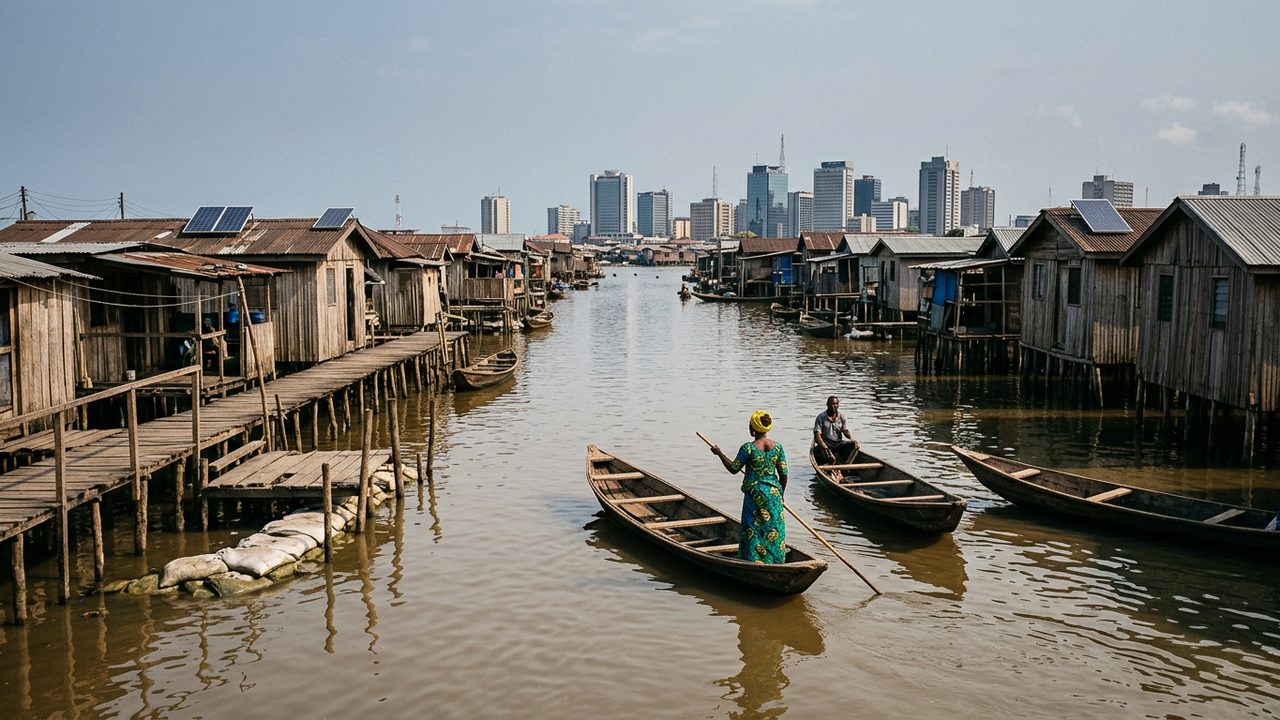
Lagos faces a combination of pressures that few coastal megacities confront simultaneously: sea level rise, land subsidence from groundwater extraction, sand mining that removes natural coastal defence, and a drainage network built for a much smaller city.
The consequences appear first in the same neighbourhoods each rainy season. Low-lying settlements on the Lagos lagoon flood repeatedly, and the economic cost is borne by households with the least capacity to relocate. Reclaimed developments along the Atlantic front have their own protective structures, which alter sediment movement along the shore.
Engineers working on the city's drainage master plan describe the core problem as maintenance rather than design. Channels that exist are frequently blocked with waste, and the institutions responsible for clearing them are funded inconsistently.
Lagos state has expanded its drainage budget and begun mapping flood exposure at street level. Whether that translates into fewer flooded homes depends on enforcement of setback rules in a property market where waterfront land is among the most valuable in West Africa.