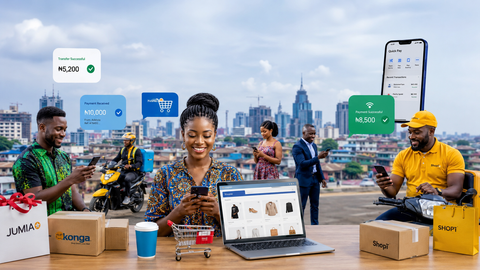
A failed bank transfer, a video that refuses to upload, an online meeting that keeps disconnecting, a customer unable to place an order or a freelancer struggling to send work to a client may seem like separate problems. But underneath many of these everyday frustrations is one common factor: the strength and reliability of the digital infrastructure connecting us.
For millions of Nigerians, the internet is no longer simply a place to chat, watch videos or scroll through social media. It has become a workplace, a classroom, a marketplace, a banking channel and, increasingly, a pathway to earning a living. That is why, when I think about Nigeria's digital future, I believe we need to look beyond the smartphones in our hands and pay attention to what makes those smartphones useful in the first place.
One of the most important parts of that foundation is fibre-optic infrastructure.
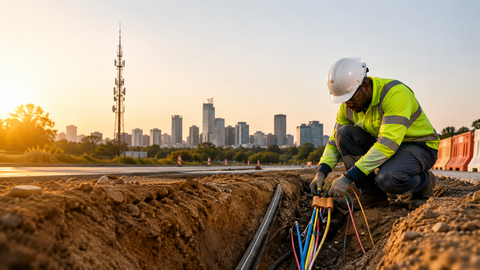
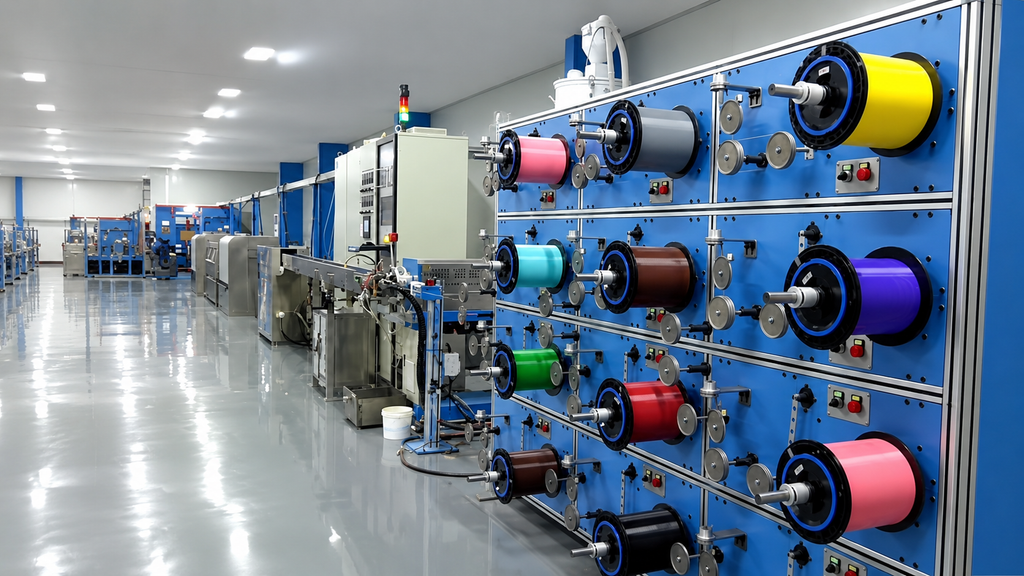
We may never see the cables carrying our data beneath roads or through communication networks, but we depend on them every day. They help move the information behind the websites we visit, the online payments we make, the videos we stream, the businesses we operate and the services we access.
And this is where the conversation becomes much bigger than internet speed.
Nigeria is trying to build a stronger digital economy, but a digital economy cannot grow properly without strong digital infrastructure. The Federal Government's Project BRIDGE, for instance, is designed to deploy about 90,000 kilometres of open-access fibre infrastructure across Nigeria and connect more than 770 local government areas. The ambition is to create a stronger foundation for digital services, businesses, employment and economic activity across the country.
The African Development Bank has also approved $200 million for Nigeria's Digital Value Chain Infrastructure Project, with the aim of significantly expanding the country's fibre backbone and extending connectivity to communities, schools, health facilities, commercial centres and other important locations.
To me, these investments send a clear message: fibre optics is no longer just a telecommunications matter. It is an economic matter.
Consider what happens when connectivity becomes unreliable. A freelancer can miss a deadline because a large file will not upload. A business owner can lose a customer because an online payment fails. A student can miss an important virtual class. A content creator can spend hours trying to upload a video. A remote worker can suddenly become unavailable to an international employer or client.
One connectivity problem can therefore travel much further than the person holding the phone.
It can affect a business, a customer, an employee and, ultimately, the economy.
This is why the issue of fibre cuts concerns me. Data from the Nigerian Communications Commission cited in reports indicate that thousands of fibre-cut incidents were recorded in Nigeria during the first quarter of 2026, with one report putting the figure at 5,934 incidents between January and March.
Behind every number is a disruption.
And when I look at those figures, I do not see only damaged cables. I see businesses that may have been unable to operate normally. I see workers who may have struggled to do their jobs. I see customers who may have been unable to access services. I see entrepreneurs whose income can be affected by infrastructure problems they have no control over.
That is why protecting fibre infrastructure should be treated as protecting economic infrastructure.
Some fibre damage is linked to road construction and excavation, while vandalism and other forms of infrastructure damage also create serious challenges. This means that protecting Nigeria's digital backbone cannot be left entirely to telecommunications companies. Government agencies, construction companies, contractors, communities and ordinary citizens all have a role to play.
After all, what is the value of investing heavily in digital infrastructure if the same infrastructure is repeatedly damaged?
But there is another part of this conversation that I find even more interesting.
Reliable connectivity does not only make our existing digital activities easier. It can create entirely new opportunities.
Imagine someone living outside Nigeria's biggest cities being able to work consistently for an international client because their internet connection is reliable. Imagine a teacher delivering online lessons without constantly worrying about disconnection. Imagine a small fashion business reaching customers in other states through social media. Imagine a Nigerian writer, graphic designer, virtual assistant, software developer or video editor serving clients in another country without leaving home.
That is what connectivity can unlock.
And this is why I believe discussions about fibre infrastructure should not only be about cables, networks and telecommunications companies. They should also be about people.
The National Digital Economy Policy and Strategy recognises digital infrastructure as an important foundation for building an inclusive digital economy. But infrastructure by itself will not transform people's lives. People need the skills and knowledge to use that infrastructure productively.
This is where I think Nigerians have an opportunity to look at the smartphone in their hands differently.
For years, many of us have primarily viewed our phones as devices for communication and entertainment. But the same smartphone can also become a small office, a learning centre, a publishing tool and even the starting point for an online business.
Someone who enjoys writing can learn content writing and begin creating articles, captions or website content for businesses. Someone with an eye for design can learn mobile graphic design. Another person can learn video editing, social media management, virtual assistance or digital marketing.
The point is not that everybody must become an online entrepreneur overnight.
The point is that the digital economy creates room for people who are willing to learn a useful skill and turn that skill into value.
And that, for me, is one of the most important lessons hidden inside the fibre-optic conversation.
Infrastructure creates possibilities, but people must be prepared to use those possibilities.
Nigeria's investment in fibre infrastructure could therefore mean much more than faster browsing. If the networks are expanded properly, maintained effectively and protected from unnecessary damage, they could support more remote employment, online education, e-commerce, fintech, digital services and technology-driven businesses across the country.
However, we should also be realistic.
Fibre expansion alone will not solve every problem facing Nigeria's digital economy. We still need affordable internet access. We need reliable electricity. We need digital skills. We need responsible road and construction practices. We need stronger protection of critical telecommunications infrastructure. And we need policies that ensure rural and underserved communities are not left behind.
Most importantly, we need to understand that Nigeria's digital economy is not some distant idea waiting for the future.
It is already happening around us.
The woman selling products through WhatsApp is participating in it.
The young person designing flyers from a smartphone is participating in it.
The freelancer working for a client abroad is participating in it.
The content creator earning from digital platforms is participating in it.
The student taking an online course is participating in it.
The small business accepting digital payments is participating in it.
They may all be using the internet differently, but they are connected to the same growing digital ecosystem.
That is why fibre-optic infrastructure matters so much. The cables may be hidden from our view, but the opportunities they carry are becoming increasingly visible in our everyday lives.
If Nigeria truly wants a digital economy capable of creating jobs, supporting businesses, improving access to services and opening opportunities for people beyond the major urban centres, then reliable connectivity cannot be treated as an afterthought. It has to be part of the foundation.
And while governments, investors and telecommunications companies work on that foundation, individuals also have a role to play.
We can learn.
We can build.
We can create.
We can stop seeing the internet only as a place to consume information and start seeing it as a place where we can create value.
Because sometimes, the biggest opportunity is sitting quietly in the device we already carry every day.
If you have an article, opinion piece, event or news story you would like published, or you are ready to begin your journey toward building a profitable online content-writing business from your phone or laptop, Global News Arena would love to hear from you. Send your article or enquiry to advertise@globalnewsarena.com.