
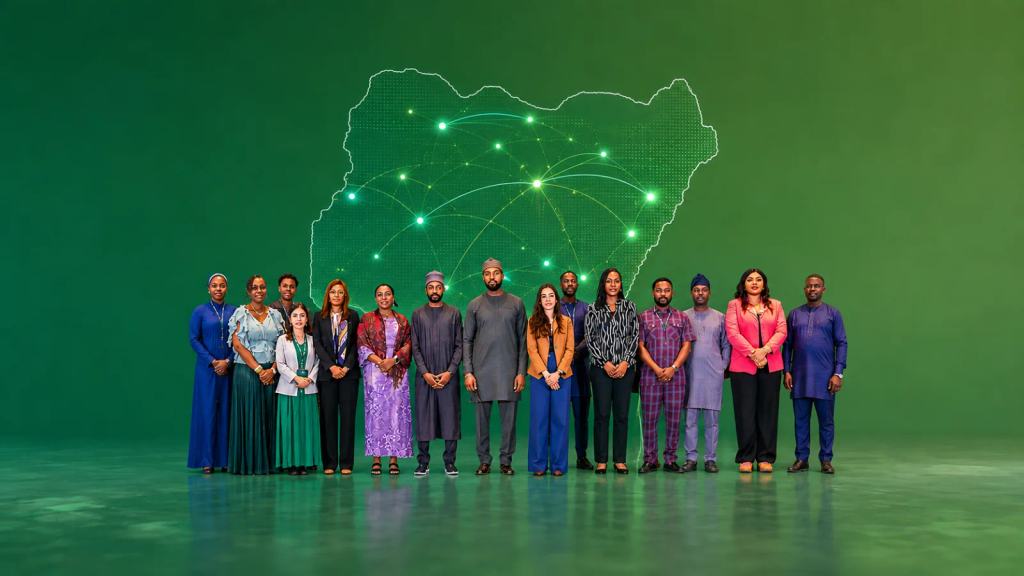
Nigeria’s technology ecosystem is entering an important phase as the National Information Technology Development Agency (NITDA) moves to strengthen the country’s network of more than 339 innovation hubs.
For me, this development deserves attention because it goes beyond the creation of technology spaces. At its core, it is about how Nigeria can give more young people the opportunity to turn ideas, digital skills and local solutions into sustainable businesses.
NITDA is working on a proposed National Innovation Hub Standards Framework, which is expected to help innovation hubs assess their capabilities, identify areas where they need improvement and develop stronger systems for supporting entrepreneurs and technology-driven businesses.
That may sound like another government framework, but I think the bigger picture is much more interesting.
Nigeria has never really had a shortage of ideas. What we have often lacked is the right environment to help those ideas move from imagination to implementation.
A young Nigerian can have a brilliant business idea, understand a problem affecting people in their community and even have the technical ability to develop a solution, but without mentorship, infrastructure, networks, funding and access to customers, that idea can remain exactly what it started as: an idea.
This is where innovation hubs become important.
According to NITDA, Nigeria has more than 339 innovation hubs, but the agency has also identified differences in their capabilities. Some already function as stronger innovation and entrepreneurship centres, while others still operate primarily as training facilities and require additional support to develop their incubation and innovation capabilities.
That tells me that the conversation should not simply be about how many hubs Nigeria has.
It should be about what those hubs are helping Nigerians achieve.
How many entrepreneurs are launching businesses because of them? How many startups are finding their first customers? How many young people are developing skills that lead to employment? How many founders are meeting mentors, investors and business partners? And perhaps most importantly, how many Nigerian businesses are becoming strong enough to compete beyond the local market?
Those are the questions that will ultimately determine whether this innovation hub revolution produces lasting results.
There is also the issue of geography.
Nigeria's technology story has historically been strongly associated with cities such as Lagos and Abuja. These locations have developed significant technology communities, which means entrepreneurs there can often find easier access to events, investors, mentors, co-working spaces and other opportunities.
But Nigeria is much bigger than those cities.
There are talented young people in Enugu, Kano, Kaduna, Ogun, Rivers, Plateau, Cross River and countless other parts of the country who understand problems in their communities better than anyone else.
A young entrepreneur should not have to relocate to Lagos simply because that is where most of the opportunities appear to be concentrated.
If innovation hubs can become stronger outside the traditional technology centres, something important could happen: local problems could begin producing local technology solutions.
An entrepreneur in an agricultural community could build a digital platform that connects farmers with buyers. Someone in a university environment could develop an education technology solution. A young creative could build a digital media business. A software developer could create a service for small businesses that solves a problem they face every day.
This is why I find the idea of strengthening innovation hubs across Nigeria particularly interesting.
Different communities have different problems, and those problems can become business opportunities when people have the skills and support required to solve them.
NITDA has also emphasised the importance of designing innovation ecosystems around the unique strengths and challenges of different communities. I think that is the right direction because Nigeria does not need hundreds of identical hubs simply carrying different names.
What it needs are useful ecosystems.
One community may need stronger agritech support. Another may have opportunities in manufacturing. Another may have a growing creative economy. Another may have universities producing young developers who need access to mentorship, investors and markets.
The strength of an innovation hub should therefore be measured by how effectively it connects the talent around it to real opportunities.
And that brings me to one of the biggest issues facing Nigerian startups: funding.
It is difficult to build a serious business without resources. Entrepreneurs need money for product development, marketing, equipment, staff, research and expansion.
NITDA has acknowledged that private-sector participation and risk capital are important to the development of Nigeria's startup ecosystem because government cannot sustainably finance the entire sector alone.
That means investors, corporations, financial institutions, development organisations and entrepreneurs all have a role to play.
However, I also believe we should be careful not to make funding the only measure of startup success.
A founder can raise money and still fail to build a sustainable business.
At the end of the day, customers matter.
A business becomes stronger when people are willing to pay for what it offers. That is why innovation hubs should not only help entrepreneurs develop ideas; they should also help them understand customers, test products, improve their business models, market their services and build sustainable revenue.
When I look at the conversation from that perspective, the innovation hub initiative becomes much more than a technology story.
It becomes an entrepreneurship story.
It becomes an employment story.
It becomes a youth empowerment story.
And it becomes a digital economy story.
That last part is particularly important because the technology revolution is no longer restricted to people building complex software.
A smartphone has already changed what is possible for an ordinary Nigerian.
Someone with a smartphone and reliable internet connection can learn a valuable digital skill, create content, communicate with customers, market a service, sell a digital product and work with people in different parts of the world.
That means you do not necessarily have to wait until you have access to a physical innovation hub before you start building something.
Your smartphone can be your first business tool.
You could learn content writing and offer your services to businesses. You could manage social media accounts. You could learn graphic design. You could become a virtual assistant. You could create educational content. You could develop digital templates or guides. You could build an audience around knowledge you already possess.
Artificial intelligence can also make some of these activities easier by helping with research, brainstorming, organisation, writing assistance, customer communication and other repetitive tasks.
But I would not advise anyone to simply jump from one online trend to another.
The better approach is to identify a problem.
Find people who have that problem.
Learn how to solve it.
Then create something useful enough that someone is willing to pay for it.
That is the foundation of a digital business, whether it begins as a freelance service, a small online store, a digital product, a content platform or eventually a technology company.
And perhaps that is one of the most important lessons hidden inside Nigeria's innovation hub story.
You do not have to start by building the next billion-dollar company.
You can start by helping one customer.
Then five.
Then ten.
As your skills improve and your understanding of the market grows, you can gradually build systems around what works.
The same principle applies to startups operating inside innovation hubs.
A founder does not necessarily need to begin with a huge company. The first objective should be proving that a real problem exists and that people genuinely want the solution.
Once that happens, funding, partnerships and expansion become much easier conversations to have.
This is also why I believe the proposed National Innovation Hub Standards Framework could become meaningful if it focuses on practical outcomes rather than simply creating standards on paper.
NITDA has been engaging hub founders, investors, development partners, government institutions, academia and other stakeholders as part of the framework development process.
That collaboration matters because the people working directly with entrepreneurs understand the challenges on the ground.
The framework will ultimately need to answer practical questions.
Can a young founder walk into a hub and find useful mentorship?
Can an entrepreneur connect with potential investors?
Can a startup access the technical resources it needs?
Can a business find customers through the ecosystem?
Can young people outside Lagos and Abuja benefit meaningfully?
Can the hubs help businesses grow beyond the training stage?
Those are the issues that will determine whether Nigeria's innovation hub network becomes a powerful economic engine or simply another impressive statistic.
I also think there is an opportunity here for Nigerians who have been watching the technology economy from the sidelines.
You do not have to be a software engineer to participate.
The digital economy needs writers, designers, marketers, researchers, teachers, video editors, social media managers, virtual assistants, analysts, sales professionals and creators.
It needs people who understand how to use technology to solve everyday problems.
And increasingly, it needs people who know how to combine human creativity with artificial intelligence.
That means the opportunity is much wider than many people realise.
If there is an innovation hub near you, find out what it offers. Attend relevant programmes. Meet other entrepreneurs. Look for mentorship. Learn from people already building businesses.
But even if there is no suitable hub around you, do not allow that to become an excuse for doing nothing.
Start where you are.
Use the phone you already have.
Learn the skill you have been postponing.
Create something useful.
Put it in front of people.
Listen to their feedback.
Improve it.
Then find a way to turn that value into income.
For me, this is ultimately what makes NITDA's push to strengthen Nigeria's 339 innovation hubs worth paying attention to.
The number itself is impressive, but the real opportunity lies in what those hubs can help Nigerians build.
If they become stronger centres of mentorship, innovation, investment, entrepreneurship and business development, they could help unlock talent that has remained outside Nigeria's traditional technology centres.
They could help local entrepreneurs solve local problems.
They could create jobs.
They could connect Nigerian businesses to global opportunities.
And they could contribute to a culture where young people stop seeing technology merely as something to consume and start seeing it as something they can use to build.
But the responsibility does not belong to the government alone.
Investors have a role.
Businesses have a role.
Universities have a role.
Innovation hubs have a role.
And entrepreneurs themselves have a role.
The opportunity is becoming clearer, but opportunity only becomes valuable when somebody takes action.
That is why I would encourage anyone reading this to think beyond the headline.
You may not have access to millions of naira.
You may not have an office.
You may not have a large team.
You may not even have a perfect business idea yet.
But you may have a smartphone, internet access, a willingness to learn and a problem you understand well enough to solve.
Sometimes, that is enough to begin.
Nigeria's innovation revolution will not be defined only by government policies or the number of technology hubs established across the country. It will ultimately be defined by the entrepreneurs who use those opportunities, the businesses they create, the problems they solve and the lives they change.
And perhaps the biggest question is no longer whether Nigeria has enough talent.
We already know the talent exists.
The bigger question is whether we can build an ecosystem that gives that talent enough opportunity to grow.
If you have an article, opinion piece, event or news story you would like published, or you are ready to begin your journey toward building a profitable online content-writing business from your phone or laptop, Global News Arena would love to hear from you. Send an email to advertise@globalnewsarena.com.