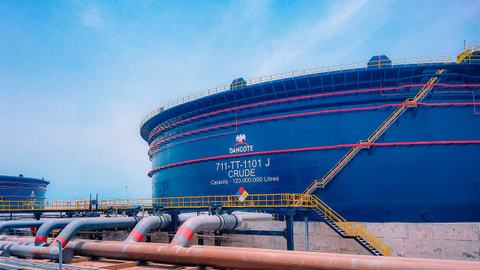

Nigeria’s long-dormant Delta Steel Company is getting another chance, and this time, the scale of the investment behind the revival is impossible to ignore.
The Federal Government has signed a Sub-lease and Operations Agreement with Premium Steel and Mines Limited (PSML), with the company committing more than $1.3 billion towards the revival of the former Delta Steel Company at Ovwian-Aladja in Delta State. The investment is expected to cover the rehabilitation and modernisation of the steel plant, as well as raw-material exploration and exploitation.
But for me, the real story is not simply that $1.3 billion is being invested. The bigger question is what this money could actually change for Nigerians if the project is successfully implemented.
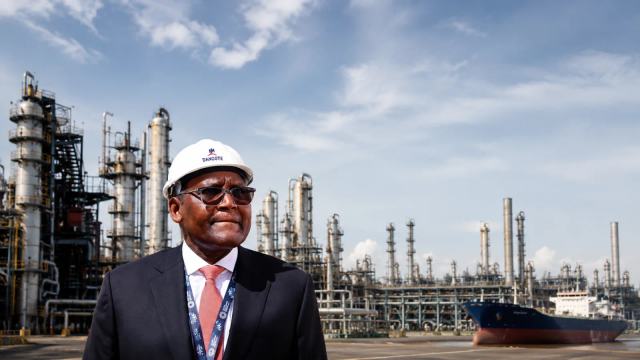
Delta Steel was commissioned in 1982 with an installed capacity of about one million tonnes of liquid steel annually. It was supposed to become an important part of Nigeria’s industrial development, yet years of operational challenges left the plant unable to fulfil that promise consistently.
Now, the government and PSML are attempting to bring that industrial dream back to life.
The plan is to rehabilitate and modernise the facility and eventually restore production to its one-million-tonne annual capacity. Commercial operations are expected to begin within 18 to 24 months, although achieving that target will depend on several important factors, particularly the availability of reliable iron ore supplies.
And this is where I think the story becomes much bigger than one steel plant.
A steel factory cannot simply wake up because its machinery has been repaired. It needs raw materials, electricity, transportation, skilled workers, engineering services, logistics and a dependable market for its products.
That is why the wider plan involving the National Iron Ore Mining Company, NIOMCO, in Itakpe is particularly important. The agreement is connected to efforts to reactivate NIOMCO and develop the Ajabanoko iron ore deposits, creating the possibility of a more integrated steel value chain.
In simple terms, Nigeria needs to be able to secure the raw materials required to keep the steel industry running instead of constantly depending on external sources.
If that happens, the benefits could extend far beyond the gates of Delta Steel.
Steel is one of those products that quietly sits underneath almost everything we are trying to build as a country. Construction companies need it. Manufacturers need it. Engineering businesses need it. Infrastructure projects need it. Fabricators need it. Even smaller businesses that supply these industries can benefit when industrial activity increases.
So, when a major steel facility returns to production, the number of opportunities created could be much larger than the number of people employed directly by the company.
The Federal Government expects the Delta Steel revival to create about 5,000 direct jobs and more than 20,000 indirect jobs.
Those indirect opportunities are where I believe the story becomes particularly interesting.
Imagine transport operators moving raw materials and finished products. Imagine logistics companies handling deliveries. Imagine technicians, engineers and contractors providing specialised services. Imagine food vendors serving workers, accommodation businesses receiving new customers and small suppliers finding new corporate clients.
This is how major investments can spread through an economy.
One factory can create demand for hundreds of businesses around it.
And that is why I would not look at the $1.3 billion investment as simply money going into a steel company. I would look at it as potential fuel for an entire industrial ecosystem.
At the same time, there is another reason this development matters: Nigeria’s long-running dependence on imported industrial products.
For years, businesses and consumers have felt the impact of foreign exchange pressures and international price changes. When a country imports products that it has the capacity to produce locally, its industries can become vulnerable to movements that happen outside its control.
A stronger domestic steel industry could help Nigeria retain more industrial value within the country while providing manufacturers and other businesses with a more reliable local source of steel.
But I also think we need to be realistic.
Nigeria has announced major industrial projects before. Some have delivered results, while others have struggled because of funding problems, infrastructure challenges, policy changes, electricity shortages, raw-material constraints or poor implementation.
So, while the $1.3 billion commitment is encouraging, I would not call the Delta Steel revival a success yet.
The real test begins after the announcement.
Will the plant actually be rehabilitated?
Will the required iron ore supply be available consistently?
Will the supporting infrastructure be strong enough?
Will workers receive the skills needed to operate a modern steel facility?
Will production actually reach the expected capacity?
And perhaps most importantly, will the business remain commercially sustainable after the initial investment?
These questions matter because a signed agreement is not the same thing as a functioning factory.
The headlines may focus on the $1.3 billion, but Nigerians will ultimately judge the project by what they can see and feel: factories producing, workers earning salaries, businesses receiving contracts and communities experiencing increased economic activity.
If those things begin to happen, then the revival could become a genuinely important moment for Nigeria’s industrial sector.
It could also create opportunities far beyond traditional employment, and this is where I think young Nigerians need to start looking differently at major economic stories.
Whenever people hear about a huge investment, the first thought is often, “How can I get a job there?”
That is a reasonable question, but I think there is another question that can be even more valuable: What opportunities will this investment create around it?
That shift in thinking can change the way we approach the economy.
You do not necessarily have to work inside Delta Steel to benefit from the economic activity that could develop around the company.
Someone could build a logistics business. Someone else could supply products or services to businesses in the area. Another person could develop technical skills that industrial companies need.
And in today's digital economy, there is another route that requires considerably less physical infrastructure.
A smartphone can be the beginning of a digital business.
Someone who understands business and enjoys explaining complicated stories can build a social media audience around Nigerian business and economic developments. Someone who is good at writing can offer content-writing services to businesses and websites. Someone who understands social media management can help small companies build their online presence.
The important thing is to recognise that attention can become valuable when it is attached to useful information.
For example, instead of simply reposting the headline that Delta Steel is receiving a $1.3 billion investment, a content creator could explain what steel production means for Nigeria, how the mining process connects to manufacturing, what industries depend on steel and how the project could affect employment.
That is a different kind of content.
It does not simply chase attention. It gives people a reason to keep coming back.
And once you have built trust with an audience, there are legitimate ways to turn that attention into income through advertising, affiliate marketing, digital products, writing services and other online opportunities.
This is one of the lessons I take from the Delta Steel story: opportunities often create more opportunities.
A major industrial project creates demand for workers, but it can also create demand for suppliers, service providers, transporters, educators, journalists, content creators and entrepreneurs.
The people who understand this early can position themselves before everyone else notices.
Of course, that does not mean every Nigerian should suddenly start a steel-related business. It simply means we should stop looking at major economic developments as stories that happen to other people.
They can teach us where the economy is moving.
They can show us where demand might increase.
They can help us identify skills worth learning.
They can even inspire business ideas.
And that is why I believe the Delta Steel revival deserves attention beyond the immediate excitement surrounding the $1.3 billion investment.
The government has also set an ambitious target of increasing Nigeria’s liquid steel production, with a broader goal of reaching 10 million tonnes annually by 2030.
That is not a small target.
Achieving it would require more than the revival of one plant. Nigeria would need functioning mines, reliable electricity, better transportation, skilled workers, investment and policies that allow industrial businesses to plan for the long term.
Delta Steel could therefore become one important part of a much larger industrial transformation.
If PSML successfully rehabilitates the plant, secures sustainable raw materials and achieves commercial production, the effects could stretch well beyond Delta State.
Mining could benefit. Manufacturing could benefit. Construction could benefit. Logistics could benefit. Engineering and fabrication businesses could benefit. And thousands of Nigerians could potentially gain employment either directly or indirectly.
But perhaps the biggest benefit would be psychological.
Nigeria has many abandoned or underutilised assets that remind us of opportunities that were never fully realised. Seeing one of those assets become productive again could demonstrate that dormant industrial infrastructure does not necessarily have to remain dormant forever.
It could show what is possible when investment, management, raw materials and infrastructure come together.
Still, I believe Nigerians should remain interested not only in the announcement but in the execution.
The $1.3 billion sounds impressive, but money alone does not transform an economy.
Production does. Jobs do. Businesses do. Skills do.
That is why the real story will be written over the coming months and years, when Nigerians can determine whether the agreement has translated into a functioning steel plant and a stronger industrial ecosystem.
For now, I see the Delta Steel revival as an opportunity with enormous potential, but also one that must be watched carefully.
The investment has created expectations. The proposed jobs have created hope. The plans for raw-material development have created a bigger vision for Nigeria’s steel industry.
Now comes the difficult part: making all of it work.
And perhaps that is the lesson I would like readers to take away from this story.
When you hear about a major investment, do not only ask who will receive the biggest contract or who will get the jobs. Ask what new needs will emerge because of that investment, what skills will become valuable, what businesses could grow around it and what you can start learning today to position yourself for tomorrow.
Sometimes, the biggest opportunity is not inside the headline.
Sometimes, it is hiding around the headline.
The Delta Steel revival is still a work in progress, and its success will ultimately depend on execution. But if the $1.3 billion investment delivers what has been promised, it could give Nigeria's steel industry something it has needed for decades: another real chance to become a productive engine of the economy.
And as Nigerians watch that process unfold, there is no reason to simply watch from the sidelines. Whether you choose to build a physical business, develop a professional skill or start creating useful content from your smartphone, the goal should be the same: recognise where opportunity is moving and position yourself to benefit from it.
If you have an article, opinion piece, event or news story you would like published, or you are ready to begin your journey toward building a profitable online content-writing business from your phone or laptop, Global News Arena would love to hear from you. Send an email to advertise@globalnewsarena.com.