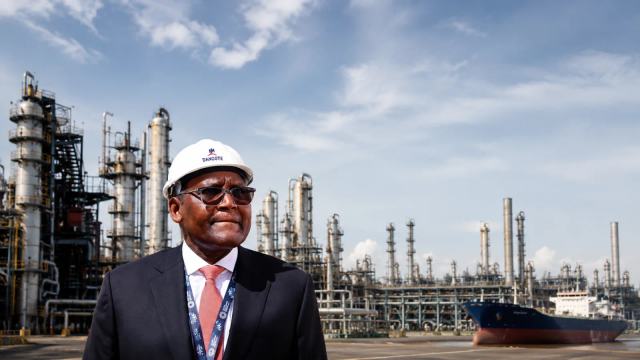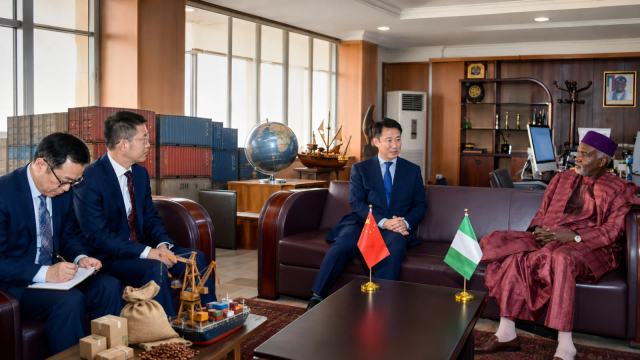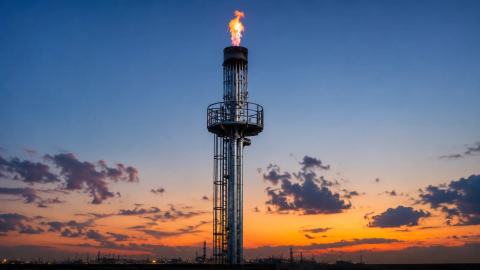
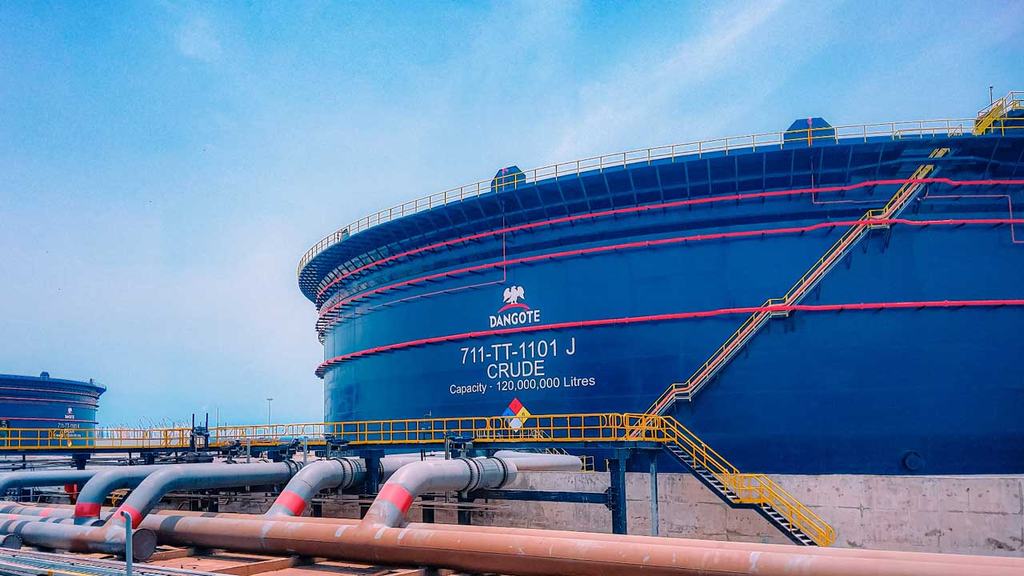
For many Nigerians, that is exactly what comes to mind whenever we hear about the Dangote Refinery. We think about fuel queues, filling stations, pump prices and the cost of transportation. But when I looked beyond the petrol conversation, I realised that what is happening at the Dangote Petroleum Refinery is much bigger than what most of us see at the filling station.
The refinery, located in the Lekki Free Zone area of Lagos, was designed to process about 650,000 barrels of crude oil per day. That alone makes it a major industrial project, but the more interesting part is what happens after the crude oil enters the facility.
So, what exactly does the refinery produce?
The most obvious answer is petrol, officially known as Premium Motor Spirit, or PMS. This is the product most Nigerians immediately associate with crude oil refining because it powers millions of vehicles and is also used in generators and other petrol-powered equipment.
But petrol is only one part of the story.
The refinery also produces Automotive Gas Oil, better known as diesel or AGO. Diesel plays an important role in transportation, agriculture, construction and industrial activities because it powers trucks, buses, heavy machinery, generators and other equipment. In a country where businesses often depend on generators and diesel-powered machines, the availability of locally refined diesel can have consequences far beyond the petroleum sector.
Then there is aviation fuel.
The refinery produces Jet A-1, a type of aviation turbine fuel used by aircraft. That means the conversation about the refinery is not limited to what happens on Nigerian roads. It also extends into the aviation industry, where reliable access to aviation fuel is essential to the movement of passengers and goods.
And there is more.
Kerosene, specifically Dual Purpose Kerosene, is also listed among the refinery's petroleum products, while Liquefied Petroleum Gas, or LPG, is another important product associated with the facility. LPG is particularly significant because cooking gas has become an increasingly important part of conversations about household energy, cleaner cooking and the cost of living.
At this point, it becomes clear why describing the Dangote Refinery simply as a “petrol refinery” does not tell the whole story.
There is another side of the operation that I find particularly interesting: petrochemicals.
The wider complex includes a polypropylene plant. Polypropylene may not sound as familiar as petrol or diesel, but it is an important industrial material used in the production of countless everyday items. Its applications include packaging, automotive components, healthcare products, textiles, furniture and household goods.
And when I think about that, the bigger picture becomes much easier to understand.
Crude oil does not simply enter the refinery and come out as petrol. It can be transformed into different products that serve transportation, aviation, households and industries. In other words, the real story is not just about fuel. It is about turning a raw resource into products that can support an entire chain of economic activity.
That is why, for me, one of the most important questions surrounding the refinery is not simply, “How much petrol can it produce?”
A more important question is: How much value can Nigeria create from its natural resources before that value leaves the country?
For years, Nigeria has been one of the world's major oil-producing countries, yet the country has also relied heavily on imported refined petroleum products. This created a situation where we could produce crude oil but still depend on other countries to process much of it into the products Nigerians needed.
That is what makes large-scale refining such an important part of the conversation.
When crude oil can be processed domestically, the potential economic impact extends beyond the refinery itself. There are opportunities around transportation, storage, distribution, logistics, manufacturing, maintenance and other supporting industries.
And this is where I think the story becomes bigger than Dangote, bigger than petrol and, in some ways, bigger than oil itself.
It becomes a story about value creation.
I have always believed that one of the biggest mistakes we can make when looking at resources is to focus only on what we possess instead of asking what we can create from what we possess.
Nigeria has crude oil.
But crude oil by itself is not the end of the story.
The real economic opportunity comes from what happens when that resource is transformed into something that people and businesses can use.
Interestingly, the same principle applies to ordinary people, especially in today's digital economy.
Think about how much information is available to someone carrying a smartphone. Millions of people have access to the internet, social media platforms, free educational resources and digital tools. Yet access alone does not automatically create income.
The difference often comes from what a person does with that access.
Someone can take knowledge and turn it into useful content. Another person can develop a writing skill and offer services to businesses. Someone else can build an audience around a particular subject, create educational materials or develop a simple digital product.
The raw material may be information, knowledge, experience or creativity.
The value comes from knowing how to transform it.
That is why the refinery story resonates with me beyond the energy industry.
The refinery takes crude oil and transforms it into products that people and businesses can use. In the same way, someone sitting at home with a smartphone can take an idea, a skill or useful information and transform it into something valuable to an audience.
It does not mean everyone will suddenly build a huge online business. It does not even mean that success will happen overnight.
In fact, I think the opposite is more realistic.
It can begin with something very small.
One article.
One useful social media post.
One writing skill.
One satisfied client.
One digital product.
One audience that genuinely finds your work helpful.
Then, with consistency, those small efforts can become something much bigger.
This is also why I believe the conversation around social media needs to change. We often talk about likes, followers, views and viral posts as if attention itself is the final destination.
It is not.
Attention can be a resource.
The real question is what you do with it.
A person can have thousands of followers and still have no meaningful business behind that audience. Another person can have a much smaller audience but know how to provide something useful that people are willing to pay for.
That distinction matters.
Just as crude oil becomes more economically useful when it is refined into valuable products, attention becomes more useful when it is transformed into trust, knowledge, services, products or opportunities.
And perhaps that is one of the most interesting lessons hidden inside the refinery story.
We should stop thinking only about what we have and start thinking more seriously about what we can build from it.
For Nigeria, the hope is that increased domestic refining and petrochemical production can contribute to a stronger industrial ecosystem, support businesses that depend on petroleum products, create opportunities across different sectors and reduce the country's dependence on imported refined products.
Of course, the full impact will depend on many factors, including production efficiency, crude supply, distribution, pricing, infrastructure and wider economic conditions. A refinery on its own cannot solve every challenge in Nigeria's economy.
But it can change an important part of the equation.
And that is why I find it interesting that the products coming from the refinery stretch across so many areas of everyday life.
Petrol affects motorists.
Diesel affects transportation and businesses.
Jet fuel affects aviation.
Kerosene affects households that use it.
LPG affects cooking and household energy choices.
And petrochemicals such as polypropylene connect the oil industry to manufacturing and consumer products.
Suddenly, the refinery does not look like a facility that simply produces petrol anymore.
It looks more like part of a much larger industrial chain.
That is the part I think many people may overlook when the conversation becomes focused only on the price at the pump.
The price of fuel matters, of course. It affects families, businesses, transport operators and almost every part of the Nigerian economy. But there is another story taking place behind the pump price: the transformation of crude oil into products that can feed different parts of an economy.
And perhaps that is the bigger lesson I take from it.
Resources are important, but resources alone do not create prosperity.
Value creation does.
Whether we are talking about crude oil, agricultural products, technology, information or human talent, the countries, companies and individuals that learn how to transform what they have into something useful are often the ones that create greater opportunities.
That principle applies even to someone who has nothing more than a smartphone and a willingness to learn.
You do not necessarily need a large office, expensive equipment or a huge amount of capital to begin developing a digital skill. You can start by learning how to write, research, edit, design, communicate or create useful content. From there, you can gradually turn that skill into a service, an audience or a digital product.
The opportunity is not necessarily in having more resources than everyone else.
Sometimes, it is in learning how to make better use of the resources already in your hands.
So, the next time you hear someone say that the Dangote Refinery produces petrol, remember that petrol is only one part of a much larger picture.
The refinery's product range extends to diesel, aviation fuel, kerosene and LPG, while its integrated petrochemical operations connect crude oil to materials used in packaging, automotive products, healthcare, textiles, furniture and other areas of manufacturing.
And for me, that is what makes the story worth paying attention to.
It is not simply a story about a massive refinery.
It is a story about transformation.
It is about taking something in its raw form and creating something with greater practical value.
Nigeria has always had resources. The challenge has never been simply having something valuable beneath the ground. The bigger challenge is learning how to turn those resources into lasting economic value, jobs, industries and opportunities.
The same is true for us as individuals.
Sometimes, the opportunity is not hiding in what we have.
It is hiding what we can create from it.
If you have an article, opinion piece, event or news story you would like published, Global News Arena would love to hear from you. And if you are ready to begin your journey toward building a profitable online content-writing business from your phone or laptop, this may be the right time to start learning, creating and turning your skills into something valuable.
Send your article, story or enquiry to advertise@globalnewsarena.com.