
Affiliate marketing is becoming an increasingly interesting opportunity for Nigerians looking to build an online income stream, but as more people enter the space in 2026, I believe there is one important question every affiliate marketer should ask before sharing a product link: Does my audience genuinely need this product?
It is a simple question, but I believe the answer can determine whether someone is building a trusted digital business or simply filling social media pages and websites with affiliate links.
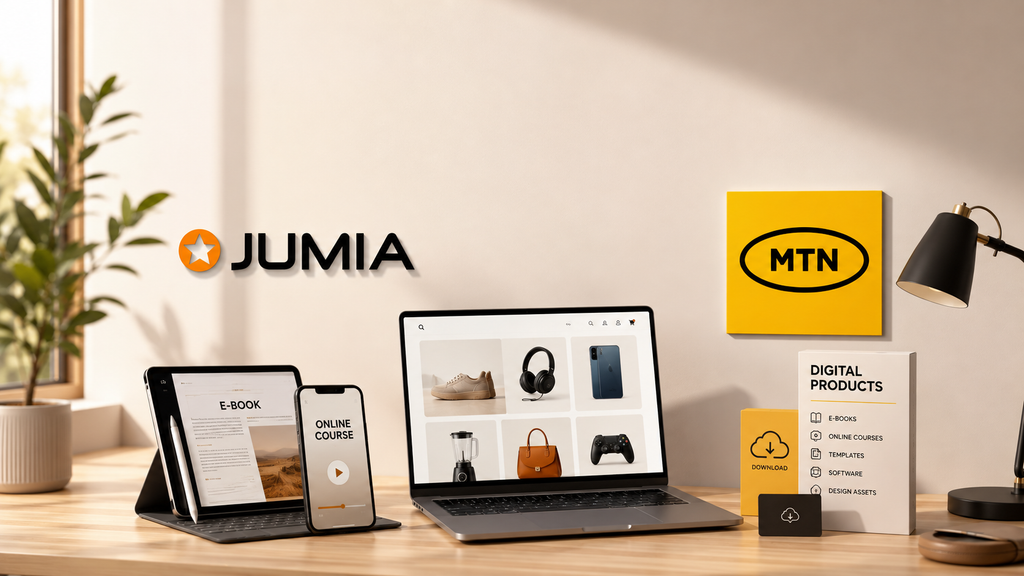
For Nigerian affiliates, platforms such as Jumia and MTN are particularly interesting because they operate in areas that millions of Nigerians already understand and use. Jumia is one of Nigeria's major online marketplaces, offering products across categories including smartphones, electronics, fashion, home appliances and other consumer goods. MTN, meanwhile, is one of the country's major telecommunications companies and operates an eShop where customers can purchase devices and other products.
According to Jumia's official affiliate information, publishers can earn commissions from qualifying purchases generated through their affiliate links, with advertised commission rates of up to 11%, depending on the applicable product and programme terms. MTN's official eShop affiliate information also states that eligible affiliates can earn up to 10% commission on qualifying purchases, subject to the programme's requirements and conditions.
Those figures may immediately attract anyone searching for an online side hustle, but this is exactly where I think a beginner should slow down.
A commission percentage should never be the first reason you choose a product to recommend.
The better question is whether that product fits the people who already trust your content.
For example, if I operate a technology website and my readers regularly come to me for information about smartphones, laptops, accessories, internet devices and other gadgets, recommending a relevant product from Jumia or MTN makes sense. The recommendation naturally fits into the information those readers are already searching for.
But if I suddenly begin promoting an unrelated product simply because it offers a higher commission, I may potentially make a sale, but I could also damage something much more valuable: the trust I have spent time building with my audience.
And that trust is something I believe Nigerian affiliate marketers need to take much more seriously.
The affiliate marketer who succeeds in the long term will not necessarily be the person who posts the largest number of links. It may be the person who consistently helps an audience make better purchasing decisions.
Think about the difference between telling someone, "This smartphone is available here, click my link to buy it," and creating useful content that explains what buyers should consider before purchasing a smartphone, which features matter, who the device is suitable for, what its limitations are, how it compares with alternatives and where readers can find more information.
In the second situation, the affiliate link becomes part of the solution rather than becoming the entire purpose of the content.
That is the direction I believe affiliate marketing needs to take.
Consumers are becoming increasingly careful about how they spend their money, particularly at a time when the cost of living makes many purchases more deliberate. When a reader clicks an affiliate link, they are not simply giving a website a page view. They may be trusting the publisher's recommendation with their hard-earned money.
That responsibility means an affiliate marketer should be prepared to do some research before recommending anything.
Check the product. Understand what it does. Look at the current price. Find out who it is designed for. Consider its strengths and limitations. Check whether the offer is still available. And, most importantly, never tell readers something you cannot support simply because you believe the claim will increase your chances of earning a commission.
This becomes even more important when we move beyond physical products and look at digital products, because the digital economy is creating another avenue for Nigerians who want to build businesses online.
Digital products can include ebooks, online courses, templates, software, educational resources, subscriptions, guides and other products or services that can be delivered digitally. Unlike many traditional businesses, some digital businesses can be started with relatively little physical infrastructure.
For someone starting from Nigeria, a smartphone can already provide access to many of the basic tools required to begin learning and building. You can research topics, write articles, create videos, manage social media pages, communicate with an audience, publish content, promote legitimate products and begin developing an online brand.
But having a smartphone does not mean making money online suddenly becomes automatic.
There is still work involved.
You have to learn how to communicate with people. You have to understand what your audience wants. You have to create useful content consistently. You need to understand how affiliate programmes operate. You need to learn basic digital marketing and search engine optimization. And, perhaps most importantly, you need enough patience to continue even when the results are not immediate.
However, there is something I find particularly interesting about learning affiliate marketing: the skills you develop can eventually take you far beyond affiliate commissions.
Someone who spends months learning what people search for online, how to create useful articles, how to compare products and how to recommend products responsibly is also learning how to build a digital audience.
That audience can eventually create opportunities of its own.
For instance, someone who consistently publishes useful content about smartphone photography could eventually create an ebook or practical digital guide. Someone who builds an audience around blogging could develop templates, writing resources or educational materials. A person who understands social media content could eventually create digital products that help small businesses improve their online presence.
Someone who becomes knowledgeable about AI tools could create tutorials, guides, prompt resources or educational content. Another person who understands music creation could build an audience around songwriting, beat-making or music-production resources and eventually create digital products around that knowledge.
In other words, affiliate marketing can become more than a commission-based activity. It can become a learning ground for understanding how the digital marketplace works and, eventually, for creating something of your own.
But before anyone becomes too excited about the possibilities, there is another reality Nigerian affiliates need to understand: affiliate programmes can change.
Commission rates can change. Eligible products can change. Payment conditions can change. Programme requirements can change. Promotional offers can expire, and companies can update their terms.
That is why I would not advise any publisher to write an article today based on a commission figure they found several years ago and assume that the information is still accurate.
If you are publishing information about Jumia's affiliate programme, check Jumia's official affiliate information for the current terms before making specific claims. If you are discussing MTN's eShop affiliate programme, check MTN's official information for the latest requirements, conditions and commission details.
This may look like a small editorial detail, but it matters enormously when you are trying to build a credible news or information website.
Readers should be able to trust that the information you publish is current.
The same principle applies to the products themselves.
A smartphone that is popular today could be replaced by a newer model tomorrow. A price can change overnight. A product can go out of stock. A discount can expire. A particular model may even be discontinued.
Therefore, an affiliate article should not necessarily be treated as something you publish once and forget.
If you want an article to continue attracting readers through search engines, it makes sense to review important information periodically and update anything that has changed. That can help protect both the usefulness of the article and the credibility of the website publishing it.
This is particularly important for Nigerian consumers because people often want practical information before spending their money.
They may want to know whether a smartphone is worth the price. They may want to understand the difference between two devices. They may want to know which product is better for students, content creators, business owners or everyday users. They may want to understand what they should check before purchasing.
An affiliate article that answers those questions can provide considerably more value than an article written simply to push a sale.
And this is where I believe content creators have a genuine opportunity.
Instead of trying to promote everything, choose an area where you can become useful.
If your audience is interested in technology, stay close to technology. If your readers are interested in online education, explore useful educational products and services. If your audience consists of small-business owners, focus on tools and resources that can genuinely help them solve business problems.
The product should follow the audience, not the other way around.
That mindset can completely change the way someone approaches affiliate marketing.
It also means Nigerian affiliates should be careful about building their entire strategy around one company.
Jumia may be useful for certain physical products. MTN may be relevant for smartphones, devices and technology-related purchases. Other legitimate companies and digital-product platforms may be more suitable for completely different audiences.
The important issue is not simply the size of the company or the commission being offered.
The important question is whether the product solves a real problem for the people you are reaching.
Once you start thinking this way, affiliate marketing begins to look very different.
Instead of asking, "What can I sell today?" you begin asking, "What problem is my audience trying to solve, and what useful information can I give them?"
That is a much stronger question because it can lead to articles, videos, comparisons, tutorials, buying guides, reviews, educational content and practical recommendations.
Within that content, an affiliate link can then appear naturally when it genuinely helps the reader.
I also believe this approach is particularly suitable for people who want to start small.
You do not necessarily need an expensive office, a large team or a huge advertising budget to begin learning. You can start by choosing a subject, researching it properly, creating useful content and gradually building an audience around something you understand.
For many people, the smartphone they already have can become the starting point.
From there, they can learn content writing, search engine optimisation, social media marketing, affiliate marketing, video creation, digital product development and other skills that are becoming increasingly relevant in the online economy.
But these are skills, not shortcuts.
There will be days when a carefully written article receives very little traffic. There will be times when people click your affiliate links without purchasing anything. You may recommend a product that performs poorly. You may spend weeks creating content before seeing meaningful results. You may even have to change your strategy completely after discovering that your original approach is not working.
That does not necessarily mean the opportunity is fake.
It means you are building something.
The mistake is assuming that every affiliate programme is a guaranteed source of income simply because a company advertises a commission.
Affiliate marketing involves understanding people, understanding products, creating content, earning attention and building trust. The commission comes after those pieces begin working together.
And that is why, for me, the bigger story behind Jumia, MTN and digital products in Nigeria in 2026 is not simply how much an affiliate can potentially earn from a particular sale.
The bigger story is the opportunity to learn how the digital marketplace works.
You can start by recommending someone else's product, but in the process you can learn how consumers behave, what people search for, how content attracts attention, how websites generate traffic, how social media builds communities and how digital products can be created and sold.
Those skills can eventually become more valuable than any single affiliate commission.
So, if I were advising someone who wants to start affiliate marketing from a smartphone today, I would tell them not to rush into promoting every product they see.
Start with a subject.
Understand the audience.
Identify the problems they are trying to solve.
Research the products carefully.
Check the current affiliate programme terms.
Create genuinely useful content.
Be honest about both the advantages and limitations of the products you recommend.
Then place affiliate links where they naturally fit and where they can genuinely help the reader.
That approach may not produce overnight results, but it can give you something far more valuable: the foundation of a digital business that is not completely dependent on one affiliate programme, one company or one product.
And perhaps that is the opportunity many people overlook.
You may begin by recommending somebody else's product, but along the way you can learn how to create content, build an audience, solve problems and understand the digital marketplace well enough to eventually create something of your own.
That is why I do not see affiliate marketing simply as a way to earn commissions.
I see it as one possible entry point into the wider digital economy, particularly for Nigerians who are willing to start small, learn continuously and use the technology already in their hands to build something useful.
The real opportunity is not in posting more links.
It is becoming more useful.
Because when people trust your information, understand your recommendations and believe that you are helping them make better decisions rather than simply trying to make a sale, the affiliate link becomes only one part of a much bigger digital business.
If you have an article, opinion piece, event or news story you would like published, or you are ready to begin your journey toward building a profitable online content-writing business from your phone or laptop, Global News Arena would love to hear from you. Send an email to advertise@globalnewsarena.com.