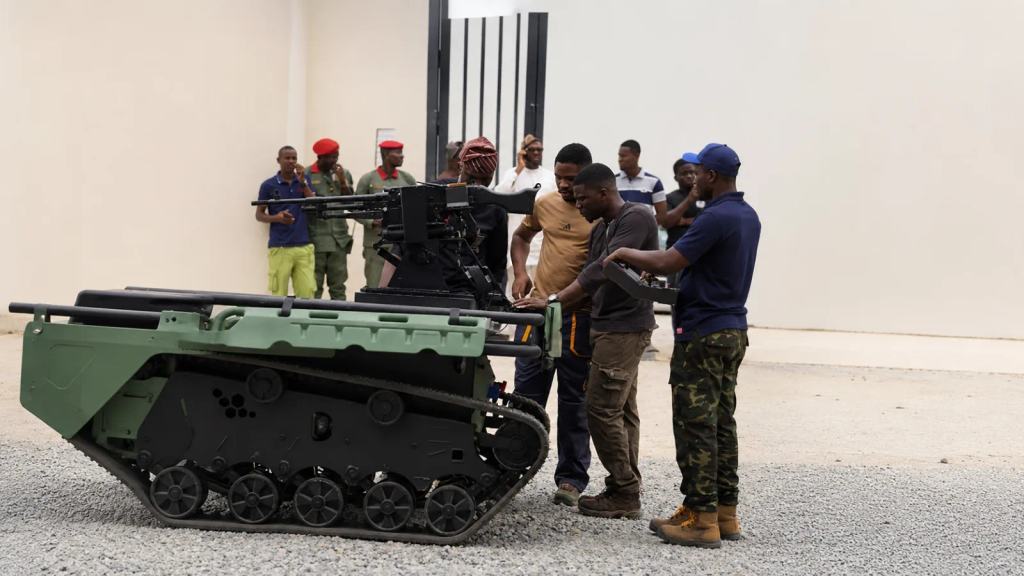
Artificial intelligence is changing the way the world approaches security, and I believe we are only beginning to understand how significant that change could become. From cybersecurity and fraud detection to surveillance, drones and autonomous systems, AI is helping organisations identify threats faster, analyse enormous amounts of information and respond to potential dangers more efficiently.
What interests me most is the shift from security being largely reactive to becoming increasingly predictive. Instead of waiting for a cyberattack, suspicious activity or physical threat to happen before taking action, modern AI-powered systems can analyse patterns, identify unusual behaviour and help security teams recognise potential problems much earlier.
That is a major change in the way we think about protection.
For years, traditional security systems have depended heavily on predefined rules. A camera records an incident, an alarm is triggered, a suspicious login is detected or a security officer reviews footage after something has happened. Artificial intelligence is introducing another layer of intelligence by allowing systems to process enormous amounts of information and identify patterns that may not be immediately obvious to humans.
A 2026 survey of security leaders found that 80% of organisations surveyed were already using or piloting AI in physical security. That tells me this is no longer simply a conversation about what technology might do in the future. Businesses are already experimenting with it and finding practical ways to incorporate it into their security operations.
The reason is fairly simple. Security teams can be overwhelmed by thousands of alerts, hours of surveillance footage and huge amounts of digital information. AI can help filter that information, identify unusual patterns and direct human attention toward the situations that may require immediate action.
But artificial intelligence is taking security beyond simply analysing information. Autonomous technology is beginning to take things a step further by allowing systems to perform certain tasks with limited human intervention.
In cybersecurity, for example, AI agents are being developed to support activities such as investigating suspicious behaviour, analysing threats and assisting with security responses. Research published in 2026 highlights the growing role of AI agents in cybersecurity while also drawing attention to concerns around reliability, safety and governance.
This development creates an interesting situation because the same technology that can help organisations defend themselves can also be used by attackers.
Cybercriminals can use AI to create more convincing scams, automate certain malicious activities and potentially identify weaknesses faster. This means the cybersecurity battle is becoming more complicated. It is no longer simply about humans trying to stay ahead of machines. Increasingly, intelligent systems are being used on both sides, while human beings remain responsible for determining how those systems should operate.
The World Economic Forum's 2026 cybersecurity outlook also highlights how AI is transforming both cyber defence and cyberattacks. As AI becomes more capable, organisations will have to think about not only how they can use it to protect their systems but also how they can prevent the technology from becoming another avenue for attack.
And this is where the story becomes even more interesting because AI is no longer confined to computer screens.
Artificial intelligence is increasingly being connected to cameras, sensors, drones, robots and other physical technologies. This development, often described as physical AI, could significantly change the way security operates in the real world.
Consider an intelligent security camera that does more than record footage. Instead of simply storing hours of video for someone to watch later, the system can analyse what is happening and identify activity that appears unusual.
Consider autonomous drones capable of monitoring large areas continuously, particularly places where it would be difficult or expensive to have security personnel stationed at all times. Consider robots operating in environments where sending human beings could expose them to unnecessary danger.
These technologies could eventually play important roles across airports, factories, warehouses, energy facilities, transport infrastructure and other sensitive locations.
However, greater automation also introduces greater responsibility.
When AI becomes connected to physical systems, a software failure or cyberattack can potentially produce consequences beyond a computer screen. The World Economic Forum has warned that as AI becomes more connected to the physical world, cyber incidents can create real-world consequences for safety and operations.
That means organisations will increasingly have to ask a different question. It will no longer be enough to ask whether an AI system can be hacked. They will also have to ask what could happen in the physical world if that system is compromised.
This is particularly important in defence, where autonomous technology is developing rapidly.
On August 24, 2026, the United Kingdom and Ukraine announced an AI defence partnership involving technology developed from Ukraine's battlefield experience. The partnership includes work involving AI sensors, drones and systems intended to help protect sensitive infrastructure.
Developments like this demonstrate how quickly artificial intelligence is moving from research environments into real-world security applications. They also explain why governments and defence organisations are investing heavily in AI capabilities.
A system that can analyse information quickly, identify potential threats and support rapid decision-making could provide an enormous advantage in situations where every second matters.
Yet the more powerful these systems become, the more important the question of trust becomes.
Can we trust an AI system to make the right decision every time?
What happens when an algorithm incorrectly identifies an innocent person as a threat? Who is responsible when an autonomous system makes a serious mistake? What happens if an attacker gains control of an AI-powered security system? And perhaps most importantly, how quickly can a human take control when something goes wrong?
These are not questions that can simply be pushed into the future.
The development of autonomous security technology has to happen alongside strong safeguards, testing, monitoring and human oversight. Research and industry discussions around physical AI governance increasingly emphasise issues such as accountability, cybersecurity, monitoring and fail-safe mechanisms.
For me, that is one of the biggest lessons emerging from this entire technological shift.
Automation should not mean abandoning human responsibility.
The goal should be to create systems that are intelligent enough to help humans make better decisions while remaining controlled enough for humans to intervene when necessary.
And this conversation is particularly relevant to Nigeria because our economy and everyday lives are becoming increasingly digital.
Nigerian banks, fintech companies, online businesses, content creators and small enterprises all depend on digital systems. As more transactions, communications and business activities move online, the potential impact of cybersecurity threats becomes even greater.
Deloitte's 2026 Nigeria Cybersecurity Outlook highlights threats including AI-powered scams, ransomware and identity fraud while pointing to the increasing importance of cybersecurity skills and human-AI collaboration.
So, while conversations about autonomous drones, intelligent surveillance systems and AI-powered defence may sound distant from the average Nigerian, the underlying lesson is actually very close to home.
If you run an online business, manage social media accounts, accept digital payments, communicate with customers through online platforms or store information in the cloud, cybersecurity already affects you.
And there is another side of this transformation that I think deserves just as much attention: opportunity.
Whenever technology changes the way an industry works, it creates demand for people who understand that technology. AI security is likely to be no different.
Someone who learns about artificial intelligence, cybersecurity, digital privacy and automation can potentially turn that knowledge into content, education, consulting, digital services or online products.
You do not necessarily need an expensive office or sophisticated equipment to begin.
Your smartphone can be the starting point.
You can use it to learn about AI and cybersecurity, follow emerging technology, create educational content, write articles, produce videos, build a technology-focused social media page or develop digital products that solve simple problems for other people.
For instance, someone who understands AI security could create a blog or social media platform that explains cybersecurity developments in simple language. Another person could create digital guides that teach small businesses how to protect their online accounts, recognise scams and improve their digital security.
Someone else could build a newsletter, YouTube channel or online community focused on artificial intelligence, cybersecurity and emerging technology.
The important thing is not to assume that you must become an expert overnight.
Start by learning.
Then share what you learn.
Then identify a problem people are willing to pay you to solve.
That is how knowledge can gradually become a digital business.
I think this is one of the most practical lessons hidden inside the larger AI revolution. Technology does not only create new machines; it creates new skills, new industries and new opportunities for people who are willing to understand what is changing.
At the same time, I do not believe the future of security will simply involve machines replacing humans. If anything, human judgment could become even more important as AI takes over more repetitive monitoring and analytical tasks.
Machines can monitor information continuously. AI can process enormous amounts of data. Autonomous systems can perform specific tasks quickly. But humans still need to establish the rules, determine acceptable boundaries, investigate complicated situations and take responsibility when something goes wrong.
That balance between human judgment and machine capability may ultimately determine how successful the next generation of security systems becomes.
Artificial intelligence is already changing security, and the transformation is likely to accelerate as autonomous technology becomes more sophisticated.
The real challenge, however, will not simply be creating smarter machines.
It will be creating machines that are secure, reliable, transparent and properly controlled.
And for individuals and businesses, there is a lesson worth taking seriously: the people who begin learning about these technologies today will be better positioned to understand the risks, recognise the opportunities and participate in the industries they create tomorrow.
The future of security is becoming increasingly intelligent, increasingly automated and increasingly connected to the physical world. The smartest response is not to fear that future, but to understand it, prepare for it and find ways to create value within it.
If you have an article, opinion piece, event or news story you would like published, or you are ready to begin your journey toward building a profitable online content-writing business from your phone or laptop, Global News Arena would love to hear from you. Send your article or publication enquiry to advertise@globalnewsarena.com