
When you see a headline saying that a company is launching an IPO or public offering, it can sound like complicated financial language. But the idea behind it is actually much easier to understand than it first appears.
An IPO means Initial Public Offering. In simple terms, it is when a private company offers its shares to the public for the first time.
The company is essentially saying, “We want to raise money to grow, and we are giving members of the public an opportunity to invest in the business by buying shares.”
That is the simplest way to understand an IPO.
Most companies do not begin as huge corporations. They usually start with founders and a relatively small number of investors or owners who provide the money needed to get the business running. As the company grows, however, its financial needs can grow too.
It may want to open new branches, build facilities, develop new products, expand into new markets, buy equipment, strengthen its operations or take advantage of a new business opportunity. At that point, the company needs capital, and there are several ways it can raise it.
It can borrow money from a bank. It can attract private investors. Or, if it meets the necessary requirements, it can raise money through the capital market by offering securities to the public.
This is where an IPO becomes important.
When people buy shares in a company, they are buying an ownership interest in that business. Of course, buying a small number of shares does not mean the investor suddenly gets to walk into the company's office and start making decisions. It simply means the investor owns a portion of the company represented by those shares.
The Securities and Exchange Commission explains that people who purchase shares become part owners of the company and are exposed to both the potential rewards and risks associated with the investment.
That is an important point because an IPO should never be viewed as a guaranteed way to make money.
A company's shares can increase in value, but they can also fall. The business can perform better than expected, or it can face difficulties. Economic conditions, investor confidence and developments within the company can all influence the value of its shares.
So, while an IPO creates an opportunity, it also comes with risk.
And there is another part of the story that is important to understand because an IPO and a public offering are not exactly the same thing.
An IPO refers specifically to the first time a company offers its shares to the public. A public offering is a broader term that can cover different ways securities are offered to members of the public.
For example, an offer for subscription can involve a company issuing securities to raise money, while an offer for sale can involve existing shareholders selling securities they already own. The Securities and Exchange Commission recognises these as different modes of public offering.
Why does this matter to the ordinary person reading a business headline?
Because it is not enough to hear that a company is raising money. You also need to understand what is actually being offered and where the money is going.
If a company is issuing new shares to raise capital, the money raised can be used by the company to support its business plans. If existing shareholders are selling their shares, the proceeds generally go to those shareholders who are selling.
That simple difference can completely change how you understand the story.
This is why, whenever I come across news about a public offering, I believe the most important question is not simply, “How much money can I make?”
I would rather ask, “Why is this company raising the money, and what exactly am I being offered?”
Those questions take us beyond the excitement of the headline and into the real story.
Perhaps the company wants to expand. Perhaps it wants to enter a new market. Perhaps it needs money for a major project. Perhaps existing investors want to sell part of their holdings. Whatever the reason, understanding the purpose behind the offering gives you a clearer picture of what is happening.
And this is where I think people sometimes make a mistake.
They hear words such as “IPO,” “shares” or “public offering” and immediately think about making quick money.
But the stock market does not work that way.
An investment is not a guarantee of profit. Before putting money into any investment, people should understand what they are buying, consider the risks and use appropriate regulated channels. The SEC also provides investor guidance and advises investors to use registered market operators when dealing in securities.
Once you understand that, the story becomes much bigger than the stock market.
An IPO is really a story about capital, ownership and growth.
A business starts with an idea. It develops a product or service. It attracts customers. It builds a reputation. It grows. Eventually, it may reach a point where it needs significantly more capital to take the next step.
That part of the story actually reminds me of something much closer to everyday life.
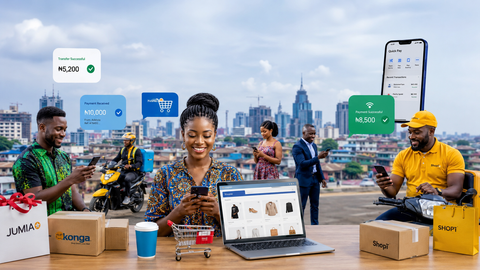
Today, a person does not necessarily need a huge office, expensive equipment or a large team to begin building something valuable. A smartphone connected to the internet can give someone access to tools for learning, creating content, communicating with customers and developing a digital business.
Someone who enjoys writing, for example, can start learning content writing using a phone or laptop. They can practise by writing articles, create useful content for businesses, manage online content or develop digital resources based on skills they have built.
The important thing is not to start with the question, “How can I make money quickly?”
A better question is, “What useful skill can I develop, and what problem can I help someone solve?”
That change in thinking is important.
A successful company does not become valuable simply because it announces an IPO. There is usually years of work behind that announcement. There are products, customers, employees, systems, decisions, successes, failures and plans for the future.
In much the same way, building a digital business is not about finding a magic button that suddenly produces money.
It is about learning something useful, creating value, earning people's trust and improving over time.
Your smartphone can certainly be used for entertainment, but it can also become a learning tool, a writing desk, a research assistant and a way to connect with potential customers.
You can learn a skill from it.
You can practise that skill.
You can create something useful.
You can show people what you can do.
And gradually, you can turn that skill into a legitimate income-generating opportunity.
That does not mean everyone should rush into investing or start a company tomorrow. It simply means we should become more curious about how opportunities actually work.
An IPO may appear complicated when it is reduced to financial terminology, but the basic idea is straightforward.
A company is offering securities to the public. In the case of an IPO, it is doing so for the first time. Investors may gain an ownership interest through shares, while the company may gain access to capital. Both sides have opportunities, but both sides also face risks.
Once you understand that, the headline becomes much easier to follow.
So, the next time you see a company announcing an IPO or public offering, don't just focus on the excitement surrounding the announcement.
Look deeper.
Find out what the company does. Find out why it is raising money. Find out what is actually being offered. Understand the risks. And most importantly, don't assume that buying shares automatically means you will make money.
For me, there is a bigger lesson hidden inside all of this.
Growth usually begins long before people notice the success.
A company preparing for an IPO may have spent years building its business before the public ever heard about the offering. In the same way, someone building a digital business from a smartphone may spend months or years learning, creating and improving before the results become obvious.
That is why I believe the principle is simple: start with value, build trust, learn continuously and grow patiently.
You don't need to have everything figured out today.
You can start small.
You can learn.
You can create.
You can improve.
And you can gradually build something that has value to other people.
Your next opportunity may not begin with an IPO. It may simply begin with the phone already in your hand.
If you have an article, opinion piece, event or news story you would like published, Global News Arena would love to hear from you. If you are also ready to begin your journey toward building a legitimate online content-writing business from your phone or laptop, start by developing your skills, creating useful content and building consistently.
Send your article, opinion piece, event or news story to advertise@globalnewsarena.com