Nigeria’s oil and gas industry is one of the most important chapters in the country’s economic history. For decades, petroleum has influenced government revenue, foreign exchange earnings, international trade, industrial activity and the daily lives of millions of Nigerians. Yet, as I look at the industry today, I see a story that goes beyond crude oil. It is a story of opportunity, dependence, challenges, transformation and the difficult question of how Nigeria can turn its natural wealth into lasting prosperity.
The story began to change dramatically in 1956 when commercial quantities of crude oil were discovered at Oloibiri in present-day Bayelsa State. Commercial production began in 1958, and from that point, petroleum gradually moved from being a promising natural resource to becoming one of the most powerful forces shaping Nigeria’s economy.
Before oil became dominant, agriculture was a major source of economic activity and export earnings. However, as petroleum production expanded, the country's economic attention increasingly shifted towards crude oil. Government revenue became heavily connected to petroleum, while the oil-producing regions became central to Nigeria’s energy story.
The Nigerian National Oil Corporation was established in 1971 and later became the Nigerian National Petroleum Corporation in 1977. Over the years, the petroleum industry continued to evolve, with the government creating different institutions and regulatory structures to manage the sector. One of the most significant recent changes came with the Petroleum Industry Act of 2021, which introduced a new framework for regulating the industry and created institutions including the Nigerian Upstream Petroleum Regulatory Commission, NUPRC.
Today, Nigeria still possesses enormous petroleum resources. NUPRC reported that as of January 1, 2026, the country had about 37.01 billion barrels of oil and condensate reserves, alongside approximately 215.19 trillion cubic feet of natural gas reserves.
Those figures tell me something very important: Nigeria's petroleum story is far from over.
The bigger issue is what the country does with the resources it still has.
For decades, oil has provided Nigeria with substantial government revenue and foreign exchange. It has also created a huge network of businesses involved in exploration, drilling, transportation, engineering, logistics, equipment supply, consulting, security, technology and other services.
But the same industry that created enormous wealth also created a dangerous level of dependence.
When international oil prices fall, production declines or disruptions affect exports, Nigeria can feel the impact through government revenue, foreign exchange availability and broader economic activity. This is one reason the country's economic diversification conversation has remained so important.
For me, the lesson is not that Nigeria made a mistake by developing its oil industry. The real lesson is that no country should allow one resource to become so important that problems in that resource sector can shake the entire economy.
That is why the development of other industries matters so much.
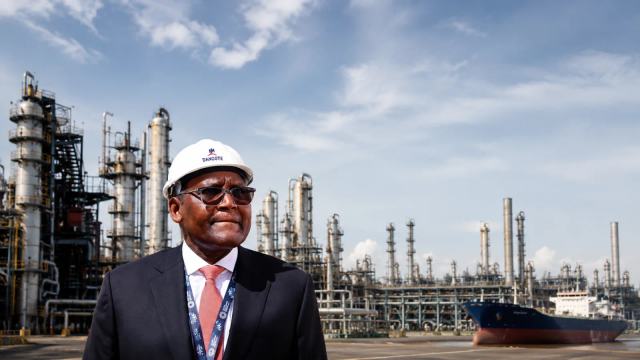
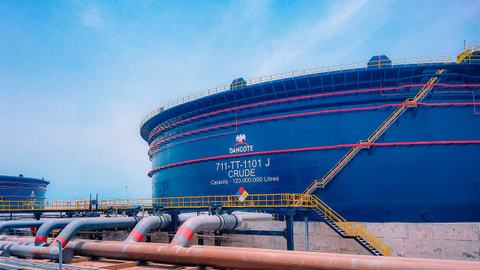
It is also why the growing attention around domestic refining is significant. For years, Nigeria found itself in the unusual position of being a major crude oil producer while depending heavily on imported refined petroleum products. Crude would leave the country, while refined products came back at significant cost.
The expansion of domestic refining capacity has the potential to change that relationship.
Instead of simply exporting crude, Nigeria has the opportunity to capture more value through refining, petrochemicals, storage, transportation and distribution. The benefits could extend beyond petroleum itself because a stronger downstream industry can support manufacturing, logistics, employment and other businesses.
And then there is natural gas, an area I believe deserves far more attention.
Nigeria has enormous gas reserves, yet much of the country's economic potential in this area remains underdeveloped. Gas can support electricity generation, manufacturing, fertiliser production and industrial development. If the necessary infrastructure and investment continue to improve, gas could become an increasingly important part of Nigeria's economic future.
However, having resources is one thing. Managing them successfully is another.
Nigeria's oil and gas industry has faced persistent challenges including crude oil theft, pipeline vandalism, operational disruptions, ageing infrastructure, environmental concerns and difficulties attracting and sustaining investment.
NUPRC's 2024 annual report recorded 732 oil spill incidents, with sabotage accounting for 59.01% of reported incidents. The report also put average oil and condensate production at approximately 1.58 million barrels per day during 2024.
These figures are more than statistics to me because every disruption in the petroleum sector can have consequences beyond the oil field. Government revenue can be affected. Businesses can lose opportunities. Workers can be affected. Investors can become more cautious. Communities can suffer environmental and economic consequences.
The environmental dimension is particularly important.
The Niger Delta has carried much of the burden of Nigeria's petroleum production, and concerns surrounding oil spills, pollution and damage to livelihoods have remained part of the national conversation for years. A successful future for the industry cannot simply be about extracting more crude. It must also involve responsible environmental practices, stronger community engagement and meaningful development in oil-producing areas.
Yet, despite these challenges, there are signs that Nigeria's petroleum sector still has considerable potential.
NUPRC reported that Nigeria's combined crude oil and condensate production averaged 1.735 million barrels per day in June 2026, while crude oil production alone reached an average of 1.56 million barrels per day. The improvement was linked largely to more stable production operations and the absence of major pipeline outages during the period.
That improvement matters because higher and more stable production can create a stronger foundation for revenue, investment and business activity.
More importantly, Nigeria is trying to attract new investment into the sector.
NUPRC said in August 2026 that 22 major offshore projects expected between 2026 and 2030 could attract an estimated $30 billion to $50 billion in investment.
The 2026 licensing round is also being presented as another opportunity to attract investment and increase production. NUPRC has said the assets involved could potentially add about 500 million barrels to Nigeria's reserves and eventually contribute at least 300,000 barrels per day of additional crude and condensate production if they are successfully developed.
Those numbers sound impressive, but I believe Nigerians should look beyond the numbers.
The real question is what these investments will mean for the wider economy.
Will Nigerian companies win more contracts? Will young Nigerians acquire skills that make them competitive? Will communities benefit from economic activity? Will more petroleum products be processed locally? Will technology transfer improve? Will the country develop businesses that can compete internationally?
Those are the questions that determine whether investment becomes genuine economic development.
This is also where technology enters the conversation.
The oil and gas industry of today is no longer driven only by physical infrastructure. Data, digital monitoring, automation, software, cybersecurity, artificial intelligence and other technologies are becoming increasingly important to how modern energy companies operate.
NUPRC's National Production Monitoring System is one example of how digital technology is being used to monitor crude production and exports, improve reporting and support royalty calculations and production forecasting.
For me, this is an important reminder that the future of Nigeria's oil and gas industry will not be created only by people working on drilling platforms or at refineries. There will also be opportunities for people working with computers, data and digital communication.
That brings the conversation closer to ordinary Nigerians, especially young people who may feel that the oil and gas industry is too large or complicated for them to participate in.
I don't think it is.
You may not own an oil field, but you can build a business around the information, services and opportunities created by the industry.
Someone who understands energy and can explain complicated petroleum developments in simple language can build an audience online. Someone with writing skills can provide content services to companies. A digital marketer can help businesses communicate with customers. A researcher can create valuable industry reports or educational resources. A technology professional can develop tools that solve problems for businesses operating in the sector.
This is why I increasingly see the smartphone as an economic tool rather than simply a device for entertainment.
A smartphone can give someone access to education, research, publishing, networking and digital business opportunities. A person can learn a skill, build an online presence, create useful content and gradually develop an income stream without waiting for a traditional office job to appear.
The important thing is to understand the economy around you.
Nigeria's oil and gas industry is one example. The resource itself belongs to the country, but thousands of companies and individuals can build businesses around the activities connected to that resource.
The same principle applies to the digital economy.
You don't have to own the biggest platform. You don't have to have millions of naira before you begin. You can start by developing knowledge, identifying a problem and learning how to solve it.
And while Nigeria continues to develop its petroleum resources, the country must also continue building sectors that can reduce its dependence on crude oil.
Agriculture, manufacturing, technology, telecommunications, financial services, creative industries, renewable energy and other sectors all have roles to play. A diversified economy is better positioned to withstand changes in oil prices and disruptions in the global energy market.
This is particularly important because the global energy industry itself is changing.
Energy transition, cleaner technologies, efficiency, digitalisation and changing investment priorities are reshaping the way countries think about energy. Nigeria therefore has to make the most of its petroleum resources while simultaneously preparing for a future in which the global energy conversation may look very different.
That means Nigeria should not simply ask how much oil it can produce today. It should also ask what it can build with the revenue, skills, infrastructure and technology generated by that production.
If petroleum revenue helps create industries that can survive beyond oil, then the resource becomes more valuable to future generations.
If oil and gas investment creates skilled Nigerian workers, stronger local businesses, modern infrastructure and technological capabilities, then the benefits become much larger than the value of the crude itself.
If domestic refining and gas development support manufacturing and electricity generation, then petroleum begins to serve as a foundation for broader industrialisation.
That is the direction I believe Nigeria should pursue.
The country has already spent decades proving that it can produce crude oil. The next challenge is proving that it can create lasting prosperity from that resource.
For ordinary Nigerians, there is an equally important lesson. We should pay attention to where the economy is moving instead of waiting until every opportunity becomes obvious. The people who learn early, develop useful skills and understand emerging industries will always have an advantage.
Oil and gas will continue to matter to Nigeria, but the opportunities around the industry are changing.
There will be opportunities in technology, content creation, research, education, logistics, professional services, engineering, digital marketing and many other areas. Some of these opportunities can even begin with nothing more than a smartphone, an internet connection and the determination to learn.
For me, that is what makes Nigeria's oil and gas story so much bigger than crude oil.
It is a story about how a natural resource can shape an economy, how dependence can create vulnerability, how investment can create new opportunities and how technology can open the door for people who may never step onto an oil platform.
Nigeria has the resources. What happens next will depend on how wisely those resources are managed, how much value is created locally and how effectively the country prepares its people and businesses for the future.
The ultimate success of Nigeria's oil and gas industry should therefore not be measured only by the number of barrels produced. It should also be measured by the businesses created, jobs generated, skills developed, communities improved, industries strengthened and opportunities made available to ordinary Nigerians.
If Nigeria can move from simply extracting resources to building a powerful value chain around them, then oil and gas can become more than a source of government revenue. It can become a stronger foundation for industrialisation, innovation and long-term economic growth.
And for anyone reading this, the message is simple: don't only watch the opportunities happening around you. Learn from them, position yourself and find a way to participate.
If you have an article, opinion piece, event or news story you would like published, or you are ready to begin your journey toward building a profitable online content writing business from your phone or laptop, Global News Arena would love to hear from you. Send an email to advertise@globalnewsarena.com.