
Nigeria’s steel industry has been waiting for its breakthrough for decades. The country has talked about building a strong local steel industry for generations, invested heavily in major projects and announced several attempts to revive them, yet the dream of producing enough steel locally to support Nigeria’s industrial ambitions has remained largely unfinished.
That is what makes the current conversation around Nigeria’s steel industry so important. This is not simply about factories producing steel. It is about whether Nigeria can finally build the industrial foundation it has been promising for decades.
The story goes back many years. Nigeria began seriously pursuing the development of an integrated iron and steel industry in the 1950s, with the aim of using the country's mineral resources to produce steel locally rather than depending heavily on imported products. By 1971, the Nigerian Steel Development Authority had been established to coordinate the development of the industry, including steel plants, geological investigations, metallurgical research and training.
From there came some of the country's most ambitious industrial projects, including the Ajaokuta Steel Company in Kogi State and the Delta Steel Company at Ovwian-Aladja in Delta State. Rolling mills were also established in places such as Jos, Katsina and Oshogbo.
The thinking behind all of this was simple. If Nigeria could produce steel locally, it could create the foundation for other industries.
And that point is important because steel is not just another commodity. It is used in construction, machinery, transportation, agriculture, manufacturing, infrastructure, oil and gas and several other parts of the economy. A country that wants to industrialise cannot easily ignore the importance of having a reliable steel industry.
This is why the difficulties surrounding Nigeria's steel sector have had consequences far beyond the factories themselves.
Ajaokuta became the most recognisable symbol of the country's struggle. The massive project was designed to become a major integrated steel complex, but decades of delays, operational problems, ownership controversies and unsuccessful attempts at restructuring prevented it from reaching the level of production Nigerians expected.
The Federal Government has continued to explore ways of reviving the facility, including technical assessments, modernisation and new investment arrangements. The Ministry of Steel Development has also said that a previous technical audit found the plant generally robust, while recommending modernisation and automation of some of its systems.
Delta Steel has experienced a similarly complicated history.
The plant was created to become an important part of Nigeria's steel production network, but years of operational and management difficulties affected its performance. Now, renewed efforts to bring the facility back to life have placed Delta Steel once again at the centre of Nigeria's industrial conversation.
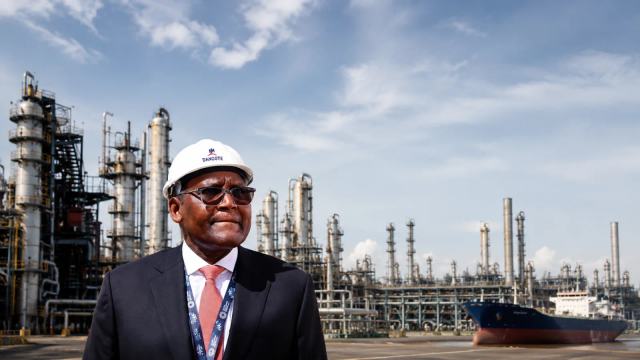
The Federal Government's agreement with Premium Steel and Mines Limited is particularly significant because the company has committed more than $1.3 billion toward the rehabilitation and modernisation of the former Delta Steel Company, with plans that could eventually take liquid-steel production to about one million metric tonnes annually.
But while the amount of money involved is impressive, I believe Nigerians should look beyond the headline figure.
A $1.3 billion commitment sounds enormous, but the real question is what that money eventually produces.
Will the plant operate consistently? Will workers be employed? Will local raw materials be used? Will manufacturers have reliable access to the steel? Will the products meet international standards? Will the company remain productive after the initial excitement disappears?
Those are the questions that will determine whether this becomes another industrial announcement or the beginning of something genuinely transformational.
And that is because Nigeria's steel problem has never been caused by a shortage of ambition alone.
There are other obstacles.
One of them is access to raw materials. Nigeria has mineral resources that could support steel production, but having iron ore and other minerals in the ground does not automatically create a functioning steel industry. Those resources have to be properly explored, mined, processed and transported to steel plants at commercially viable costs.
The Federal Ministry of Steel Development has identified investment in mining and local sourcing of raw materials as important parts of its strategy for strengthening the sector.
Then there is electricity.
Steel production requires enormous amounts of energy, which means unreliable or expensive power can make local production difficult and costly. If a Nigerian steel producer has to spend heavily dealing with energy problems while competing against companies operating in countries with more reliable industrial power, the disadvantage becomes obvious.
Transportation presents another challenge because raw materials and finished products must move efficiently between mines, factories, ports, distributors and customers.
Technology also matters.
Modern steel production is not simply about reopening an old factory and switching on the machines. Equipment needs to be modernised, production processes need to become more efficient and facilities need regular maintenance. Nigeria also needs engineers, technicians, metallurgists and other skilled professionals capable of operating and maintaining modern industrial systems.
The government has recognised the importance of human capital, with the Ministry of Steel Development identifying an ageing workforce and the need to develop new technical skills as challenges facing the sector.
And then there is perhaps the issue I consider one of the most important: consistency.
A steel industry cannot be built according to short political timelines.
An administration may announce a project today, another administration may review it tomorrow and another may change the direction again. But steel plants require enormous capital, long-term planning and confidence that the rules governing the investment will remain stable.
Investors need to know that if they put billions of dollars into a project, they will have a reasonable opportunity to operate the business for many years.
That is why Nigeria's ability to maintain consistent policies may be just as important as the money invested in the industry.
There is also the question of competition.
Local production alone does not automatically mean success. Nigerian steel must be good enough and affordable enough for manufacturers and construction companies to choose it. If locally produced steel is consistently more expensive or unreliable, businesses will continue looking for alternatives.
So, for Nigeria to truly build a competitive steel industry, the country has to solve several problems at the same time: raw materials, power, transport, technology, financing, skilled labour, regulation and market access.
That may sound difficult, but the opportunity is equally enormous.
A functioning steel industry could create jobs directly and indirectly. It could support mining companies, transport businesses, engineering firms, construction companies, manufacturers, fabricators and suppliers. It could also encourage more investment in industries that depend on steel.
This is where I believe the conversation becomes much bigger than Ajaokuta or Delta Steel.
If Nigeria eventually succeeds in building a strong domestic steel ecosystem, the benefits could spread through the economy.
A construction company could have more reliable access to locally produced materials. A manufacturer could reduce its dependence on imported inputs. An engineering business could find new customers. A transport operator could gain more industrial contracts. A young technician could find a new career path.
In other words, the value of a steel industry is not only measured by how much steel comes out of a factory.
It is measured by what happens around that factory.
And this is also where I see a lesson that applies beyond the steel sector.
Whenever I hear about a major investment, whether it is in steel, technology, energy, agriculture or manufacturing, I do not only ask who will work directly for the company. I also ask what new opportunities will emerge around it.
That question matters because many people assume that benefiting from a growing industry means getting a job inside the industry itself.
It does not always work that way.
Today, someone with nothing more than a smartphone can learn about an industry, research what is happening, create useful content and build an audience around information people need.
That is one of the reasons I believe digital skills are becoming increasingly important.
A person interested in writing can follow major developments in Nigeria's economy and explain them in simple language. Someone interested in video can create educational content. Someone with social-media skills can help businesses communicate with their customers. Another person can build a digital product around knowledge they have developed.
The important thing is not simply owning a smartphone. The important thing is knowing how to turn the device into a tool for learning, creating and solving problems.
I see that lesson clearly in Nigeria's steel story because the country itself is trying to do something similar on a much larger scale: take resources that already exist and turn them into greater value.
Nigeria has iron ore.
It has mineral resources.
It has engineers and technical professionals.
It has a large population and a huge domestic market.
What has been missing is the ability to consistently connect these resources into a productive industrial system.
The same principle applies to individuals. Having a smartphone is one thing. Knowing how to use it to develop a valuable skill and create something people are willing to pay for is another.
But while digital opportunities are exciting, they should not distract us from the central issue here.
Nigeria needs physical industries.
The country cannot build an economy entirely around social media, content creation or digital businesses. It needs factories, farms, mines, power plants, transport infrastructure and manufacturing companies.
That is precisely why the steel industry matters.
A country that wants to manufacture cars needs steel.
A country building railways needs steel.
A country expanding roads, bridges, buildings and industrial facilities needs steel.
Manufacturers need steel.
Engineers need steel.
Construction companies need steel.
So, when Nigeria talks about steel, it is really talking about the foundation upon which several other parts of the economy can grow.
This is also why I think the government must be held accountable for results rather than announcements.
Nigeria has heard many promises about steel over the years. Nigerians have seen agreements signed, projects announced and revival plans introduced.
What the country needs now is measurable progress.
We need to see factories operating.
We need to see production figures rising.
We need to see workers gaining employment.
We need to see Nigerian manufacturers purchasing locally produced steel.
We need to see raw materials moving through a reliable supply chain.
We need to see investment turning into productive assets.
Most importantly, we need to see the industry remain functional over the long term.
If the current revival efforts around Delta Steel, Ajaokuta and other private-sector projects succeed, Nigeria could find itself much closer to the industrial economy it has imagined for generations.
The opportunity is there, but the execution will determine everything.
For me, Nigeria's steel story is therefore not a story I would describe as finished. It is still being written.
The country has already spent decades dreaming about becoming a major steel producer. The next chapter must be about turning that dream into measurable production, competitive businesses, skilled employment and industrial growth.
The success of Nigeria's steel industry should not ultimately be measured by the size of the projects announced or the amount of money mentioned at a signing ceremony.
It should be measured by what Nigerians can actually see and feel years later.
If factories are producing, businesses are growing, workers are earning, manufacturers are buying locally and Nigeria is importing less while creating more value at home, then we will know that something has genuinely changed.
Until then, I believe Nigerians should remain hopeful but watchful.
The country does not need another beautiful industrial story that ends with an abandoned facility.
It needs an industry that works.
And perhaps that is the biggest lesson I take from Nigeria's steel journey: big opportunities do not become valuable simply because they are announced. They become valuable when someone has the discipline, patience and determination to turn the idea into something that works.
That lesson applies to the country, to businesses and even to individuals.
Whether you are waiting for Nigeria's next industrial boom or trying to build something for yourself from your phone or laptop, the principle remains the same: start with what you have, develop something valuable and, most importantly, keep building.
If you have an article, opinion piece, event or news story you would like published, or you are ready to begin your journey toward building a profitable online content-writing business from your phone or laptop, Global News Arena would love to hear from you. Send an email to advertise@globalnewsarena.com.